China’s research ships linger longer than others near undersea cables, study shows
FORUM Staff
China’s research vessels spend disproportionately more time near critical undersea communications cables across the Pacific than vessels from nearly 50 other nations, a new analysis found.
The findings demonstrate a “persistent pattern of activity in locations where undersea data could have significant military value,” according to the October 2026 analysis by the Center for Strategic and International Studies (CSIS), a Washington, D.C.-based think tank.
The analysis, covering five years ending in December 2025, helps quantify rising alarm among Indo-Pacific nations over Chinese research vessels operating without permission in their waters.
The CSIS report recommends that the United States and its Allies and Partners build upon multilateral efforts to strengthen maritime awareness, enforce maritime law, publicly expose incursions and improve maintenance of undersea communication systems. The subsea networks transmit more than 95% of global data, and the Indo-Pacific has been a leading region for undersea cable construction for more than a decade.
The CSIS analysis covers more than 200 civilian research ships from 47 nations. It found that — other than those from China — the vessels did not spend much time near subsea cables on the high seas. China’s activity stood out during 2024, in particular, when seven of its vessels ranked above the 80th percentile for time spent near subsea infrastructure.
“This persistent and disproportionate activity reveals that the PRC [People’s Republic of China] may be leveraging its research fleet for underwater data collection that may aid in the systemic analysis of terrain for sabotage or submarine operations,” the study said.
The activity represents a broader trend in the tactics of authoritarian nations, the CSIS analysis said: Deploying state-owned civilian assets as dual-use tools for gray zone operations, which fall below the threshold of armed conflict.
Cable sabotage is on the rise globally, including in geopolitical flash points such as the Baltic, Red and South China seas. China is suspected of targeting cables with landing points in Taiwan, prompting the self-governed island to deploy 24-hour Coast Guard patrols and monitor blacklisted China-linked boats. The Chinese Communist Party claims Taiwan as part of China and threatens to annex it by force.
Research vessels are equipped with labs and scientific instruments to study marine life and ecosystems for sustainable fishing and resource management. Using them for military purposes provides “plausible deniability while enabling state-level intelligence, surveillance, and reconnaissance (ISR),” the analysis said.
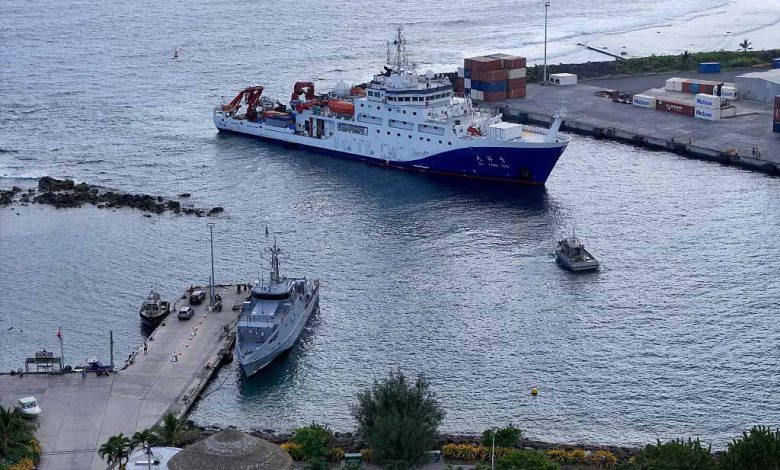
The CSIS detailed suspected dual-use missions by China, including one from July to October 2024 involving a ship in the Xiang Yang Hong research fleet. Initially, the ship operated across an area where three undersea cables connect the continental U.S. and island nations and territories including Australia, Guam, Indonesia, Micronesia, Palau, the Philippines, Singapore and Timor-Leste. The ship’s movements indicate that it likely switched from an ISR mission focused on subsea cables to a civilian mission mapping the seafloor for potential mineral deposits.
“None of the intersected cable systems is owned or operated by a PRC-based entity, indicating an avoidance of PRC-based systems,” the CSIS said. Research ships typically move back and forth in a lawnmower pattern while those monitoring a cable will track it from directly above.
Scientific research can serve military purposes, U.S. Navy officials say. For example, China’s collection of temperature, salinity and current data enables its People’s Liberation Army Navy to optimize sonar performance and long-range underwater surveillance.
— STORY CONTINUES BELOW —
Join the discussion
How can Indo-Pacific Allies and Partners expose Chinese research vessels that probe their waters without permission?
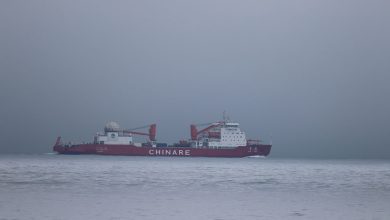
The patterns noted in the CSIS study continue in 2026. In May, a Chinese vessel designed for Arctic research ventured some 75 kilometers into the exclusive economic zone (EEZ) of tropical Palau in the Western Pacific and spent 14 hours there, the Australian Broadcasting Corp. reported.
Palauan President Surangel Whipps Jr. noted another incursion in July, saying China is “surveying over the top of our fiber-optic cable, and they have gear in the water, so for us it’s a security concern.”
Similar incursions have been reported through the years by Australia, India, Japan, the Philippines and Taiwan. Allied and partner responses range from condemnation to interdiction. India deployed a naval ship to expel the research vessel Shi Yan 1 in November 2019, accusing China of spying.
The United Nations Convention on the Law of the Sea provides a limited legal framework for research and surveying at sea, including a stipulation that such activity in another nation’s EEZ or on the continental shelf requires that coastal state’s consent. China ratified the convention and purports to abide by it.