Japan-ROK technology cooperation reinforces trilateral missile-tracking network with U.S.
Felix Kim
Japan and the Republic of Korea (ROK) are building on their renewed defense ties to strengthen a trilateral missile-tracking network with their longtime mutual ally the United States, combining operational exercises and cooperation on emerging technologies.
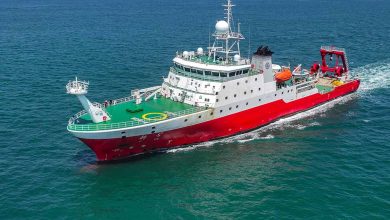
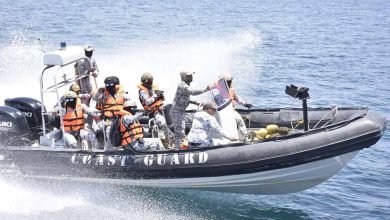
Seoul and Tokyo announced in mid-2026 that they would resume a maritime search and rescue exercise last held in 2018. The drills, which are expected to enhance radar capabilities and communication procedures, are significant for bilateral relations, SeungHwan Kim, a nonresident fellow at the Cross-Strait Dynamics Research Center of the Australia-based Indo-Pacific Studies Center, told FORUM.
Joint exercises can identify communications delays, incompatible data formats and unclear operational authorities, retired ROK Navy Cmdr. Jihoon Yu, a research fellow at the Korea Institute for Defense Analyses, told FORUM. Eliminating such gaps is vital for integrated missile defense, which requires clarity in intelligence sharing, command and control (C2), and decision making.
In December 2023, Japan, the ROK and the U.S. announced they had fully activated a real-time mechanism for sharing warning data on North Korea’s missile launches. That data previously moved through separate Seoul-Washington and Tokyo-Washington channels but now links the allies’ forces in a single chain. The network also shares detection assets, including ground radars, to track missiles from launch to projected target.
— STORY CONTINUES BELOW —
Join the discussion
How does your nation work with the U.S. and its Allies and Partners to deter potential adversaries?
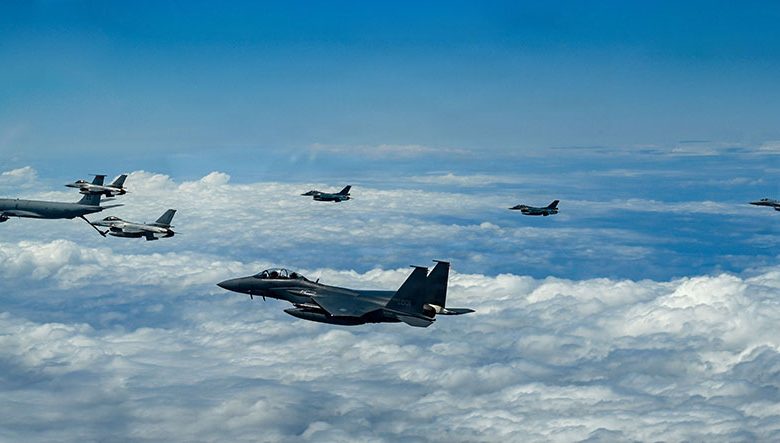
“The main technical gain is that radars in different places cover each other’s blind spots,” Kim said. The architecture was tested during the trilateral Freedom Edge in September 2026. The U.S. Pacific Command said the exercise featured real-time data sharing, synchronized coordination and enhanced air defense scenarios.
The drills were “aimed at enhancing deterrence and response capabilities against North Korean nuclear and missile threats, while safeguarding regional peace and stability,” the ROK’s Joint Chiefs of Staff stated.
The integration of assets enabled by artificial intelligence, also known as super intelligence, into missile defenses can speed decisions at C2 nodes, Kim said, including by analyzing satellite imagery for indications of mobile launcher activity and other preparations. The ROK is upgrading its combined C2 system with the U.S. to include such analysis and automated decision support, he said.
Felix Kim is a FORUM contributor reporting from Seoul, South Korea.