Australia’s defense training initiatives foster Indo-Pacific intelligence interoperability
Peter Parson
Australia is leveraging defense education to strengthen analytical interoperability among Southeast Asian and Pacific partner defense forces. Programs at institutions such as the Defence International Training Centre (DITC), along with training supported through Canberra’s Defence Cooperation Program, help regional officers develop common terminology, analytical skills and strategic communication practices.
Personnel from countries including Brunei, Indonesia, Malaysia and Papua New Guinea (PNG) train alongside Australian counterparts using common operational practices to strengthen cooperation in complex security environments. That foundation helps transform disparate national data into cohesive situational awareness.
“Australia has made education and training a central part of its defense engagement with Southeast Asian and Pacific partners because these programs build long-term institutional relationships, strengthen regional security cooperation, and improve the ability of partner forces to work with one another and with Australia,” Dr. Ashok Sharma, a visiting fellow at the University of New South Wales Canberra at the Australian Defence Force Academy, told FORUM.
“Through programs at institutions such as the DITC, regional officers may learn the fundamentals of intelligence collection, evaluation, analysis and reporting,” Sharma said. “Instruction can include distinguishing information from intelligence, assessing source reliability and information credibility, identifying assumptions and gaps, developing indicators and warnings, and using structured analytical techniques to test competing explanations.”
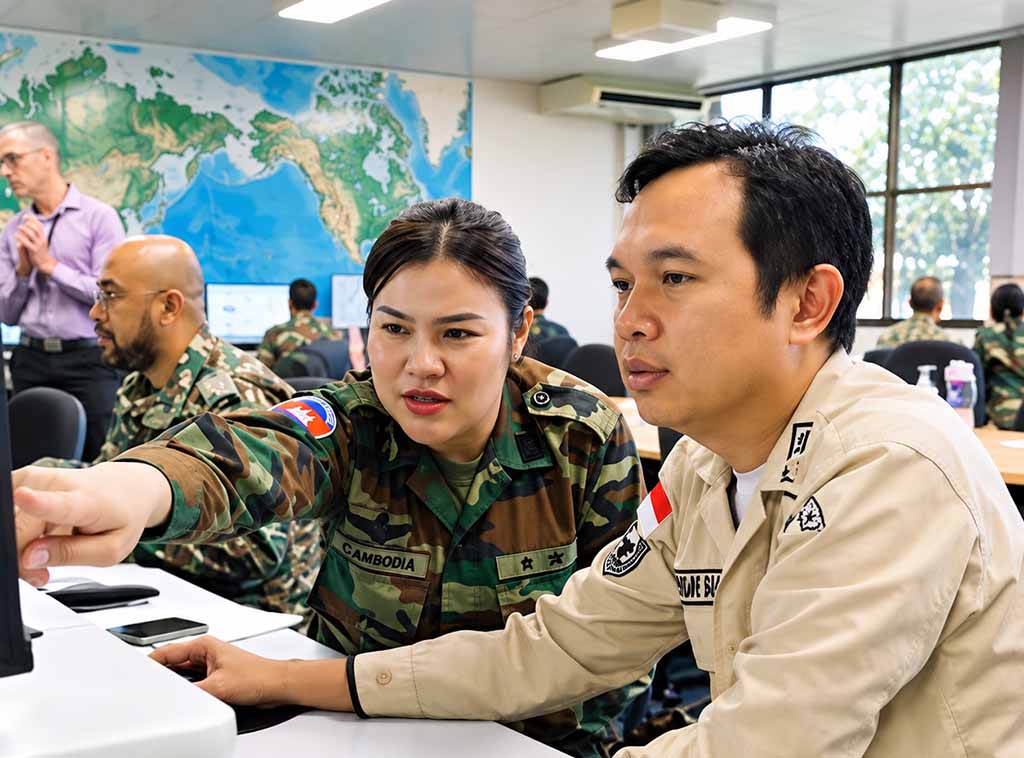
A standardized analytical baseline allows partner forces to bridge gaps resulting from varying military structures, legal frameworks and security cultures.
“This common foundation makes it easier for officers to interpret one another’s reports and to identify where apparent disagreements arise from different terminology or reporting conventions rather than genuinely different assessments,” Sharma said.
— STORY CONTINUES BELOW —
Join the discussion
How do your defense forces support personnel development and technical capacity with Allies and Partners?
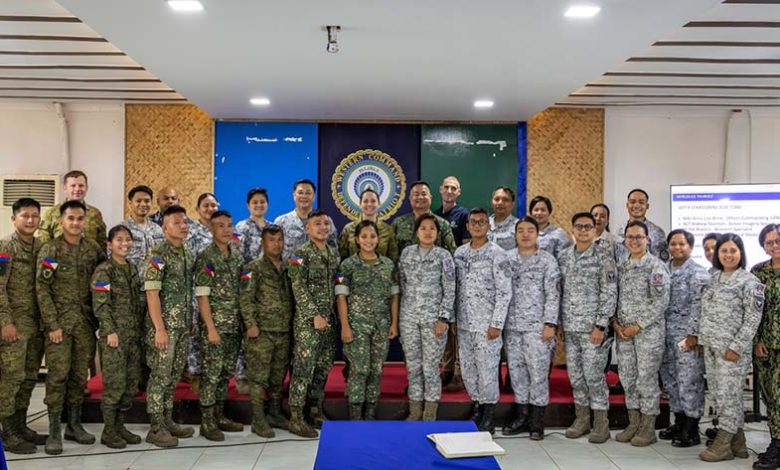
Technical alignment is supported by operational initiatives such as the Joint Australian Training Team-Philippines program. The Australian Defence Force (ADF) also deploys training teams to nations including PNG and Vanuatu.
In collaboration with the United Nations Office on Drugs and Crime, Australia deploys maritime cybersecurity training cohorts to Malaysia to support Southeast Asian partners.
Operationalizing maritime law is another focus of Canberra’s outreach, with the ADF’s Indo-Pacific Centre for Military Law deploying teams to nations such as Sri Lanka to provide training on using surveillance data during maritime intercepts.
Beyond technical proficiency, Australia’s defense education programs emphasize personal networks. “Officers who have worked together in classrooms, exercises and practical assessments are more likely to recognize one another’s professional judgment and understand how they approach uncertainty,” Sharma said.
Ultimately, Australia’s educational and operational initiatives seek to transform isolated national data into shared operational awareness across the Indo-Pacific.
Peter Parson is a FORUM contributor based in Hamilton, New Zealand.