Bridging Regions
A partnership among Australia, Indonesia, Papua New Guinea and Timor-Leste could anchor regional stability

Ridvan Kilic
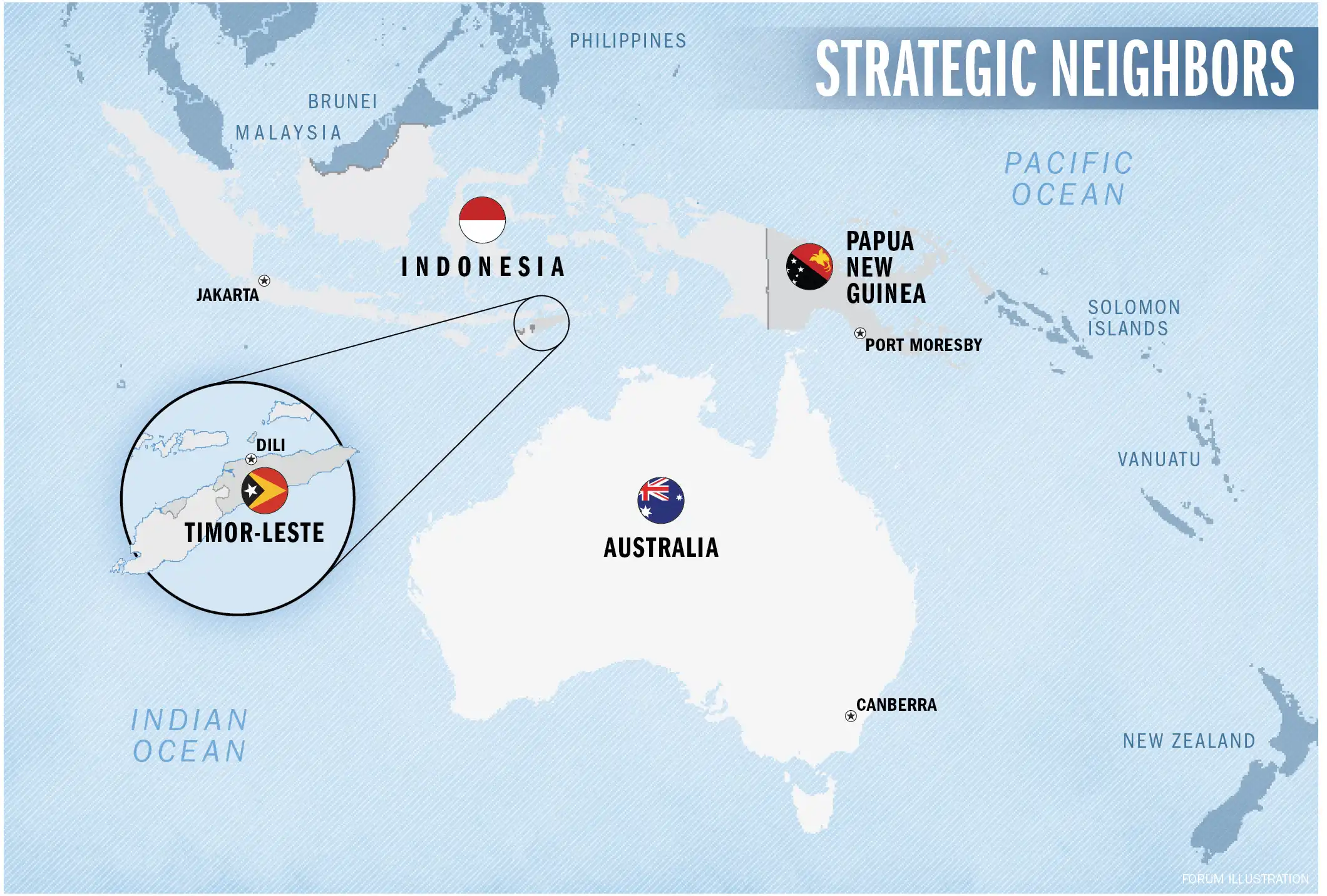
Amid growing uncertainty in the Indo-Pacific, Australia has a timely opportunity to forge a high-level quadrilateral partnership with its three most strategically important neighbors — Indonesia, Papua New Guinea (PNG) and Timor-Leste. Distinct from Australia’s established partnership with India, Japan and the United States, known as the Quad, the proposed arrangement reflects a regionally grounded approach to cooperation focused on Canberra’s immediate strategic environment.
Building on the momentum of recent trilateral arrangements, the four-nation framework would institutionalize cooperation across a spectrum of security challenges. Beyond a diplomatic initiative, it would reinforce the centrality of the Association of Southeast Asian Nations (ASEAN) and support PNG’s growing engagement with the 11-nation bloc, of which Indonesia and Timor-Leste are members. It also strengthens ASEAN maritime security, leveraging regional frameworks to enforce a secure Indo-Pacific backed by international law. In doing so, the quadrilateral partnership could complement ASEAN-led mechanisms such as the ASEAN Regional Forum and the ASEAN Defence Ministers’ Meeting Plus, bolstering rather than competing with existing institutional architecture.
Analysts consider the concept timely and grounded in shared interests. “The quadrilateral initiative … is a visionary initiative that represents a regional geostrategic repositioning that will not only strengthen the ties and closeness among the four — with a combined population of around 329 million inhabitants — it will also directly reinforce the spirit of collaboration for common interests and challenges in the sectors of land-sea border security, cybersecurity, policing, transnational crime, defense infrastructure development, IUU [illegal, unreported and unregulated fishing] and maritime security,” said Jose Turquel, a foreign policy expert and former senior advisor to Timor-Leste’s Ministry of Foreign Affairs and Cooperation. He added that the initiative “will uphold ASEAN’s centrality in the vast and volatile Indo-Pacific region.”
Australia has identified the Pacific and maritime Southeast Asia as the country’s primary areas of defense interest, underscoring the importance of its immediate neighborhood. Consequently, strong relations with Indonesia, PNG and Timor-Leste are a strategic necessity and a diplomatic imperative. This is particularly evident as regional cohesion is tested by geopolitical competition, alongside a range of persistent and emerging security challenges. This includes territorial disputes in the South China Sea, instability stemming from the protracted Myanmar civil war, tensions along the Cambodia-Thailand border and internal security concerns such as tribal violence in parts of PNG. In this environment, closer communication, consultation and cooperation among neighboring states represents a long-term investment in shared stability, resilience and crisis response capability.
Australia’s strategic interests in the region closely align with those of its northern neighbors. All four democracies share a commitment to upholding international laws and norms in the Indo-Pacific and support ASEAN’s central role in shaping a peaceful, stable and prosperous region where sovereignty and international law are respected. Strengthening relationships among the four countries, therefore, presents an opportunity to build momentum toward a more structured, though still informal, quadrilateral partnership that reflects shared priorities.
GROWING CONSENSUS
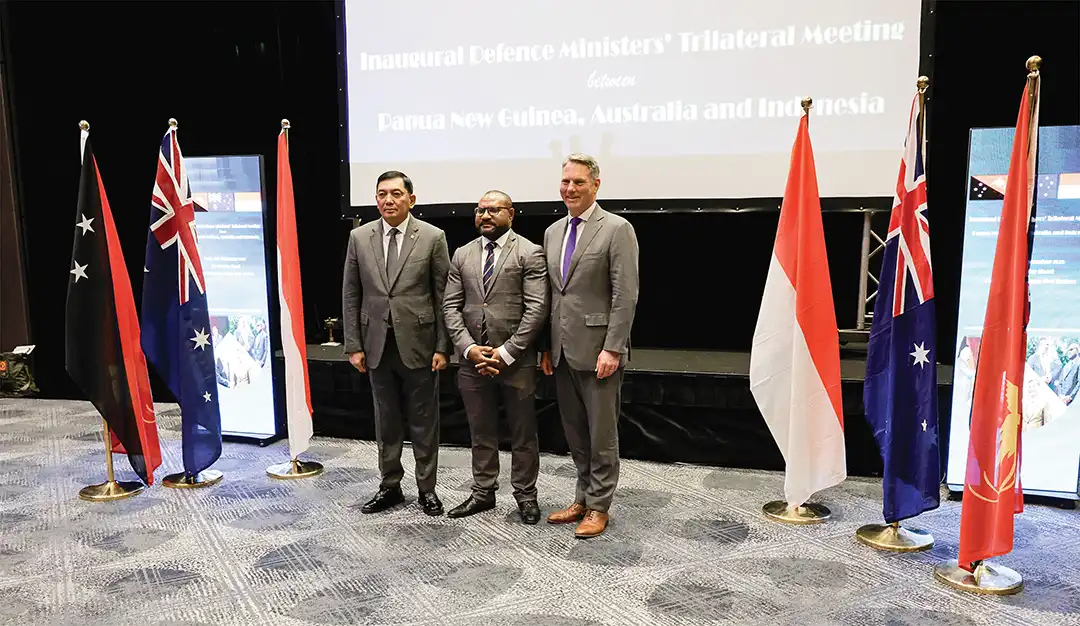
Recent years have brought meaningful developments at the trilateral level. The Australia-Indonesia-PNG partnership has taken shape at the defense ministerial level, reflecting a growing convergence of interests, particularly in maritime security and disaster response. At the same time, the Australia-Indonesia-Timor-Leste relationship is well established at the foreign ministerial level, providing a platform for diplomatic coordination and policy alignment. Beyond these arrangements, all four countries have engaged in quadrilateral cooperation through the Arafura and Timor Seas Ecosystem Action (ATSEA) program, which aims to protect shared marine resources, enhance biodiversity conservation and improve coastal livelihoods across that maritime region.
Under ATSEA’s Strategic Action Programme 2024-2033, the four countries are addressing IUU fishing through improved coastal and marine governance, strengthened enforcement mechanisms, and sustainable resource management. Beyond the environmental dimension, the initiative highlights the practical security benefits of deeper coordination. Turquel said the proposed quadrilateral “will undoubtedly create economic opportunities for the four countries and [their] people and is the most beneficial for both Timor-Leste and PNG, particularly in combating illegal activities” around the nations’ exclusive economic zones (EEZ), while also deepening cooperation under existing frameworks such as ATSEA.
Importantly, the quadrilateral concept would not replace or overshadow existing bilateral or trilateral arrangements. Rather, it is designed to complement and enhance these mechanisms by providing a platform for coordination without requiring a formal, treaty-based security alliance. This flexible, nonbinding approach is particularly suited to the region’s political and strategic sensitivities, especially for countries such as Indonesia that prioritize autonomy.
Under such an arrangement, annual leaders’ and ministerial-level summits could be convened, with the ASEAN Secretariat invited as a permanent guest to ensure alignment with regional frameworks. Talks could address an array of shared interests and challenges, including border security, cybersecurity, policing, peacekeeping, humanitarian assistance and disaster response, climate change and energy transition, health and food security, transnational crime, intelligence cooperation, defense infrastructure development, coastal and marine governance, subsea cable connectivity, IUU fishing, and maritime security. Over time, such institutionalized engagement could foster trust, improve interoperability and enhance collective responses to traditional and nontraditional threats.
Analysts see the initiative as a bridge between Southeast Asia and the Pacific, helping to connect two regional systems that often operate in parallel rather than in coordination. “A quadrilateral arrangement between Australia, Indonesia, PNG and Timor-Leste could be a first realistic step for a larger regional minilateral cooperation that includes ASEAN and the [18-member] Pacific Islands Forum,” said Aristyo Rizka Darmawan, a foreign policy scholar and assistant professor of international law at the University of Indonesia. That could help “forge closer ties between the two major regional organizations,” strengthening collective security and advancing shared interests.

SECURING THE SEAS
Maritime security cooperation is likely to be at the forefront of a quadrilateral initiative. The concept envisions joint maritime patrols, coordinated surveillance, regular military exercises, training programs and reciprocal port visits to enhance interoperability and maritime domain awareness. A task force could be established to assess cooperation opportunities on a nonbinding, case-by-case basis. As part of this mechanism, communications tools such as real-time information sharing and hotlines could prevent illegal incursions into territorial waters, disrupt transnational criminal networks and improve coordinated crisis response.
Those initiatives would particularly benefit PNG and Timor-Leste, which have limited maritime enforcement capabilities. IUU fishing costs PNG an estimated $260 million and Timor-Leste about $300 million each year. Strengthening maritime enforcement through coordinated patrols, shared intelligence and training support would deliver economic and security benefits, while contributing to the long-term sustainability of marine resources.
Australia plays a leading role in supporting PNG’s maritime and defense capabilities through long-term initiatives such as the Pacific Maritime Security Program (PMSP), including providing patrol boats to enhance PNG’s ability to monitor its vast maritime domain and counter transnational crime and IUU fishing. Bilateral ties have deepened through agreements such as the October 2025 mutual defense pact, known as the Pukpuk Treaty. The agreement is Canberra’s first formal security alliance since the 1951 ANZUS Treaty with New Zealand and the U.S., highlighting PNG’s increasing importance. The Pukpuk Treaty was signed as PNG marked the 50th anniversary of its independence from Australia.
Similarly, Australia’s defense cooperation with Timor-Leste has expanded significantly in recent years. The 2022 Defence Cooperation Agreement strengthened security ties, particularly in the maritime domain, by facilitating joint training, operational coordination and personnel exchanges. In early 2026, the nations announced the New Partnership for a New Era initiative, reaffirming cooperation across shared priorities, including maritime security, defense infrastructure and combating transnational crime such as human trafficking.
Since achieving independence in 2002, Timor-Leste has pursued a foreign policy focused on securing ASEAN membership — which it did in October 2025 — and maintaining strong ties with Australia and Indonesia. Its strategic location between Southeast Asia and the Pacific gives it a unique role in bridging regional dynamics, making its participation in a quadrilateral framework particularly valuable.

boat HMAS Albany sail during Exercise Paradise in Papua New Guinea in October 2025. The Ted Diro was presented to the PNGDF under Canberra’s Pacific Maritime Security Program. AUSTRALIAN DEFENCE DEPARTMENT
INTEGRATING OPERATIONS
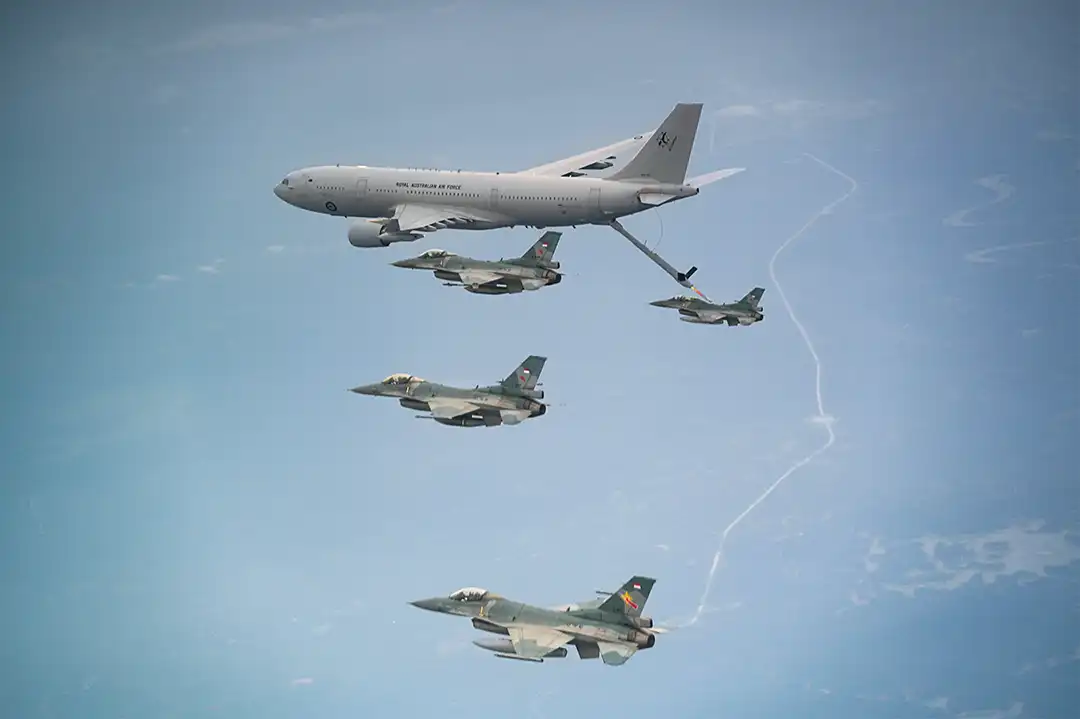
Indonesia is a central pillar of the proposed four-nation framework. Australia shares its longest maritime boundary with Indonesia, and the bilateral relationship has evolved significantly in recent decades. Agreements such as the 2018 Comprehensive Strategic Partnership and the 2006 Lombok Treaty, which focuses on security cooperation, set the groundwork for deeper collaboration.
The February 2026 signing of the Australia-Indonesia Treaty on Common Security, also known as the Jakarta Treaty, expands consultation mechanisms at the leader and ministerial levels, enabling regular talks on shared security challenges. In addition, there are plans to embed Indonesian Armed Forces officers with the Australian Defence Force and to jointly develop training facilities in strategically important locations such as Morotai, an island in Indonesia’s North Maluku province. Such initiatives reflect growing trust and operational integration.
Jakarta traditionally has avoided formal security alliances in favor of a “free and active” foreign policy that emphasizes strategic autonomy and balanced engagement with major powers. The policy seeks to give Jakarta flexibility and independence to diversify its partnerships in accordance with national interests. Indonesia has trilateral partnerships with Australia and PNG; Australia and India; Australia and Timor-Leste; and Malaysia and the Philippines, and is considering a similar grouping with Australia and Japan.
Jakarta’s nonaligned approach has been tested in recent years by China’s increasing assertiveness in Indonesia’s EEZ in the North Natuna Sea, where Beijing’s illegal territorial claims have heightened tensions. Although Indonesia maintains economic ties with China, it remains cautious about Beijing’s strategic intentions.
In this context, closer cooperation with regional partners such as Australia, PNG and Timor-Leste lets Indonesia strengthen its security posture without formally aligning with a major power bloc. An informal quadrilateral framework provides a pragmatic avenue for cooperation that aligns with Indonesia’s foreign policy principles while enhancing regional resilience.
‘OVERLAPPING INTERESTS’
The quadrilateral partnership also would reinforce ASEAN’s centrality in the Indo-Pacific. Australia has long viewed ASEAN as the cornerstone of regional stability, becoming its first dialogue partner in 1974. Over time, this relationship has deepened significantly, including through the long-standing ASEAN-Australia-New Zealand Free Trade Area agreement and the elevation of ASEAN-Australia ties to a Comprehensive Strategic Partnership in 2021.
Despite differences in size, capabilities, political systems and historical experience, Australia, Indonesia, PNG and Timor-Leste have converging priorities and concerns. “In a more interconnected and contested world, what they have in common is drawing them more closely together than ever before,” said John Blaxland, professor of international security and intelligence studies at the Australian National University. “They share geography, but also a set of overlapping interests in security, stability and prosperity.”
Blaxland noted that quadrilateral cooperation could extend beyond traditional security domains to areas such as trade, education and cultural exchanges, and may eventually expand to include regional partners such as Malaysia, New Zealand, the Philippines and Singapore. Such an evolution would reflect the growing importance of flexible, issue-based coalitions in addressing complex regional challenges.
Ultimately, Australia’s focus on strengthening ties with its immediate neighbors reflects a broader shift toward flexible cooperation in an increasingly complex and multipolar Indo-Pacific. An Australia-Indonesia-PNG-Timor-Leste partnership would not only enhance collective security in the strategically important Arafura-Timor corridor but also it would reinforce the growing role of minilateralism in shaping a stable, inclusive and resilient region.