Foundational Support
FORUM Staff
Uncurl the Philippines’ serpentine shoreline from the archipelago’s 7,600 islands and it would stretch more than 36,000 kilometers, almost enough to circumnavigate the equator. Safeguarding the waters around one of the world’s longest coastlines is a leviathan mission. It is not one, however, that Manila must accomplish alone.
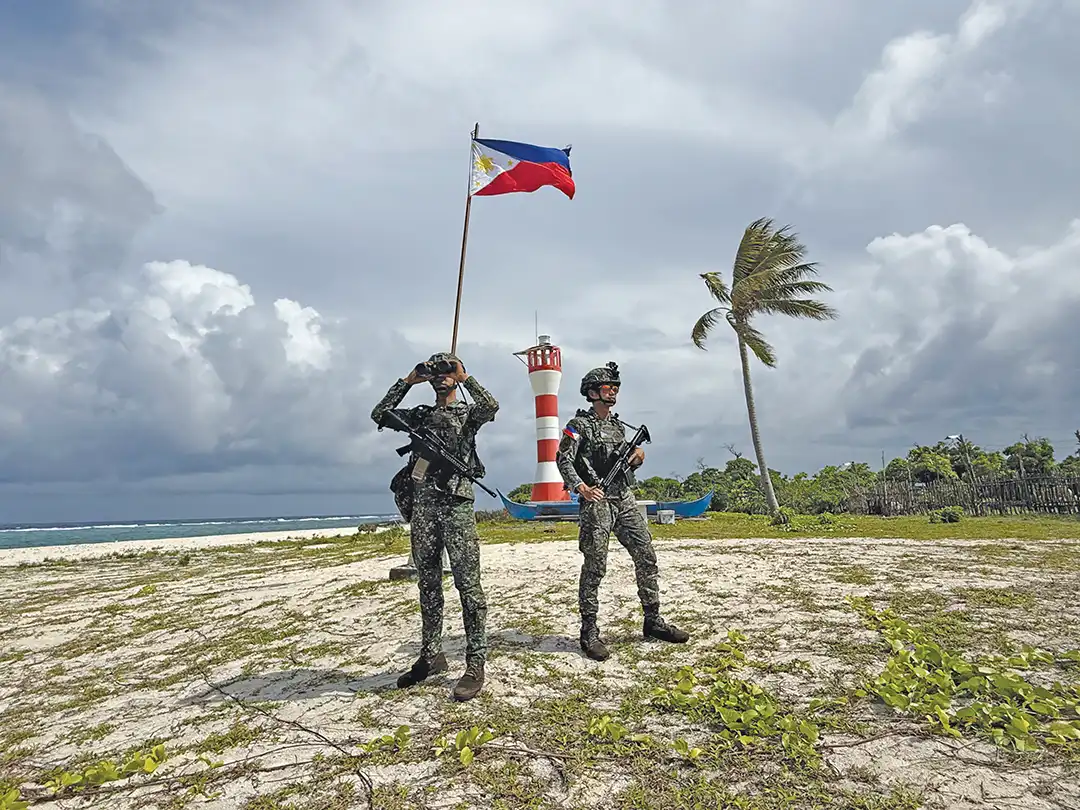
Since 2023, Japan’s Official Security Assistance (OSA) initiative has provided the Philippines with defense assets to enhance maritime domain awareness as Manila confronts China’s gray zone coercion and militarization of South China Sea reefs. In January 2026, Manila and Tokyo announced a $5.6 million agreement to build boathouses and slipways for the Philippine Navy, the OSA’s first infrastructure project. Weeks later, Japan presented the Philippines with five coastal surveillance radar systems in an agreement valued at $3.8 million. The “milestone marks a significant step in strengthening the Philippines’ maritime domain awareness and coastal defense capabilities,” the Philippine National Defense Department stated.
“At a time when the security environment is becoming increasingly complex and difficult, strategic challenges in the region serve as a clear reminder that peace and stability cannot be taken for granted. It must be actively and collectively sustained,” Kazuya Endo, Japan’s ambassador to the Philippines, said during the February handover ceremony in Manila. “As maritime democracies positioned along vital sea-lanes, Japan and the Philippines are natural partners.
“The South China Sea is a vital sea lane for many countries through which a large portion of our trade and energy supplies pass,” he said, according to the Philippine News Agency. “Safety, openness and stability of these waters are therefore of direct importance to our own security and prosperity. Enhancing the Philippines’ maritime domain capability is not only an investment in the Philippines’ security, but also a meaningful contribution to regional and global stability.”
Deterrence Network
As Japan accelerates its biggest defense buildup in decades — including doubling spending to 2% of gross domestic product — it is simultaneously enhancing the security and deterrence capabilities of Allies and Partners across the Indo-Pacific and beyond. The OSA has become a cornerstone of Tokyo’s defense diplomacy, providing equipment, supplies and infrastructure development support to the armed forces and related organizations of like-minded countries. In addition to air and coastal radar systems and rigid-hulled inflatable boats for the Philippines, OSA commitments include high-speed patrol boats for the Indonesian Navy and maritime surveillance drones for Sri Lanka.
“Through OSA, Japan complements its own defense modernization and integrates its diplomacy, defense industry and technology base into a regional deterrence architecture,” Hiroyasu Harada, chief analyst with Japan’s Network for Security Business and Technology (NSBT), told FORUM. “OSA projects, particularly the provision of maritime drones to Sri Lanka and coastal radars to the Philippines, strengthen regional deterrence and resilience on multiple levels. These initiatives go beyond mere equipment transfers, establishing the foundation for an information-sharing network that enables early responses to gray zone incidents.”
“First, they enhance deterrence,” Harada said. “Maritime drones improve Sri Lanka’s Indian Ocean surveillance, while coastal radars bolster the Philippines’ monitoring of South China Sea approaches, preempting attempts at changing the status quo by force. This creates a distributed deterrence network where recipient countries can independently alert and report, generating collective deterrence effects against China’s maritime expansion.
“Additionally, they build resilience. These assets also serve peacetime disaster monitoring and search and rescue functions, increasing resistance to hybrid threats,” he said. “Japan supports operational training through these projects and standardizes information-sharing protocols, ultimately elevating the region’s overall crisis response capabilities and reducing Japan’s own sea-lane defense burden.”
Bolstering deterrence along the first island chain is critical as authoritarian regimes in Beijing and Pyongyang agitate for strategic gain, stirring geopolitical turbulence. The string of archipelagoes stretching from Japan to Indonesia is a vital first line of defense for the United States and its Allies and Partners, who are increasing collective defense engagements. For example, Japan and the Philippines have expanded trilateral maritime patrols and other exercises with the U.S., their decades-long mutual ally, including in the South China Sea.
The resource-rich waterway, a global trade route, is a flash point as China continues to disregard a 2016 international tribunal ruling that its expansive sovereignty claims have no legal basis. Beijing’s maritime forces have harassed vessels of three of the 11 OSA partners — Indonesia, Malaysia and the Philippines — including within those nations’ internationally recognized exclusive economic zones. In announcing its two OSA projects with Malaysia, including rescue and diving support vessels, Japan noted the Southeast Asian nation’s location along the Malacca Strait. The maritime choke point links the Indian and Pacific oceans and is one of the world’s busiest shipping routes.
For Japan, the OSA represents a strategic pivot to shaping the regional security architecture through capacity building, according to Dr. Stephen Nagy, a professor at Tokyo’s International Christian University and a visiting fellow with the Japan Institute of International Affairs. “Every radar system installed and drone deployed creates a web of technical personnel who train together, share operational pictures and develop common procedures — this is grassroots interoperability that matters more than high-level agreements,” he told FORUM. “These daily interactions build the muscle memory of cooperation that can be activated in crisis. More fundamentally, when Japan’s equipment helps [nations] push back against intimidation, it creates trust that can’t be bought. It must be earned through shared risk.”
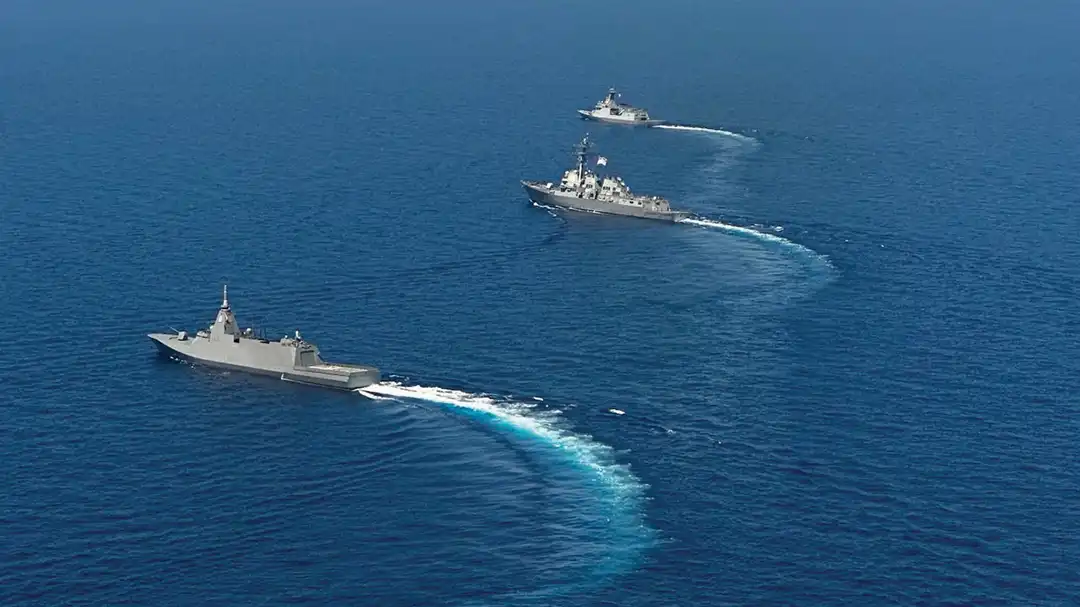
ARMED FORCES OF THE PHILIPPINES/THE ASSOCIATED PRESS
Shared Vision
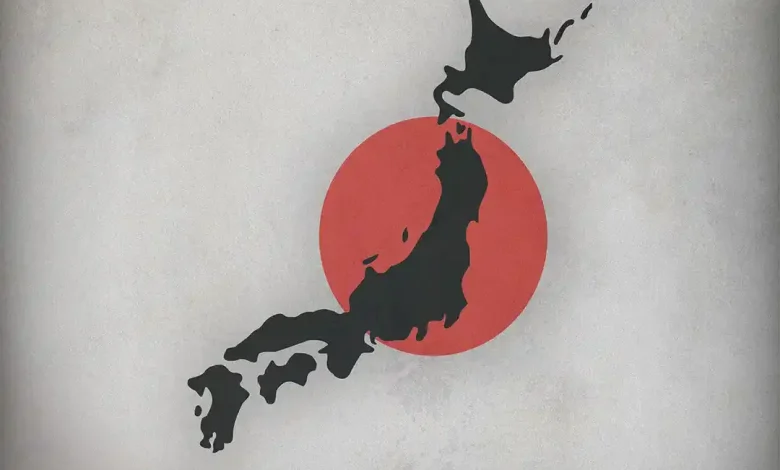
The OSA initiative was unveiled in late 2022 as part of Tokyo’s National Security Strategy, which also called for hiking defense spending over five years. “As Japan is finding itself in the midst of the most severe and complex security environment since the end of World War II, it is essential for us to drastically strengthen our own defense capabilities as well as enhance the security and deterrence capabilities of like-minded countries in order to prevent unilateral attempts to change the status quo by force, ensure the peace and stability of the Indo-Pacific region in particular, and create a security environment desirable for Japan,” the Foreign Affairs Ministry stated.
The program mirrors Japan’s Overseas Development Assistance (ODA), which was established in the 1950s to provide partner nations with funding for roads, dams and other civilian infrastructure. To comply with Japan’s arms export controls, OSA projects are limited to fields not directly related to international conflict, such as monitoring and surveillance, counterterrorism and counterpiracy, and disaster response.
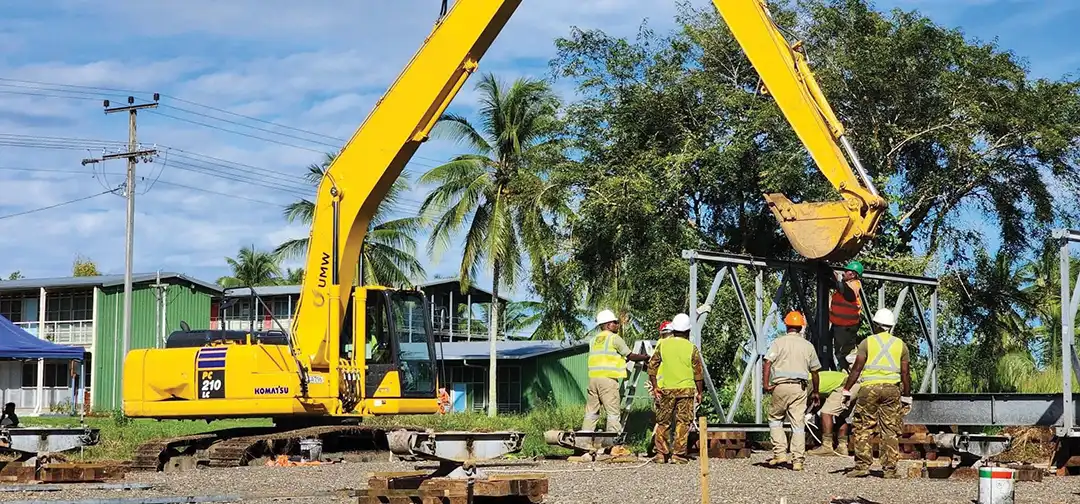
PAPUA NEW GUINEA DEFENCE FORCE
Program partners are selected based on factors such as “democracy, rule of law and respect for fundamental human rights,” and include:
- Bangladesh – patrol boats to strengthen monitoring and surveillance capabilities, and disaster response.
- Djibouti – coastal radar system and related infrastructure to secure sea-lanes off the Horn of Africa. Djibouti hosts the Japan Self-Defense Forces’ only overseas base, which conducts counterpiracy operations. The U.S. and China also have military bases in the East African nation.
- Fiji – patrol boats and related equipment for surveillance and disaster response, as well as ambulances and other emergency medical equipment to support joint military medicine projects by the nations’ forces. At their November 2025 summit in Tokyo, Fijian Prime Minister Sitiveni Rabuka and Japanese Prime Minister Sanae Takaichi affirmed the importance of “facilitating OSA as a new form of collaboration to enhance security cooperation.”
- Papua New Guinea – heavy engineering equipment for disaster response and infrastructure development. The agreement, which coincided with the 50th anniversary of the nations’ diplomatic ties in 2025, complements projects between the Japan Ground Self-Defense Force (JGSDF) and the Papua New Guinea Defence Force.
- Thailand – disaster response, and maritime search and rescue equipment.
- Tonga – military uniforms and uncrewed aerial vehicles. “We expect these drones to play a significant role in enhancing Tonga’s surveillance and disaster relief capabilities, contributing to your efforts to counter illegal, unreported and unregulated fishing, and illegal drug trafficking,” Hisao Inagaki, Japan’s ambassador to Tonga, said at the December 2025 signing ceremony. Crown Prince Tupouto’a ‘Ulukalala, the Pacific island nation’s minister for the armed forces and foreign affairs, highlighted Tokyo’s support for “enhancing the Kingdom’s capability with quality equipment and investment,” contributing to the safety and prosperity of Tonga’s maritime domain.
The OSA marks a significant shift in Tokyo’s foreign assistance policies, according to Jumpei Ishimaru, an analyst with the International Institute for Strategic Studies’ Japan Chair Program. “Japan has selected recipient countries which align with its [Free and Open Indo-Pacific] vision and which are located in strategic areas, such as near the sea-lanes between the Indian Ocean and the Pacific, and between Japan and the South Pacific,” he wrote in 2024 for the United Kingdom-based think tank.
Expanding Network
Japan’s OSA commitments, which had surpassed $73 million as of mid-2026, are part of the nation’s deepening engagement in Indo-Pacific deterrence, including deploying domestically developed, extended-range missiles in early 2026 to enhance counterstrike capabilities. The overall defense budget hit a record $66.5 billion for fiscal year 2026, placing Japan among the world’s top 10 spenders.
Tokyo also is expanding reciprocal access agreements with partners such as Australia and the Philippines. The bilateral pacts enable deployment of each nation’s forces to the other’s territory for joint exercises, disaster response and other missions to enhance interoperability. For example, about 1,400 JGSDF Soldiers participated in the annual Balikatan drills in the Philippines in April and May 2026, the first time Tokyo deployed ground troops to the Philippines-U.S. exercise, which included eight fully participating nations.
“Across the Indo-Pacific, networks of security cooperation involving Japan, the United States, Australia, and other partners are steadily expanding,” Jun J. Nohara, an associate professor of international relations at Japan’s Kyoto Sangyo University, wrote for The Diplomat magazine in March 2026. “Each new agreement adds another layer to this emerging architecture. Taken together, these partnerships may gradually raise the costs of coercion — and make Beijing think twice before escalating its actions.”
As it broadens its network of partners, Japan also is expanding the OSA. Tokyo allocated about $115 million for the program in the fiscal year that ends March 2027, more than doubling annual spending, with Southeast Asian nations including Cambodia, Laos and Vietnam considered priority candidates, The Straits Times reported. “Each project will get bigger in scale,” a senior Japanese official told the Singapore-based newspaper in early 2026. “We are responding to requests from partner countries or candidate countries for higher-performance and higher-quality equipment, especially for surveillance purposes, like radars or unmanned aerial vehicles.”
Japan is pursuing three interlocking goals through the OSA, said Nagy, the Tokyo-based professor: “Denying China the ability to dominate maritime choke points, creating early warning systems for the first island chain and building political capital that translates into diplomatic alignment when push comes to shove.”
The program “systematically enhances interoperability and trust between Japan and recipient countries over the long term through post-transfer maintenance and operational training, joint exercises, and standardization of information-sharing protocols,” said Harada, the NSBT’s chief analyst. “Japan’s expanding Official Security Assistance role strategically transforms the Indo-Pacific power balance into a multipolar, distributed deterrence model.”
Japan’s Investments in Regional Security
Japan’s Official Security Assistance program, established as part of the 2022 National Security Strategy, has provided defense assets, equipment and infrastructure development support to the armed forces and related organizations of like-minded countries across the Indo-Pacific and beyond. The initiative, which has committed more than $73 million in assistance since 2023, strengthens the security and deterrence capabilities of partners, including:
- Bangladesh: patrol boats ($3.6 million)
- Djibouti: coastal radar system ($6.9 million)
- Fiji: patrol boats; ambulances and other emergency medical equipment ($5 million)
- Indonesia: patrol boats ($6.2 million)
- Malaysia: rescue boats; diving support vessel ($21.9 million)
- Papua New Guinea: heavy engineering equipment ($2.5 million)
- Philippines: air and coastal radar systems; patrol boats; boathouses and slipways ($19.4 million)
- Sri Lanka: maritime surveillance drones ($3.1 million)
- Thailand: disaster response, and maritime search and rescue equipment ($3.1 million)
- Tonga: military uniforms; uncrewed aerial vehicles for surveillance and disaster response ($1.8 million)
FORUM correspondent Felix Kim contributed to this report.