Monumental Gamble
FORUM Staff
For much of the past decade, defense experts have warned that China is approaching the military capability to seize Taiwan by force. The argument seems straightforward: China’s economic rise has fueled rapid military modernization, and its leader, Chinese Communist Party (CCP) General Secretary Xi Jinping, has explicitly tied national rejuvenation to unification with Taiwan, setting a goal of 2027 as a deadline to be ready for a potential invasion. Military exercises around the democratic, self-governed island have grown in scale and frequency, and the People’s Liberation Army (PLA) has unveiled increasingly sophisticated weapons systems.
Yet this narrative oversimplifies complex realities, analysts say. Beneath the outward display of strength lies a military institution grappling with deep structural weaknesses that strike at the core of combat effectiveness. Corruption, political purges, command instability, limited operational experience and the extraordinary difficulty of amphibious warfare cast doubt on the PLA’s readiness to invade Taiwan, an island of 23 million people with an increasingly well-equipped military.
Xi’s attempts to strengthen and discipline the PLA have exposed its vulnerabilities. He has produced a force that appears modern and powerful but is immature and unproven in war.
The Amphibious Challenge
A cross-strait invasion of Taiwan would represent one of the most difficult military undertakings in modern history, analysts say. Amphibious operations demand a rare combination of planning, coordination and sheer logistical capacity. Historical precedents such as the Allied landings in Normandy in World War II or the United States operation at Inchon during the Korean War succeeded only after years of preparation, overwhelming superiority and favorable strategic conditions.
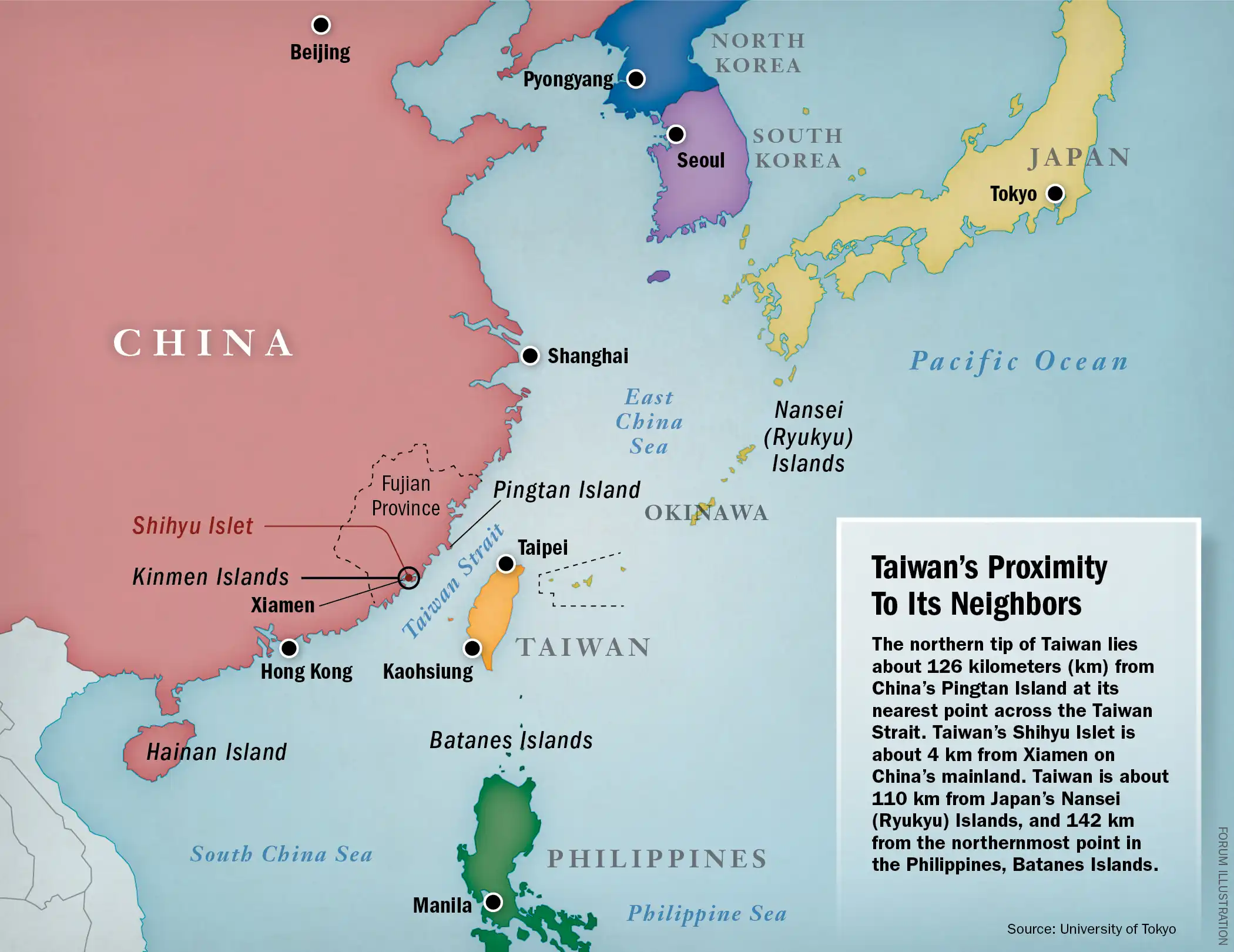
The Taiwan Strait presents a harsh environment. Stretching roughly 126 kilometers at its narrowest point between mainland China and Taiwan, it endures unpredictable weather patterns and strong currents that complicate large-scale troop movements. Taiwan’s coastline offers few suitable landing beaches, all of which are well-mapped, fortified and covered by defensive fire.
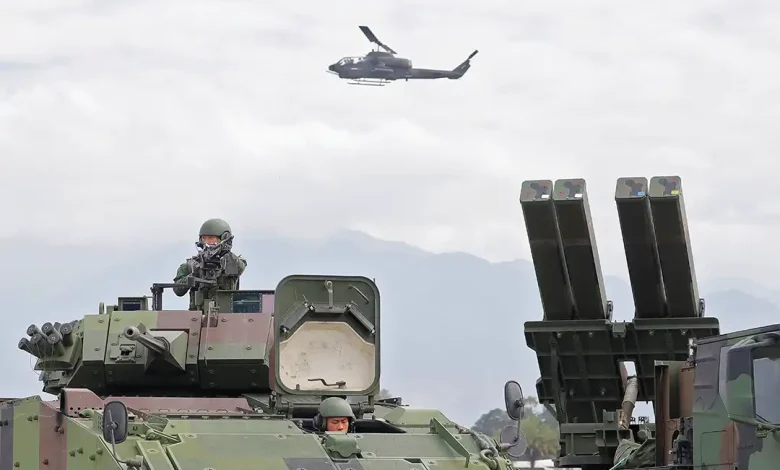
Taiwan has spent decades preparing for such a scenario. Its defense strategy emphasizes denial, focusing on anti-ship missiles, coastal defenses, mobile artillery, uncrewed systems and hardened infrastructure designed to slow and disrupt an invading force. Any PLA landing would be contested from the moment it began, and likely before.
Even Chinese analysts acknowledge the inherent difficulty of such an operation. An ongoing war-gaming project modeled on the estimated 2027 capabilities of Allies and adversaries determined that a Taiwan invasion would be “extremely risky” for China. In its initial study released in 2023, the Center for Strategic and International Studies (CSIS), based in Washington, D.C., ran its war game 24 times, factoring in a range of conditions, assumptions and uncertainties. In most scenarios, the U.S., cooperating with Japan and Taiwan, defeated a conventional amphibious invasion by China and maintained Taiwan’s self-governance.
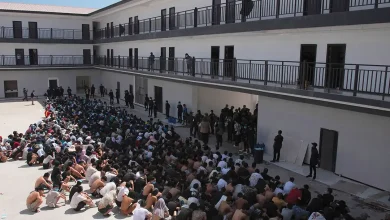
“Our conclusion was we could sustain defense of an amphibious invasion at very high costs [to the U.S., Japan and Taiwan], but that China would also lose a lot,” retired U.S. Marine Corps Reserve Col. Mark Cancian, a senior advisor with the CSIS International Security Program, told FORUM. The costs to China would include more than expensive equipment and lives. “It might threaten CCP rule, including Xi’s rule. It’s not a riskless operation for them.” If China fails to occupy Taiwan, “there would be 20,000 to 30,000 PLA prisoners paraded in Taipei,” said Cancian, a co-author of the study.
The CSIS assessment reflects the number of simultaneous objectives the PLA would need to achieve in an amphibious invasion. It would have to establish air superiority, neutralize Taiwan’s naval and missile defenses, transport large numbers of troops across contested waters, and rapidly secure ports to sustain follow-on forces. All of this would need to occur under the threat of external intervention. While complexity alone does not preclude such an operation, it does raise the threshold for success to a level that only the most capable and cohesive military could achieve. The PLA has not demonstrated that level of capability, military experts say.
Since the CSIS study’s release, the team has run about 80 iterations, including evaluating the use of nuclear weapons and different types of blockades, and is continuing its research. The lead authors believe the study’s core conclusions hold for the near future, said Eric Heginbotham, co-director of the war-gaming lab at the Massachusetts Institute of Technology’s Security Studies Program and Cancian’s co-author. On the surface, after U.S. combat operations in Iran and the ongoing costs of the Russia-Ukraine conflict, some aspects of an amphibious invasion may look more favorable to China. For example, some U.S. munitions heavily relied upon in Iran may take many months to replenish to optimal levels, Heginbotham told FORUM, yet “none of this is to say that [the prospect of a Taiwan invasion] looks good for the Chinese perspective.”
A January 2026 study by the German Marshall Fund was even less favorable for China. It predicted the PLA could suffer up to 100,000 fatalities in a conflict with Taiwan, with hundreds of thousands of additional military personnel wounded, captured or missing. The study, “If China Attacks Taiwan,” by the U.S.-based think tank, evaluated two scenarios: a minor conflict of several weeks of Chinese blockades and air and maritime confrontations between the PLA and Taiwan that ends with a bilateral agreement to de-escalate; and a major monthslong war involving Japanese and U.S. forces that ends in “the humiliation of a defeat” for China. In the latter, Beijing would incur multitrillion-dollar economic losses, international sanctions and significant social unrest, the authors said.
Other conditions that evolved in the past year work against China’s probable success. For a start, Japan is more likely to enter any conflict, Heginbotham said. Tokyo also is better prepared to do so than ever.
Given its geographical proximity, Japan views a Taiwan contingency as a direct threat to its security. In recent years, through its revamped National Defense Strategy, Japan has significantly increased its defense spending and posture, especially in its southwest Nansei, or Ryukyu, island chain, which stretches from southern Kyushu to Taiwan and includes Okinawa. There it has enhanced air, sea and land capabilities as well as evacuation infrastructure to ensure readiness. Those investments compound the risk in Beijing’s calculation.
In early 2026, the U.S. demonstrated its ability to conduct intricate operations that no other military can do while forces also gained even more combat experience in operations in Iran and Venezuela. “Although no one can read the psyche of Xi, on balance, I think [such combat operations] would give him pause and he’d be more cautious,” Cancian said.
Corruption: A Persistent Structural Weakness
One of the most significant obstacles to PLA readiness is corruption. This is a deeply embedded problem that has persisted despite repeated attempts at reform. For years, reports have documented widespread graft within the PLA. Procurement processes have been particularly vulnerable, with funds diverted, contracts manipulated and equipment quality compromised. Promotions have reportedly been influenced by bribery rather than merit, undermining the professional integrity of the officer corps.
The consequences are profound. A military plagued by corruption is incapable of reliably assessing its own readiness. Training reports may be falsified, equipment performance exaggerated and weaknesses concealed from senior leadership. Such distortions can prove fatal in conflict. “If military leaders are corrupt or politically unreliable, that inherently leads to problems of readiness,” Lyle Morris, an expert on the Chinese military at the New York-based Asia Society Policy Institute, told The Washington Post newspaper. Corruption wastes resources, erodes trust, distorts decision-making and undermines military effectiveness.
Recent investigations underscore the severity of the problem. Allegations of corruption within the PLA Rocket Force, which is responsible for China’s strategic missile arsenal, raised concerns about the reliability of critical systems. In a conflict, uncertainty about missile performance could have cascading effects across an operational plan.
Reports in 2026 have highlighted technical failures of Chinese-made radar, missiles and drones in combat operations in Iran, Pakistan and Venezuela. Beijing, for instance, sold its JY-27A long-range air surveillance and guidance radar to several nations claiming it could detect stealth aircraft at nearly 400 kilometers. In Venezuela, the radar failed to detect U.S. fighter jets and other aircraft, allowing special operations forces to fly helicopters to the nation’s capital, Caracas, without resistance, according to Gen. Dan Caine, chairman of the U.S. Joint Chiefs of Staff. In May 2025, a four-day skirmish between India and Pakistan revealed the poor performance of Chinese-produced systems used by Pakistan’s military.
Accounts also have surfaced about the compromised performance of China’s J-20 stealth aircraft, which, if confirmed, could single-handedly stymie any Taiwan invasion plans. Now-deposed PLA officers, weapons scientists and defense industry executives, including the aircraft’s designer, reportedly falsified test data to cover the fighter jet’s shortcomings, according to sources, including the Global Defense Corp. The falsifications may also have undermined development of China’s counterstealth radar, analysts say.
Xi’s Purges: Discipline Through Disruption
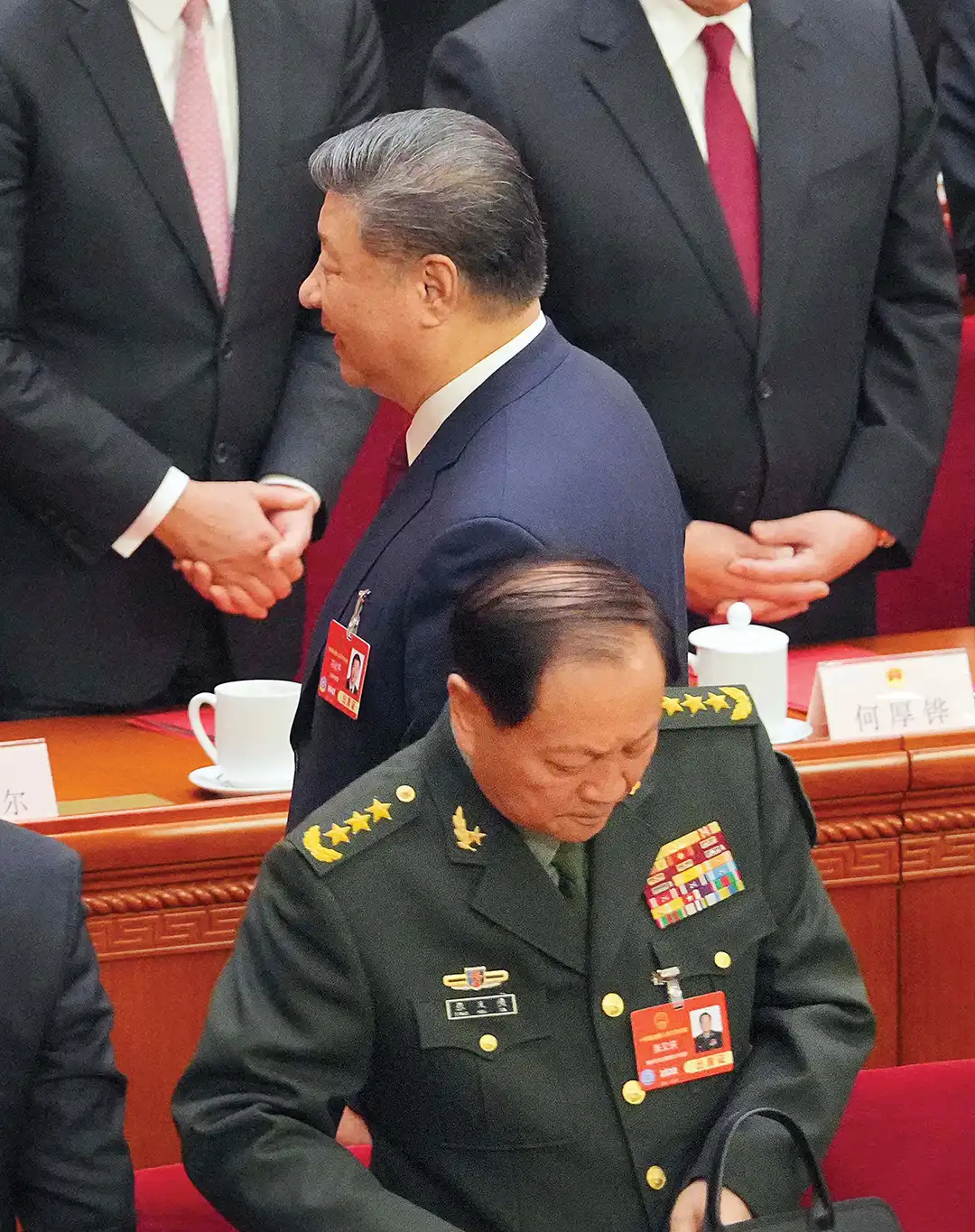
In response to such systemic issues, Xi launched an extensive anti-corruption campaign within the PLA. While intended to restore discipline and loyalty, the campaign has had far-reaching and often destabilizing consequences. Since 2022, more than 100 senior PLA officers have been cast aside or gone missing, according to the CSIS China Power Project report. These include high-ranking figures within the Central Military Commission (CMC), theater commands and key operational units such as the Rocket Force, which span China’s armed forces.
In January 2026, China’s National Defense Ministry announced investigations into Gen. Zhang Youxia, the PLA’s top general and CMC vice chairman, and Gen. Liu Zhenli, the CMC Joint Staff Department’s chief of staff, for “serious disciplinary and legal violations.” Their ouster left only one general, Zhang Shengmin, serving on the CMC alongside Xi. The fate of Zhang and Liu, like many of their purged colleagues, remains unknown, but they disappeared from public view.
Their timeline for PLA joint operations training did not align closely enough with Xi’s deadline for the PLA to be capable of invading Taiwan, according to K. Tristan Tang, co-founder of the Taiwan Defense Studies Initiative. “Although the probability of achieving the 2027 Taiwan invasion capability remains extremely low, Xi Jinping will likely appoint successors who are willing to execute his military blueprint in place of Zhang and Liu,” Tang wrote in a January 2026 analysis for the U.S.-based Jamestown Foundation. “As a result, while the Chinese military remains unlikely to invade Taiwan in the near term, PLA training and exercise activity may become more aggressive and more frequent than in recent years.” The main reason for their removal, however, was likely because they posed a direct threat to Xi’s authority, Tang wrote.
In the meantime, Xi’s purge has significantly disrupted the PLA’s command structure and operational readiness, according to a February 2026 report by the London-based International Institute for Strategic Studies (IISS). Leadership positions have been vacated or filled by officers with limited experience at the highest levels of command. In some cases, entire chains of command have been reshaped. “From an organisational perspective, until the vacancies are filled, the PLA is operating with serious deficiencies in its command structure,” IISS said in its annual Military Balance survey.
Beyond structural disruption, the purge has damaged morale and trust. Military effectiveness depends not only on equipment and doctrine but also on the cohesion and confidence of personnel. “The purges will also aggravate existing strains in party-army relations,” Dr. Phillip Saunders, an expert on Chinese military affairs at the National Defense University, wrote in the February 2026 issue of The Interpreter, a publication of the Australia-based Lowy Institute think tank. “Xi’s confidence in the less experienced leaders running the PLA will be limited, and he is well aware that his generals may be reluctant to offer honest assessments of PLA readiness for war. These factors decrease the likelihood that Xi will be willing to roll the dice on a Taiwan invasion.”
The PLA’s challenge is not merely to replace purged officials but also to rebuild trust within its ranks. This process cannot be rushed, and it is unlikely to be achievable in the near term, analysts said.
The Experience Gap: An Untested Force
The PLA’s lack of combat experience is a critical limitation. The last major conflict involving Chinese forces occurred in 1979 during the brief but intense war with Vietnam. Since then, the PLA has undergone extensive modernization but has not been tested in large-scale combat.
Training exercises, no matter how realistic, can’t replicate the chaos, uncertainty and psychological stress of war, experts say. Commanders must make decisions with incomplete information; units must operate under fire and adapt to unforeseen developments. “With the removal of Zhang Youxia and Liu Zhenli — the last senior commanders with real combat experience who rose through the ranks mostly based on merit — the professional core of the PLA has been left gutted. Their downfall is likely going to implicate all of their associates, potentially unleashing further chaos,” Dr. Zi Yang, a research fellow at the S. Rajaratnam School of International Studies at Nanyang Technological University in Singapore, explained in The Diplomat magazine.
Recent conflicts underscore the importance of experience. The performance of Russian forces in Ukraine demonstrates how a military that appears formidable can falter when confronted with the realities of warfare. Logistics failures, poor coordination and rigid command structures all contributed to outcomes that diverged sharply from prewar expectations. The PLA must contend with the possibility that similar challenges could arise in its own operations, particularly in an environment as demanding as a Taiwan invasion.
Joint Operations: Progress and Limitations
Modern warfare requires seamless integration across domains. Air, naval, ground, cyber and space forces must operate in concert, sharing information and coordinating actions in real time. The PLA has made progress in developing joint operational capabilities. Reforms initiated under Xi have reorganized the military into theater commands designed to facilitate integrated operations. Large-scale exercises around Taiwan have demonstrated elements of this capability.
However, these drills remain controlled environments. For example, China may fail to establish air superiority during an amphibious invasion, meaning the PLA would be conducting the operation not only in contested waters but also contested airspace. Analysts note that the PLA has not conducted rehearsals at the scale required for a successful invasion of Taiwan. The true measure of joint capability lies in the ability to sustain coordination under pressure over extended periods across all domains, which remains unproven for China, they say.
The ongoing purges raise additional concerns about the interoperability of the PLA’s forces. Disruptions within command structures, particularly in joint operations centers, have likely hindered the integration the PLA seeks to achieve, analysts say.

Political Control, Loss of Military Effectiveness
At the core of the PLA’s challenges lies a fundamental tension between political control and military effectiveness. The PLA is not a national army in the traditional sense; it is, as Xi has stated, the armed wing of the CCP. Its primary loyalty is to the party and its leadership and Xi himself, according to the Mercator Institute for China Studies.
This structure ensures centralized control of the military but can constrain operational flexibility. Military effectiveness often depends on decentralized decision-making, where commanders at various levels are empowered to adapt to changing situations. A system that prioritizes political reliability may inhibit such adaptability and limit the initiative required for complex operations.
External Constraints: The Shadow of Intervention
Any assessment of a potential Taiwan invasion must consider the likelihood of external intervention. The U.S. maintains a long-standing commitment to Taiwan’s defense, and while its potential response to a conflict remains deliberately ambiguous, the prospect of military involvement looms large.
The presence of U.S. forces in the region, along with expected support of nearby Allies such as Japan and the Philippines, significantly complicates China’s strategic calculus. Even a limited intervention could disrupt PLA operations, extend the conflict and increase the risk of escalation.
Since the early 1970s, Japan, like the U.S., has followed a policy of intentional ambiguity, recognizing Beijing’s “One China” stance but maintaining unofficial yet deep ties with Taipei. In November 2025, Japanese Prime Minister Sanae Takaichi indicated to lawmakers that Japan might take a stronger approach if China attacked Taiwan. Such an action could be considered a survival crisis under Japanese law, which would justify the use of force, she said.
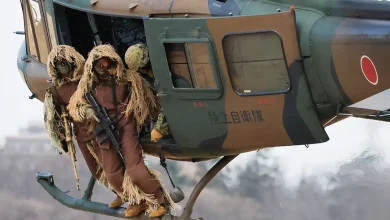
As part of establishing formidable defensive capabilities in its southwestern islands, Japan has built a system for joint operations of its amphibious, ground and maritime forces to enable better defense and recapture of remote islands. Those enhancements expand the depth and intensity of the multinational resistance China would face in an invasion.
The Philippines also has hardened its stance on defending Taiwan. In May 2026, President Ferdinand Marcos Jr. said the nation likely would be involved in any conflict over Taiwan because of its proximity, the Bloomberg news agency reported. “In the Philippines, we do not have a choice because Taiwan is so close to the Philippines and we have almost 200,000 Filipino nationals living and working in Taiwan,” he said.
He made similar comments in August 2025 after another in a series of encounters between the Philippine Coast Guard and China’s maritime forces near Scarborough Reef in the South China Sea. Marcos emphasized that the Philippines does not want war but said he would not order vessels to withdraw from contested areas if conflict erupts.
Like Japan, the Philippines has been strengthening its deterrence posture through collective defense initiatives, including increased participation in multilateral exercises and multinational defense partnerships.
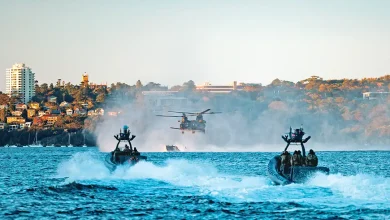
Tested at the 2026 Balikatan exercise in the Philippines in conjunction with a new command and control hub, the PACOM Mission Network (PMN) is emblematic of this effort. The U.S. Pacific Command (US PACOM) platform linked forces from Australia, Canada, Japan, New Zealand, the Philippines and the U.S. across a series of combined and joint operations, according to Adm. Samuel J. Paparo, Commander of US PACOM.
The PMN enables allied and partner forces to integrate operations by securely sharing operational data, intelligence and battlespace information across domains using an architecture that requires constant authentication and authorization to thwart adversaries, while enabling rapid and coordinated threat response.
Such increased deterrence activities may be a key factor in U.S. intelligence officials updating their assessment of China’s intent to invade Taiwan in 2027. “The [intelligence community] assesses that Chinese leaders do not currently plan to execute an invasion of Taiwan in 2027, nor do they have a fixed timeline for achieving unification,” the Office of the Director of National Intelligence’s 2026 Annual Threat Assessment noted.
“Beijing almost certainly will consider a variety of factors in deciding whether and how to pursue military approaches to unification, including PLA readiness, the actions and politics of Taiwan, and whether or not the U.S. will militarily intervene on Taiwan’s behalf,” the report said.
Although China’s ambitions may have dimmed in the short term, they have not been extinguished. The Annual Threat Assessment stated that Beijing must seize Taiwan by 2049 to achieve its goal of a “national rejuvenation” by the 100th anniversary of the People’s Republic of China.
For Xi, the stakes remain “exceptionally high,” Cancian and Heginbotham reiterate. A failed invasion would have profound political consequences, domestically and internationally, for China. It would undermine the legitimacy of CCP leadership and potentially destabilize the broader strategic environment.

Stepping Up Deterrence
It’s imperative that Allies and Partners continue to advance their deterrence efforts despite indications that China’s PLA is not ready to invade Taiwan, defense analysts say. Allies and Partners must avoid complacency.
Despite the long shadow cast by internal corruption, the PLA continues to reform problem areas and modernize capabilities, analysts say. Allies and Partners must persist in strengthening their overmatch in quality, equipment integration and technological capabilities. They also must continue to establish multinational agreements, conduct multilateral exercises, demonstrate superior equipment performance and capabilities, and elevate interoperability.
Although the PLA lacks the cohesion, confidence and competence at every level of command required to execute a successful invasion of Taiwan, Allies and Partners must work together to ensure their overmatch endures in the decades to come.