Security Triumvirate
Defense Trilateral Seeks to Fulfill its Promise of Unity
FORUM Staff
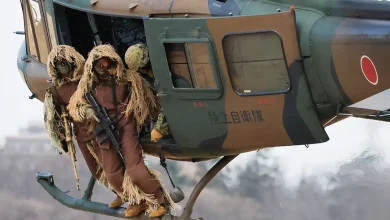
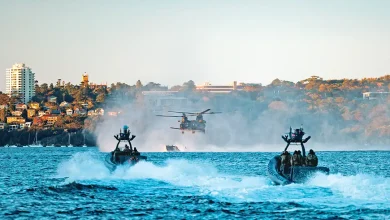
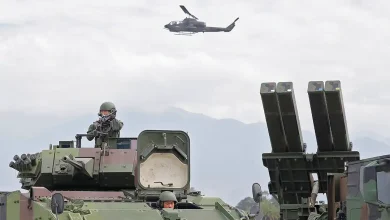
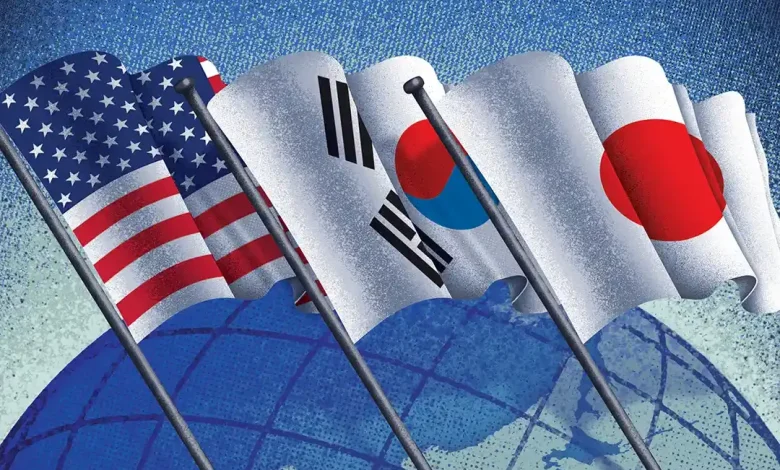
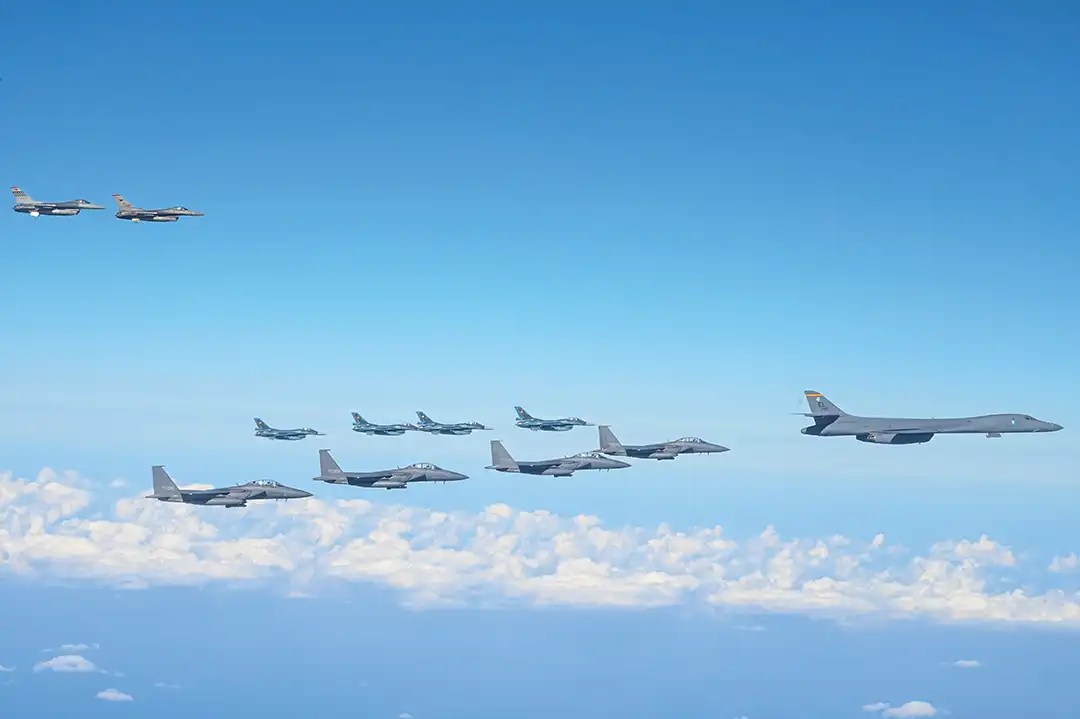
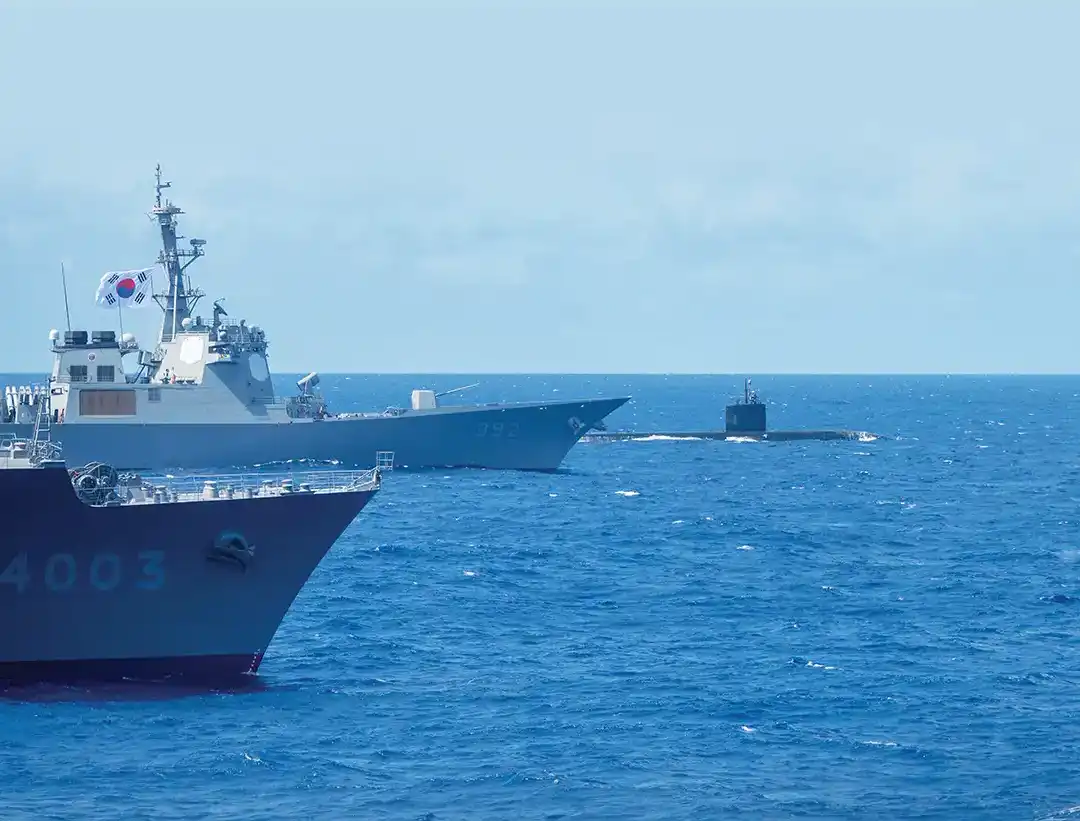
Japanese, Republic of Korea (ROK) and United States forces deployed south and east of South Korea’s Jeju Island in September 2025 for the third iteration of Freedom Edge, the nations’ premier trilateral defense exercise. The training “demonstrates the countries’ shared commitment to collectively achieve and maintain peace,” the U.S. Pacific Command said.
The nations dispatched personnel and equipment including ships and aircraft to the five-day, multidomain drills in the East China Sea that featured training in air defense, ballistic missile capabilities, cyberwarfare, maritime interdictions, and medical and special operations.
Freedom Edge, previously held in June and November 2024, is an example of security collaboration among the three nations following an August 2023 summit at the U.S. presidential retreat outside Washington, D.C. At that landmark session, the countries committed to working as a cohesive unit that deters coercion, projects power and upholds the status quo in an increasingly tense Indo-Pacific.
Japan and the ROK are longtime bilateral allies of the U.S. but historically infrequent collaborators with each other, especially on defense. A central goal of the trilateral summit was to move beyond the Northeast Asian democracies’ past relations and leverage their shared values and geographic proximity to face challenges together and with the U.S.
Japanese Prime Minister Sanae Takaichi and ROK President Lee Jae-myung, who were both elected after the trilateral’s launch, support the call for enhanced defense collaboration and mutual trust. Both want their nations to move beyond imperfect histories, a forward-looking rapprochement that Takaichi repeatedly has elucidated by respectfully bowing before Lee and the ROK flag.
In a joint statement after their September 2025 meeting in New York, the foreign ministers of Japan, the ROK and the U.S. reaffirmed their nations’ commitment to bolster trilateral defense capabilities and deterrence through robust security cooperation.
ROK Foreign Minister Cho Hyun said the commitment to trilateral cooperation is stronger than ever. “We believe that our initiative to restore the shuttle diplomacy and our [the ROK] initiative to work with Japan have been well received,” Cho told the Asia Society, a U.S.-based think tank.
Accomplishments
A key goal of the trilateral partnership is to institutionalize relations among the countries, especially between Japan and the ROK. Seoul and Tokyo in recent years have strived to deepen ties to confront mutual threats, including North Korea’s illicit missile and nuclear programs, China’s increasing assertiveness in the East China and South China seas, and Russia’s ties with Beijing and Pyongyang.
Japanese Defense Minister Shinjiro Koizumi and ROK Defense Minister Ahn Gyu-back held talks in Yokosuka, Japan, in January 2026 after meeting in Seoul in September 2025. At the January summit, they reaffirmed a call for the complete denuclearization of the Korean Peninsula — a position advocated by the United Nations and the U.S. — and announced the resumption of a bilateral naval search and rescue exercise last held in 2017. They vowed to meet regularly and improve communication between their departments “to boost mutual understanding and trust,” according to a news release.
“We agreed that, amid an increasingly severe security environment, both countries will cooperate to maintain regional peace and stability, and that we will continue Japan-South Korea and Japan-U.S.-South Korea cooperation,” Koizumi said.
Working Together
Among the trilateral’s initiatives, the nations triangulate ROK data with information collected by Japan and the U.S. to track missiles and other threats.
The countries also share intelligence, surveillance and reconnaissance information and collaborate on artificial intelligence and uncrewed systems. With potential adversaries increasing their capabilities, a threat to any one country could have repercussions for all three.
Japan and the ROK restored the General Security of Military Information Agreement shortly before the 2023 trilateral summit. It calls for Japan to share satellite imagery and electronic intelligence with the ROK in exchange for human intelligence about an adversary’s capabilities and intentions, the Breaking Defense publication reported.
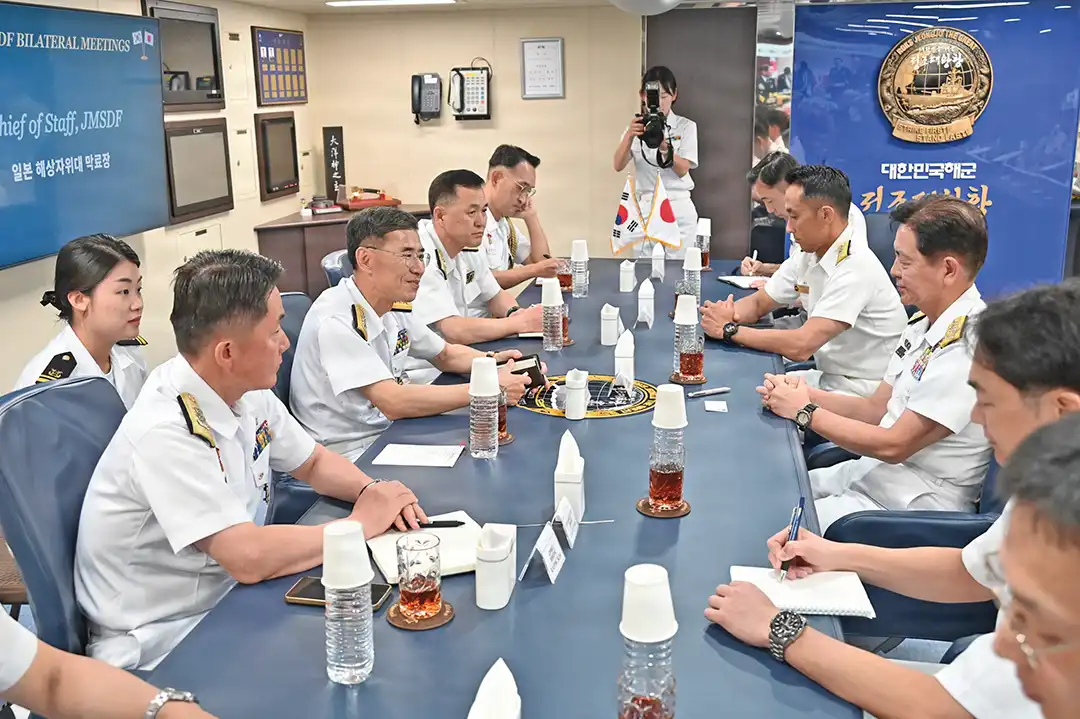
Routine joint exercises such as Freedom Edge and Freedom Shield — annual ROK-U.S. drills across air, land, sea and space domains — reinforce trilateral relations. Some Freedom Shield drills take place in Japan and include the Japan Ground Self-Defense Force.
“These gestures signal a significant intention to lay a foundation for improved defense cooperation between the JSDF [Japan Self-Defense Forces] and the ROK military,” Dr. Chiew-Ping Hoo, co-founder of the Malaysia-based East Asian International Relations Caucus, told FORUM. “It would be wise for both countries to further strengthen mutual understanding and cooperation.”
Common Challenges

Although the three nations have unique perspectives, their key priorities and challenges overlap in important and synergistic ways. The trilateral effort strives for mutually beneficial cohesion.
Japan is increasingly focused on China, especially since Beijing reacted strongly after Takaichi in November 2025 said a Chinese naval blockade of Taiwan could pose a “survival-threatening situation” for Japan. China claims sovereignty over self-governed Taiwan and threatens to annex the island by force.
The ROK is most concerned about North Korea’s aggressive nuclear and ballistic missile programs, which violate U.N. Security Council resolutions and have spurred international sanctions. The ROK does not have nuclear weapons.
The U.S. has pledged an “ironclad” commitment to defend Japan and the ROK if needed under its long-standing treaties with each ally.
Russia’s deepening military ties with North Korea, and joint Chinese-Russian military activities near Japanese and ROK airspace and waters, contribute to regional destabilization.
“Given the rising military capabilities of China and North Korea, as well as North Korea-Russia military cooperation, it is logical for Japan and South Korea to advance their defense relations,” Hoo said.
There is much the nations can do now to prepare for a contingency, Dr. Jeffrey Hornung, a defense analyst and Japan specialist with the Rand Corp., a U.S.-based think tank, told FORUM. He posed a hypothetical example of an ROK ship disabled by enemy fire that arrives in a Japanese port. Today, the damaged ship could not undergo repairs because Seoul and Tokyo do not have an acquisition and cross-servicing agreement, he said. The bilateral pacts allow equipment and service support between nations’ defense departments.
Establishing such agreements and combined strategies in peacetime will enhance the trilateral’s ability to function as a cohesive unit in a crisis, Hornung said.
The Japan-ROK-U.S. initiative compares favorably with the Triple Entente of France, Russia and the United Kingdom during World War I, the Lowy Institute reported in October 2025. Though the nations were not formal allies and had clashed, they built an effective coalition through trust and interoperability to prevail in the conflict. Similarly, Japan, the ROK and the U.S. should focus on mutual defense, the Australian think tank said.
The trilateral nations have strong assets: state-of-the-art missile defense systems, blue-water navies, formidable air power and substantial defense budgets. Through planning, multidomain exercises, a unified command structure, and economic and technological links they could form a deterrence structure “that no adversary would dare to challenge,” the Lowy Institute said.
Going Forward
At their January 2026 summit in Nara City, Japan, Lee and Takaichi noted the urgency in addressing defense matters. Lee said cooperation between the nations “is more important than anything else,” while Takaichi noted that amid an increasingly severe strategic environment, “we have shared our recognition of the strategic importance of Japan-South Korea relations and confirmed that our two countries should work together to contribute to regional stability.” She also emphasized the importance of trilateral security cooperation with the U.S.
Seoul and Tokyo also are enhancing ties in areas such as economics and trade. At their summit, Lee and Takaichi agreed to explore cooperation in supply chains, critical minerals, semiconductors and emerging technologies.

“By deepening cooperation across ideological lines and managing expectations, Tokyo and Seoul have a rare opportunity to construct an alignment resilient enough to withstand the political winds of the future,” Foreign Affairs magazine reported in December 2025.
Engagements such as Freedom Edge offer a preview of what’s possible.
“Freedom Edge is a continuing effort among the three nations to make information sharing and interoperability routine, repeatable and real,” said U.S. Air Force Col. Craig Rumble, the 2025 exercise’s lead planner. “Freedom Edge turns policy into procedures, and procedures into muscle memory so the U.S., Japan, and [the] Republic of Korea can train and improve together.”