Built to Endure
How the U.S. and its Allies and Partners Synchronize Power Across the Indo-Pacific
FORUM Staff
The United States and its Allies and Partners are evolving beyond traditional bilateral security guarantees toward a more integrated model of combined planning, operational coordination and distributed force posture. The developments are particularly evident in the Indo-Pacific, where military exercises, rotational deployments and policy coordination mechanisms increasingly function as parts of a broader strategic architecture. Instead of focusing solely on deterrence through presence, an emerging emphasis is on synchronizing military capabilities and policy objectives across a network of like-minded nations. The result is a more resilient and cohesive approach to collective security.
The U.S. “has moved more mobile and lethal military forces to strategic locations” in the Indo-Pacific, Ely Ratner of the U.S.-based Marathon Initiative think tank wrote for Foreign Affairs magazine in 2025. “Crucially, it has overhauled its security partnerships in the region. … The United States has pursued a more networked approach that gives U.S. allies greater responsibilities and encourages closer ties not just with Washington but among the allies themselves.”
Among the clearest shifts is the growing emphasis on aligning theater strategy — a comprehensive approach that includes planning and executing military operations in a specific area — with allied force posture planning. Historically, U.S. military deployments abroad were structured around U.S. operational requirements. While Allies and Partners participated in exercises or hosted bases, strategic planning was frequently driven by U.S. command structure.
That dynamic is changing. Allied militaries are increasingly participating in joint and combined planning that determines not only where forces are stationed but also how they are organized, integrated and employed in potential contingencies. Multinational command conferences, combined operational planning and interoperability initiatives are becoming standard features of alliance management.
The evolution reflects strategic realities. Security challenges in the Indo-Pacific span vast distances and all domains — air, cyber, land, sea and space. Regional crises could involve multiple allied and partner territories simultaneously. Technological integration requires early coordination rather than impromptu cooperation.
Allies and Partners are reshaping operational frameworks, which enhances collective security. Nations participating in regional defense initiatives are working to ensure that logistics networks, command and control (C2) systems, and basing arrangements are compatible across militaries.
Defense exercises demonstrate how the concept operates. For example, the biennial Australia- and U.S.-led Talisman Sabre, designed to improve combat readiness and interoperability among multiple partner nations, relies on multilateral planning, according to the Australian Defence Department. The largest and most recent iteration in 2025 involved more than 40,000 military personnel from 19 nations, signaling the scale and collective commitment behind such engagements. “Talisman Sabre demonstrates our enduring alliance with the United States, through deepening cooperation in training and force integration,” said Royal Australian Navy Vice Adm. Justin Jones, chief of joint operations. “It is a key opportunity to work with our partners from across the region and around the globe, demonstrating our combined capability to achieve large-scale operational outcomes together.”

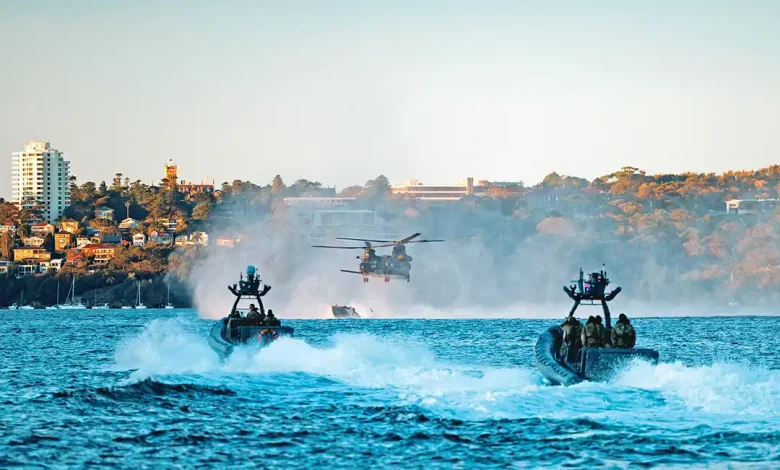
The U.S.-led Rim of the Pacific (RIMPAC) exercise also illustrates how Allies and Partners are involved from the earliest stages. During the RIMPAC Commanders Conference in March 2026 in Sydney, senior leaders and planners from more than 30 nations reviewed exercise design, aligned objectives and coordinated operations before forces were deployed to Hawaii for the 30th iteration in June.
Multilateral Platforms
Another defining trend is framing multilateral exercises as platforms for operational integration in addition to training. Traditionally, exercises have focused on basic interoperability — ensuring that forces from different countries could communicate or operate together in certain scenarios. Today’s exercises are becoming more ambitious.
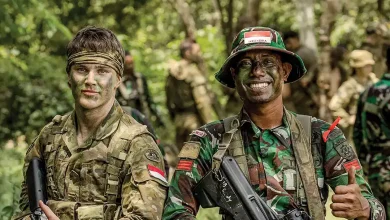
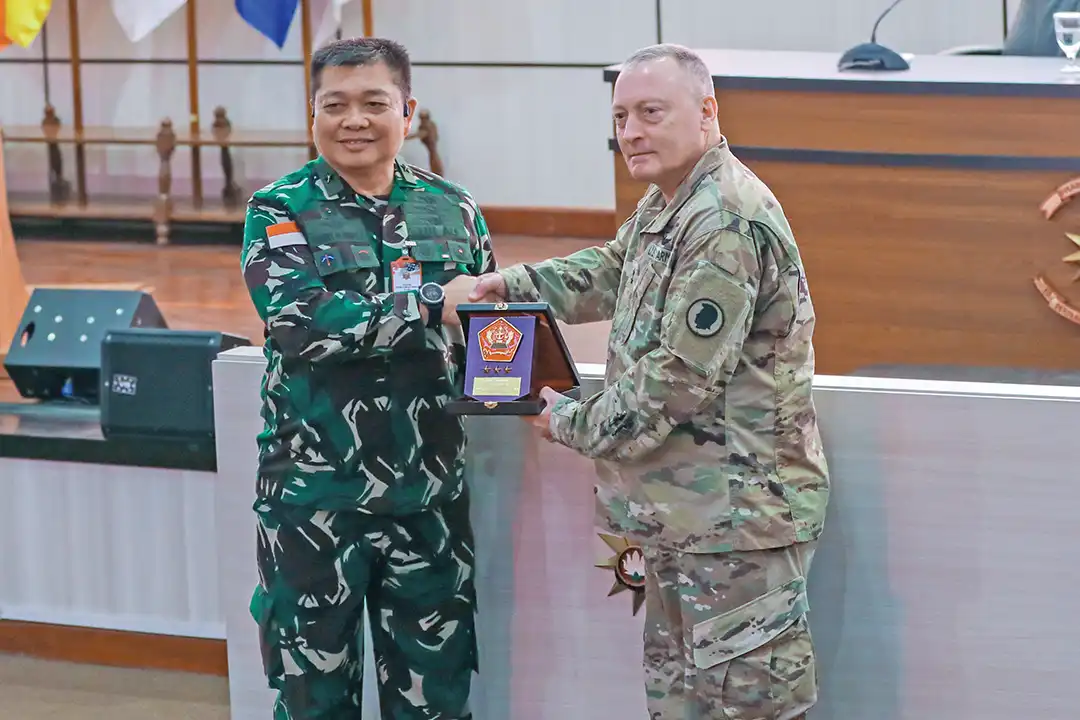
Super Garuda Shield, for example, has evolved from a bilateral Indonesia-U.S. training event into a multilateral exercise in Indonesia involving more than a dozen nations and thousands of troops. It incorporates combined C2 simulations, airborne and amphibious operations, and live-fire drills.
SGT. SEAN WALKER/U.S. ARMY NATIONAL GUARD
Exercises now serve as laboratories for testing coalition warfare concepts. Among the operational priorities:
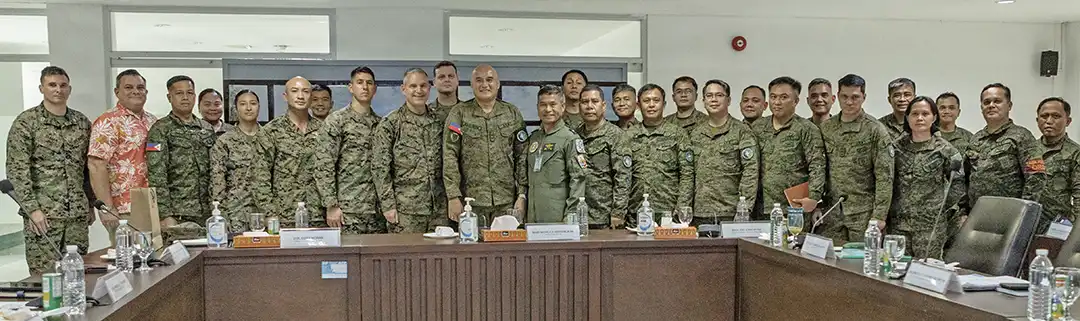
- Logistics integration: Military operations depend on supply chains, mobility infrastructure and sustainment capabilities. Exercises increasingly test the abilities of allied and partner forces to move personnel, vehicles and equipment across long distances. Exercise Balikatan 2026 exemplified the principle as Armed Forces of the Philippines (AFP) and U.S. military personnel conducted maritime pre-positioning that showcased military-to-civilian and ally-to-ally collaboration. Months of planning among the AFP and U.S. Marine Corps commands, port authorities and local transportation contractors culminated in the arrival of the U.S. Navy Military Sealift Command vessel USNS Sgt. William W. Seay to the Philippines’ Cagayan de Oro port with equipment vital to supporting Balikatan.
- C2 interoperability: Command structures must function across languages, doctrines and technological systems. Multinational exercises simulate real-world scenarios where Allies and Partners share command responsibilities. For more than a decade, RIMPAC has incorporated multinational command roles. In 2026, the Republic of Korea (ROK) commanded the maritime component while Canada commanded the air component and Chile filled the role of combined task force deputy commander.
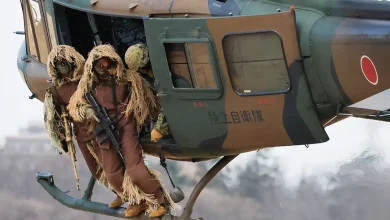
- All-domain operations: Multilateral exercises increasingly demonstrate all-domain integration among Allies and Partners. Trilateral drills such as Freedom Edge among Japanese, ROK and U.S. forces combine air, maritime, cyber, space and special operations capabilities. Larger-scale events include RIMPAC and Valiant Shield, a Guam-, Japan-, Northern Mariana Islands- and Palau-based exercise that integrates air, maritime, space and cyberspace domains across dozens of partners, including Canada, France, Japan and the U.S. Such engagements highlight the shift toward coordinated all-domain warfare that spans physical and digital battlefields. Their scope reflects the reality that future conflicts likely will unfold simultaneously across domains.
Analysts view multilateral exercises as strategic signals. The rapid growth of multinational participation demonstrates a regional commitment to cooperative security. Increasingly, additional nations attend exercises as observers, indicating interest in deeper integration. For example, Canada, France, Japan and New Zealand sent observers to Balikatan in the Philippines before becoming participants. This trend reinforces a coalition-oriented Indo-Pacific security environment.
LANCE CPL. MADISON M. LUCIANO/
U.S. MARINE CORPS
Dynamic Deployments
Also emerging across the defense landscape is the concept of an adaptable and distributed force posture. For decades, the backbone of U.S. overseas military presence consisted of large, permanent bases in allied countries. While those installations remain important, a developing strategy emphasizes flexibility. Rotational deployments — with forces temporarily operating from allied and partner nations without establishing permanent bases — are becoming a central component of this approach.
U.S. Marine Corps rotational forces (MRF) have operated in Australia — where MRF-Darwin has grown from a force of 200 to 2,500 since 2011, according to the Australian Broadcasting Corp. — and across Southeast Asia, extending a Philippine deployment in April 2026 as the combined troops deepened partnerships. The move “reflects a deliberate shift from presence to presence with purpose,” stated Col. Robert Bunn, MRF-Southeast Asia commanding officer. “We are integrating with the AFP to strengthen combined capabilities, enable faster response in crisis and contribute to a credible, forward posture in the Indo-Pacific. Our alliance is not symbolic. It is operational, historic and built to endure.”

Factors driving the shift to rotational deployments include:
- Strategic resilience: A widely distributed network of access points to reduce the vulnerability associated with concentrating forces in a few locations.
- Operational agility: The U.S. and its Allies and Partners can adjust their presence in response to emerging threats or crises.
- Political sustainability: Some countries prefer rotational access agreements rather than permanent foreign bases.
The Indo-Pacific has become a testing ground for this concept. U.S. Army formations, for example, regularly move among partner nations as part of exercise frameworks and operational programs. The deployments strengthen interoperability and maintain readiness while reinforcing regional deterrence.
Strategy Alignment
Beyond exercises and deployments, recent analysis highlights an important trend: deepening defense policy and strategy among Allies and Partners. Countries are supporting national defense strategies with shared regional objectives, including coordinated threat assessments and joint planning.
Coordination among Australia, Japan, the Philippines and the U.S., an informal grouping dubbed the Squad that first convened at the Shangri-La Dialogue security forum in Singapore in 2023, illustrates broad policy synchronization. The group focuses on defense cooperation, intelligence sharing and joint operations.
Expanding engagement among Japan, the ROK and the U.S. offers another example of defense synchronization. Multilateral activities include joint training exercises, expert exchanges, real-time data sharing of missile warnings and capacity-building initiatives, Adm. Samuel J. Paparo, Commander of the U.S. Pacific Command, told the U.S. House Armed Services Committee in 2025. Plans are “aimed at enhancing our combined ability to respond to regional challenges and promote a more integrated and effective regional security architecture,” he said.
Allies and Partners also are negotiating agreements that allow military forces to operate from each other’s territory, pre-position equipment and train for contingencies. The Philippines-U.S. Enhanced Defense Cooperation Agreement is among the clearest examples. It allows U.S. forces access to agreed locations in the Philippines, with equipment storage and maintenance. The U.S. committed $144 million for infrastructure investments at those sites during the 2026 budget year. Such moves enable distributed force posture and provide logistics hubs and staging areas — representing shared infrastructure for coalition operations.
The Philippines’ expanding security cooperation illustrates evolving multinational integration. In addition to its long-standing mutual defense treaty with the U.S., Manila has visiting forces agreements with Australia, Canada, France, Japan, New Zealand and the United Kingdom, most of which were signed in 2025. Emerging security partners include Germany, the European Union, Lithuania, the ROK and Singapore, which have held talks or signed defense agreements with the Philippines.
Meanwhile, shiprider agreements between Pacific Island Countries and the U.S. allow partner nation personnel to operate aboard U.S. Coast Guard vessels to conduct maritime law enforcement in the partner nation’s waters. The Federated States of Micronesia and Palau have also expanded their agreements to allow the U.S. Coast Guard to board and intercept suspicious ships on their behalf without a local officer aboard. The arrangements provide functional access to U.S. platforms, enabling shared maritime domain awareness and distributed enforcement operations, and offering a unique example of operational access without permanent basing.
Defense industrial cooperation also is becoming a pillar of alliance integration. Joint development programs, technology sharing and coproduction pacts are taking shape across numerous partnerships. The Philippines and the U.S. have committed to increasing regulation compatibility, enabling technology transfers, and expanding coproduction and supply cooperation. The arrangement moves beyond military exercises into shared production ecosystems and supports deepening strategic alignment in nontraditional security.
The U.S.-led Partnership for Indo-Pacific Industrial Resilience (PIPIR) expanded in 2026 with a program to produce solid rocket motors for guided weapons, with Japan taking the lead. The 16-nation group also is pursuing drone cooperation across the Indo-Pacific and ammunition production in the Philippines. With its focus on supply chain resilience and forward production, PIPIR is one of the region’s strongest examples of coalition-based coproduction. Such joint production and technology sharing will likely deepen as Allies and Partners strengthen collective capabilities.

Collective Readiness
Exercises, deployments and policy coordination are increasingly interconnected components of a strategic framework designed to strengthen coalition operations and maintain regional stability. Rather than focusing solely on military presence, the emerging model emphasizes integration — aligning strategy, posture, logistics and capabilities across partners. Multilateral exercises illustrate how this concept is being implemented in practice, providing operational platforms where allied militaries can train, experiment and demonstrate collective readiness.
At the same time, rotational deployments and distributed access agreements are reshaping how military power is positioned across the Indo-Pacific. Together, these developments suggest a future where regional security increasingly depends on the strength of integrated alliances rather than the capabilities of any single nation. In a region defined by vast distances, complex geopolitics and evolving security challenges, the success of this networked approach could prove decisive in maintaining stability and preventing conflict.