U.S. boardings neutralize Iranian regime’s shadow fleet
Lt. Col. Uilisone F. Tua/U.S. Army
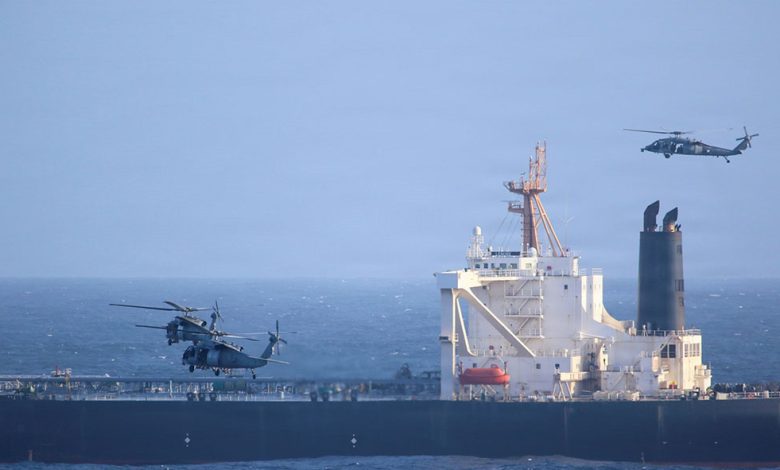
Sanctions evasion at sea depends on ambiguity: unclear ownership, shifting flags and the hope that no one will act. Recent United States boardings of Iranian regime-linked tankers M/T Tifani and M/T Majestic X in the Indian Ocean show how established maritime law can remove that ambiguity, and why the lesson matters across the Indo-Pacific.
Networks that move illicit cargo and generate revenue for the Iranian regime’s Islamic Revolutionary Guard Corps (IRGC) exploit the protections the law gives legitimate commercial shipping enterprises. IRGC-linked groups disable onboard automatic identification systems (AIS) designed to prevent ship collisions, carry falsified registry documents and fly false flags, all to make their ships hard to identify and harder to challenge.
International law has an answer. Under the United Nations Convention on the Law of the Sea (UNCLOS), a ship’s freedom of navigation on the high seas rests on its nationality. Article 91 provides that ships have the nationality of the state whose flag they are entitled to fly. Article 92, however, provides that a ship sailing under the flags of two or more states, using them according to convenience, may lose the protection of those flags. Such a vessel cannot claim the protection of any flag state, and under Article 110, naval authorities, with reasonable grounds to suspect statelessness, may board the vessel to verify its status.
That doctrine is long established. U.S. Naval War College professor James Kraska, writing in the journal International Law Studies in 2026, traces it through treaty text, custom and decades of court decisions. He also stresses its limits: The right of visit belongs to navy warships, requires reasonable grounds and carries a duty to compensate the vessel if suspicions prove unfounded. He concludes that statelessness is “not a loophole in the law of the sea but a liability.”
The Tifani was boarded in April 2026 in the Bay of Bengal between Sri Lanka and Indonesia, in the U.S. Pacific Command area of responsibility. Majestic X was boarded days later in the same part of the Indian Ocean. Kraska reports that the Tifani’s AIS transponder was switched off when it was approached and that Majestic X’s claimed flag was disputed. Both circumstances exemplify the type of discrepancies that prompt a closer look at a ship’s status.
The lawful boardings were just the beginning. A statelessness finding can provide the jurisdictional authority to bring sanctions, customs, criminal or forfeiture proceedings. In the case of Tifani and Majestic X, the U.S. Justice Department opened civil forfeiture proceedings. U.S. Homeland Security Investigations agents later executed federal warrants for the tankers and the roughly 4 million barrels of Iranian crude oil aboard, valued at nearly $600 million, Bloomberg reported in September 2026. The U.S. seized a third tanker in the Indian Ocean in June. The supertanker, known as the Davina or Lenore was stateless and been under U.S. sanctions since late 2024 for suspected Iranian oil trading.
Kraska describes the legal machinery behind these actions as a chain of sanctions designations and terrorism-forfeiture statutes that proceeds against the property itself, enabling a case to advance without convicting any individual. A lawful boarding at sea can lead to lasting consequences for the vessels and cargo that sustain an illicit network.
— STORY CONTINUES BELOW —
Join the discussion
How can your armed forces work with Allies and Partners to strengthen lawful responses to illicit shipping?
This approach is not solely based in U.S. law and policy. Kraska notes that the United Kingdom supported the U.S. seizure of the tanker Bella 1 in the North Atlantic in January 2026. Authorities said the vessel’s AIS had been disabled and its name concealed while transporting 1.8 million barrels of Iran-origin oil.
France has boarded several suspected false-flag vessels in European waters, and 14 North Sea and Baltic states declared in 2025 that stateless vessels are not entitled to freedom of navigation under UNCLOS. Australia, Japan and New Zealand also have sanctioned shadow fleet vessels linked to Russia, a reminder that both the problem and the response are global.
Perhaps the most durable solution is prevention. Kraska notes that the International Maritime Organization (IMO) approved guidelines on ship registration in April 2026, drawing on proposals from states including the Cook Islands, the Marshall Islands and Thailand. The voluntary guidelines request that flag states verify ownership, check IMO numbers and require proof of deregistration before a ship changes flags. Registries that apply such standards consistently close loopholes exploited by illicit actors and protect legitimate shipping.
For regional maritime forces, the practical task is to turn legal clarity into coordinated action —recognizing indicators of statelessness, exchanging information quickly and applying national authorities to deny illicit vessels safe passage and profit. Adversaries exploit legal ambiguity on the assumption that others will hesitate to act. Lawful and transparent action closes those gaps and reinforces global maritime rules and norms that preserve stability and prosperity.