Allied space networks sharpen Indo-Pacific situational awareness
Peter Parson
A growing network of space situational awareness (SSA) agreements and initiatives is strengthening Indo-Pacific allies’ ability to track activity in orbit. Data-sharing arrangements among Australia, Japan and the United States, for example, are building a shared view of the space domain, reducing collision risk and setting the foundation for more resilient space operations.
“Understanding what is in orbit and the type of operations individual satellites are conducting requires both terrestrial and space-based tracking systems,” said Dr. Zack Cooper, a senior fellow at the U.S.-based American Enterprise Institute who specializes in Indo-Pacific defense strategy.
“Japan and Australia both have unique geography that is vital for this mission, since they sit at the northern and southern portions of the Indo-Pacific,” Cooper told FORUM.
That supports a growing web of pacts, such as the 2023 Reciprocal Access Agreement and the 2025 Framework for Strategic Defence Coordination between Canberra and Tokyo. In mid-2026, meanwhile, Australia and the U.S. expanded space cooperation, including in surveillance and military operations, with officials calling space capabilities foundational to 21st-century deterrence.
Testing tactical networks that use space-based communication, sensors and intelligence sharing was a core component of Valiant Shield, U.S.-led defense drills conducted across the Western Pacific in mid-2026 by Allies and Partners including Australia and Japan.
Australia and the U.S. also cooperate with the United Kingdom on the Deep Space Advanced Radar Capability (DARC) in Western Australia, part of the nations’ AUKUS security partnership. DARC sites also are planned for the U.K. and the U.S. to provide persistent, high-fidelity tracking of small objects on geosynchronous orbit.
— STORY CONTINUES BELOW —
Join the discussion
How can your nation work with the U.S. and its Allies and Partners to protect civilian and military assets in the vital space domain?
The Quad partnership, which includes Australia, India, Japan and the U.S., also is prioritizing SSA, including for collision avoidance and debris management.
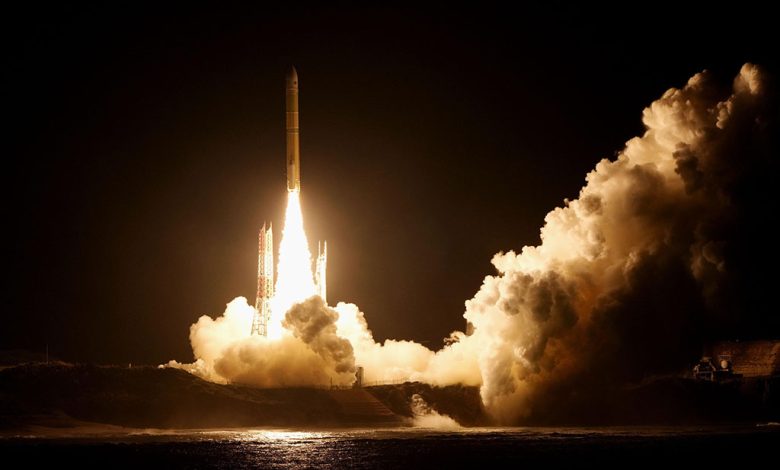
In August 2026, Japan launched the second of two U.S. sensors aboard a Japanese navigation satellite. The longtime allies’ first such space cooperative initiative will enable “better management and protection of space assets, ensuring a more secure and reliable space environment,” the U.S. Space Force said.
Partner nations are overcoming technical challenges in sharing space data across different standards and operating systems, Victoria Samson, chief director of space security and stability at the U.S.-based Secure World Foundation, told FORUM.
Samson said the goal is to have “a richer view of the space domain,” with more inputs improving reliability. Additionally, pooled datasets “can lead to a common understanding as to what is standard behavior and what is atypical behavior,” enabling analysts to better identify anomalies.
Peter Parson is a FORUM contributor based in Hamilton, New Zealand.