ASEAN coast guards building common legal foundation for maritime security
Sarah Chan
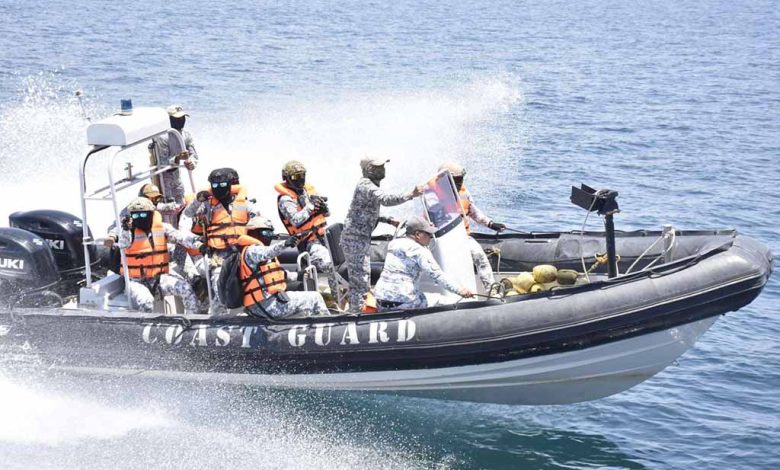
Southeast Asian coast guards are developing a shared legal foundation for enforcing maritime laws, including aligning rules of engagement, evidence-handling standards and prosecutorial procedures.
Central to the initiative is legal interoperability, which enables coast guards from different countries to gather evidence, conduct boardings and support prosecutions using common standards. “Legal interoperability among the coast guards of ASEAN [Association of Southeast Asian Nations] member states will be a crucial aspect of the institutionalization of the ASEAN Coast Guard Forum [ACF],” Harshit Prajapati, a New Delhi-based defense analyst, told FORUM.
The ACF agreed in mid-2026 to seek permanent status as an entity of the 11-member regional bloc. Delegates finalized a concept paper and terms of reference to be considered at the ASEAN Summit in the Philippines in November 2026, laying the groundwork for deeper regional cooperation on maritime law enforcement.
Much of the enhanced interoperability will flow from an operational agreement to standardize how coast guards engage and de-escalate in contested waters such as the South China Sea. The Southeast Asia Protocol of Engagement at Sea for Coast Guard and Maritime Law Enforcement will govern ACF field operations and define the legal interoperability extended to member agencies.
Legal alignment will require addressing long-standing sovereignty issues, favoring approaches that strengthen interoperability while preserving national authority, Prajapati said.
“ASEAN states’ coast guards fall under the jurisdiction of different ministries, which is another challenge in institutionalizing the ACF,” he said, highlighting the importance of developing protocols to guide operationalization.
— STORY CONTINUES BELOW —
Join the discussion
How do your maritime forces work with Allies and Partners to counter illegal incursions and transnational crime?
Training is advancing separately. The United Nations Office on Drugs and Crime’s (UNODC) Global Maritime Crime Programme conducts scenario-based legal exercises and simulated trials, including in Indonesia and Vietnam, to strengthen evidence handling and prosecutions. At a UNODC-supported facility in Batam, Indonesia, maritime officers from Indonesia, Malaysia, the Philippines and Vietnam trained in visit, board, search and seizure procedures, including evidence collection. UNODC programs also address chain of custody and data reliability, which can bolster cross-jurisdictional investigations.
Additionally, a proposed maritime security academy between ASEAN and the Republic of Korea would provide regional training and expert exchanges.
Information sharing among partners is critical to deterring illicit maritime activity by state and nonstate actors and to upholding international norms.
In late 2025, for example, the Philippine Coast Guard used Canada’s Dark Vessel Detection program to flag a Chinese research vessel inside the Philippines’ exclusive economic zone. The Coast Guard deployed an aircraft to determine whether the vessel was conducting unauthorized marine research.
Sarah Chan is a FORUM contributor reporting from Singapore.