Indo-Pacific forces adopting edge computing to navigate communication disruptions
Mandeep Singh
Indo-Pacific defense forces are bringing the processing and analysis of data generated by AI-enabled assets closer to the platforms themselves, a shift designed to ensure the uninterrupted operation of drones, uncrewed vessels and missiles.
“Instead of sending everything back to a distant server, forces can process data locally, much closer to where it is generated,” Dr. Sameer Patil, director of the Centre for Security, Strategy and Technology at the Observer Research Foundation in Mumbai, told FORUM.
Military operations frequently unfold in remote or contested terrain where connectivity is unreliable. Cloud computing relies on stable, high-speed networks, meaning its performance can degrade sharply under adverse conditions. Centralizing storage and analysis in a distant data center also introduces latency that can prove costly in combat.
By contrast, edge computing can keep platforms functional when GPS or other signals are jammed or communication networks are disabled. Autonomous systems such as drones and uncrewed vehicles can run AI-enabled analysis onboard, performing more of their functions independently rather than relying on remote computing, Patil said. Similarly, crewed systems such as the United States-developed F-35 Lightning II fighter jet incorporate onboard computing to process sensor data, accelerating target identification.
The Australian Defence Force is among those “exploring how secure tactical cloud and edge-computing capabilities can be brought onto the battlefield, including through cooperation with industry,” Patil said.
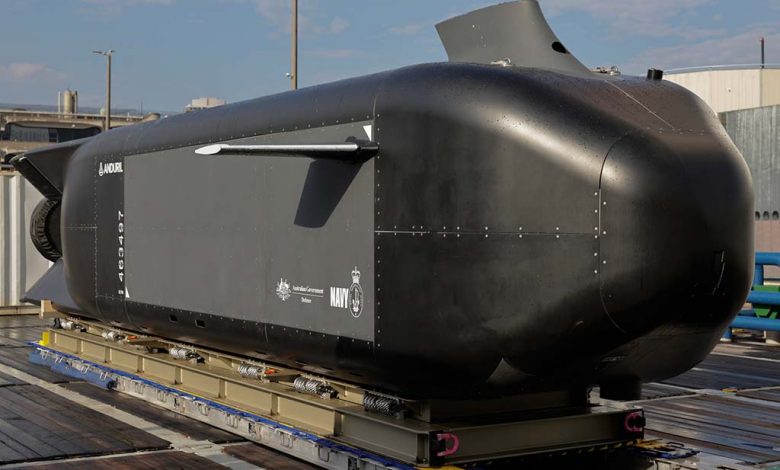
The Royal Australian Navy has moved its Ghost Shark extra-large autonomous underwater vehicle from prototype to fleet service under the recently established Maritime Autonomous Systems Unit. Developed with the U.S.-based Anduril Industries, the Ghost Shark can operate at depths of 6,000 meters without a crew aboard or a physical link to the surface. The unit also oversees the Bluebottle uncrewed surface vessel and the Speartooth uncrewed underwater vehicle (UUV).
— STORY CONTINUES BELOW —
Join the discussion
How are your armed forces working with partners to maximize AI-enabled capabilities?
India, meanwhile, is expanding its portfolio of connected platforms, from AI-enabled counter-drone systems to networked sensors, which is positioning edge computing as central to operations. “As the Indian military deploys more connected platforms and systems, edge computing will become increasingly important for integrating them effectively,” Patil said.
The trend is shaping regional cooperation. In May 2026, Australia, the United Kingdom and the U.S. designated AI-enabled payloads for UUVs as the first signature project under Pillar II of their AUKUS partnership, with deliveries beginning in 2027. The project will make undersea payloads interchangeable and interoperable across the three partner navies’ autonomous fleets.
Building such interoperability requires sustained cooperation, the Australian Institute of International Affairs reported in June 2026. AI-enabled systems rely on large volumes of sensor and environmental data, giving partner nations a strong incentive to improve how that information is collected, standardized and shared. Greater alignment can help allied systems respond more consistently under the same conditions and streamline joint operations.
Therefore, establishing common data standards and governance frameworks is vital, analysts say. As Allies and Partners field more autonomous, AI-enabled platforms, edge computing will be an operational necessity to ensure individual systems function and fight effectively even when networks are unavailable.
Mandeep Singh is a FORUM contributor reporting from New Delhi, India.