Rapid acquisition strategy accelerates Indo-Pacific defense modernization
Peter Parson
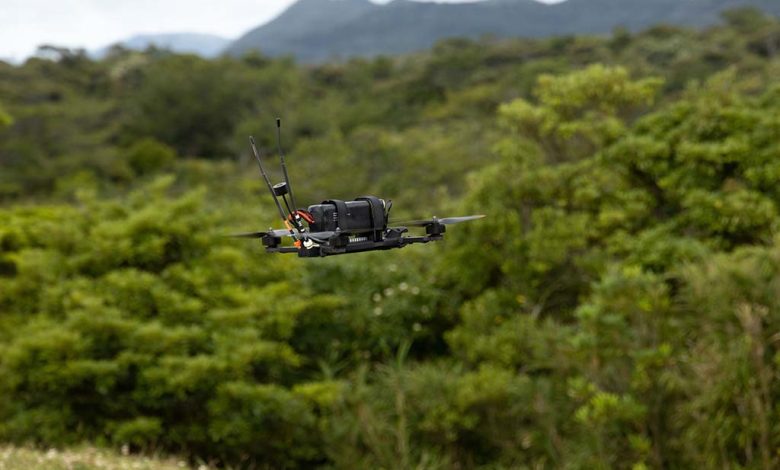
Indo-Pacific defense forces are shifting from yearslong procurement cycles toward a rapid acquisition approach that rapidly adapts and fields proven commercial technologies. Spearheaded by the United States Department of War Innovation Unit, the concept has spread among Allies and Partners as commands seek accelerated acquisition amid a volatile security environment.
Nations including Australia, Japan and the Republic of Korea “are advancing acquisition of commercial software, AI systems, UAVs [uncrewed aerial vehicles] — striking a balance of strategic urgency, economic pragmatism and asymmetric deterrence,” Chester Cabalza, founder of the Manila-based think tank International Development and Security Cooperation, told FORUM.
Taiwan’s Defense Ministry has reclassified drones as consumables, grouping them with munitions rather than aircraft, and announced plans to procure more than 200,000 UAVs and 1,000 uncrewed surface vessels, with a focus on domestic production.
In June 2026, Japan’s Acquisition, Technology and Logistics Agency launched a Ukraine-inspired Rapid Interceptor Drone Acquisition Program, using existing channels to select systems for trials within about three months.
Meanwhile, the Philippine Coast Guard is expanding its UAV-enhanced surveillance capacity with Australian support.
The regional shift is happening in conjunction with the U.S.’s comprehensive reimagining of its warfighting capabilities. Secretary of War Pete Hegseth’s “Unleashing U.S. Military Drone Dominance” directive removes bureaucratic barriers to drone production and procurement while giving troops greater authority to acquire and operate uncrewed systems. The $1.1 billion program aims to field hundreds of thousands of attack drones by 2027 through competitions in which operators test systems in realistic scenarios.
Integrating dual-use technology into defense forces brings economic benefits, said Dr. Bruce Bennett, an independent defense analyst and professor at the RAND School of Public Policy. “If you can have the same product used in both civilian and military systems, you’re going to lower the price for that product,” he told FORUM.
— STORY CONTINUES BELOW —
Join the discussion
How are your armed forces working with Allies and Partners to integrate emerging capabilities such as AI and drones?
Gregory Poling, director of the Asia Maritime Transparency Initiative at the U.S.-based Center for Strategic and International Studies, said the model draws on Ukraine’s experience “bootstrapping” civilian technology and repurposing civilian assembly lines. Given China’s position as a leading drone producer, Poling told FORUM, the aim for Indo-Pacific Allies and Partners should be to create “a stalemate, where uncrewed aggression by China becomes basically infeasible because of the capability for uncrewed defense on the other side.”
The approach extends to maritime domain awareness (MDA). The U.S. Navy’s Task Force 59, its first uncrewed and AI-enabled unit, uses commercially developed uncrewed vessels to patrol Middle East choke points and feed imagery to an AI-assisted command center in Bahrain. In November 2025, Hegseth proposed extending the model to the South China Sea through a shared MDA network to ensure Southeast Asian partners facing China’s “aggression and provocation” are “not alone.”
In May 2026, the member nations of the Quad partnership — Australia, India, Japan and the U.S. — launched the Indo-Pacific Maritime Surveillance Collaboration initiative, expanding a shared operating-picture framework and initially focusing on the Indian Ocean region. In 2025, Washington approved the $131 million sale to India of HawkEye 360 satellite technology and SeaVision software to identify vessels whose reported locations diverge from transponder data.
Through cooperative initiatives such as the U.S.-led Partnership for Indo-Pacific Industrial Resilience, Allies and Partners “can distribute, strengthen supply chains and replicate initiatives,” Cabalza said.
Peter Parson is a FORUM contributor based in Hamilton, New Zealand.