Indonesia, Thailand deepen defense ties as regional cooperation expands
Gusty Da Costa
Indonesia and Thailand are expanding their defense partnership into joint special forces training, coordinated maritime patrols and industry collaboration, marking a shift to operational cooperation.
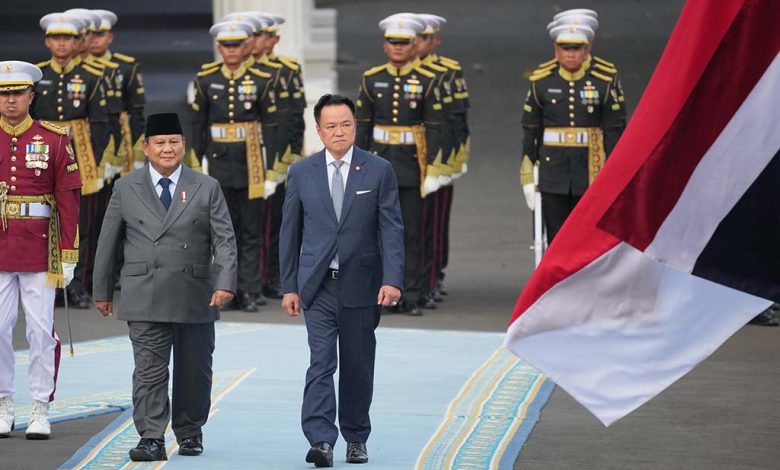
The commitment was reaffirmed during Thai Defense Minister Lt. Gen. Adul Boonthumjaroen’s August 2026 visit to Jakarta, where he and Indonesian Defense Minister Sjafrie Sjamsoeddin announced plans to intensify implementation of the bilateral Defense Cooperation Agreement (DCA). The 2018 pact now covers joint military training, defense industry development, personnel exchanges and military education.
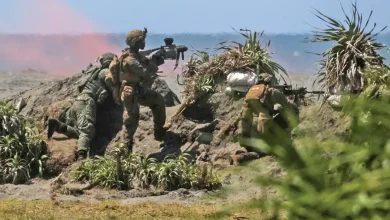
“We will exchange officers and Soldiers from the special forces of both countries, and we also plan to conduct joint training between the special forces of Indonesia and Thailand,” Sjafrie said, according to the Antara news agency. He said the nations will increase coordinated patrols in the Malacca Strait, one of the world’s busiest maritime trade routes.
The announcement came a day after Indonesian President Prabowo Subianto and Thai Prime Minister Anutin Charnvirakul agreed to elevate ties to a strategic partnership. The upgrade will strengthen force interoperability, regional maritime security and technology transfers, the Indonesia-based Kompas magazine reported.
Thailand also offered to supply the Indonesian Marine Corps with 36 Thai-built amphibious armored vehicles featuring dual water-jet propulsion systems.
The expanding relationship reflects broader shifts in the Indo-Pacific security environment, according to Beni Sukadis, a military analyst with Jakarta-based Marapi Consulting. Cooperation that once centered on officer education and exchanges is now oriented toward interoperability and joint operational capability, driven by maritime security threats, transnational crime, natural disasters and military modernization.
Special forces cooperation increasingly is important as Bangkok and Jakarta face similar needs in counterterrorism, reconnaissance and rapid response.
The nations are building a resilient partnership while preserving strategic autonomy, according to Dr. Marcellus Hakeng Jayawibawa, an analyst at Indonesia’s Lemhannas Strategic Center. Thailand’s military experience and Indonesia’s strategic geography as a vast archipelago “can serve as important assets for strengthening regional stability,” he told FORUM.
— STORY CONTINUES BELOW —
Join the discussion
How is your nation working with Allies and Partners to support Southeast Asian stability?
Jayawibawa highlighted joint exercises and enhanced interoperability among near-term priorities for the DCA, alongside maritime domain awareness, information sharing and combating transnational crime at sea.
He identified tactical and combat vehicles, aerospace technology, uncrewed systems, and patrol vessels as areas for defense industry cooperation, as well as joint maintenance, repair and overhaul capacity for aerospace assets.
“The best direction for Indonesia-Thailand defense industrial cooperation is not simply to produce new weapons or platforms,” he said. “It should also build shared capabilities across the entire value chain, from technology and production to maintenance and maritime surveillance, thereby strengthening defense self-reliance and ASEAN [Association of Southeast Asian Nations] security resilience.”
Sukadis said closer bilateral ties can serve as a foundation for greater interoperability among ASEAN militaries, strengthening the region’s ability to respond to challenges while reinforcing ASEAN centrality in the Indo-Pacific security architecture.
Gusty Da Costa is a FORUM contributor based in Jakarta, Indonesia.