
Tai Prohaska/United States Pacific Multi-Domain Training and Experimentation Capability
In the Indo-Pacific, where distance and dynamic threats demand unparalleled readiness, the United States’ Pacific Multi-Domain Training and Experimentation Capability (PMTEC) empowers warfighters to cultivate mastery through realistic, multidomain training environments.
Established in 2022, PMTEC is funded and resourced by the U.S. Pacific Command (US PACOM) to enhance joint, combined and coalition warfighting readiness, posture and lethality. Through repetition and exposure to evolving scenarios integrating live, virtual and constructive (LVC) training, the PMTEC team ensures warfighters build the muscle memory needed to quickly and effectively respond in highly complex situations to provide sustainable asymmetric advantages to U.S., ally and partner forces.
The 2025 U.S. National Security Strategy (NSS) frames the Indo-Pacific as “among the next century’s key economic and geopolitical battlegrounds,” requiring technological superiority, sustained deterrence and coalition strength. PMTEC flexes asymmetric advantage in all three pillars, as well as interoperability among the U.S. joint forces and with Allies and Partners.
As a key component of the Pacific Deterrence Initiative, PMTEC reinforces the U.S. commitment to homeland defense and a free, secure and prosperous Indo-Pacific. PMTEC’s integration of advanced training technologies and its alignment with the NSS make it a cornerstone in maintaining regional stability and countering aggression.

CPL. BRISEIDA VILLASENOR/
U.S. MARINE CORPS
Realistic Threat Scenarios
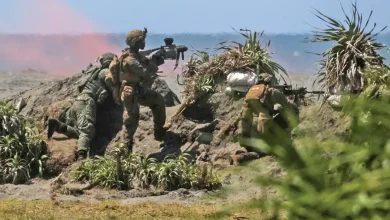
LVC training environments allow warfighters to rehearse against simulated adversaries that mirror real-world threats across land, sea, air, space and cyber domains, ensuring comprehensive readiness. For example, during Exercise Balikatan 2026 in the Philippines, PMTEC supported the integration of emitters that simulate the electronic signature of an enemy force, providing a signal for the Canadian, Japanese, Philippine and U.S. combined task force’s electronic warfare (EW) specialists to hunt. Next-generation command and control relies on EW capabilities to validate and shoot targets, said U.S. Army Capt. Phoebe Lee, artillery fire control officer, 25th Infantry Division. “Everything you saw leave [during a Balikatan 2026 counter-landing exercise] was a full digital kill chain,” she said. “Those targets were being sent completely digitally to the Fire Direction Center. We keep pushing forward with it [EW], and we’re getting better and more lethal.”
Other technologies being integrated into training include artificial intelligence (AI), tactical assault kits (TAK) and deployable cyber ranges (DCR). These tools give warfighters real-time insights, situational awareness and seamless communication, enabling faster and more informed decisions.
“By integrating AI and TAK devices into training environments, PMTEC ensures that warfighters are exposed to realistic scenarios with AI-enabled tools that challenge their decision-making and operational skills,” said Mary Ann Swendsen, PMTEC experimentation integrator. “This level of threat-informed realism is critical for developing innovative ways and AI-assisted efficiencies that lead to operational superiority.”
DCRs provide realistic training against cyber threats in a joint force and coalition environment. PMTEC supported the DCR for Super Garuda Shield 2025 in Indonesia. The exercise combined forces from 23 nations, reinforcing distributed operations and coalition deterrence. The DCR was pivotal in enhancing threat awareness, joint force readiness and interoperability for cyber defense.
Indonesian National Armed Forces 2nd Lt. Vian Navalilno was a team leader during the cyber exercise. He said the simulated threats and working side by side with U.S. and coalition forces greatly increased his capabilities and confidence. “It was totally realistic, based on real-world scenarios,” Navalilno said. “It was my opportunity to identify the latest techniques, tactics and procedures.” He said the lessons will help him identify real-world threats, share information with Allies and Partners, and work collectively to prevent and respond to cyberattacks.
Realistic cybersecurity training with Allies and Partners also is critical to homeland defense. The 2025 Homeland Threat Assessment emphasized that cyber threats are among the most pressing dangers to the U.S., cutting across mission areas such as public safety, border security, infrastructure and economic stability.
“Cyberattacks aren’t just about stolen data,” Swendsen said. “They’re about strategic positioning. Adversaries weaponize data to weaken deterrence, facilitate confusion, shape narratives and prepare the battlefield without firing a shot.”

Sustained Deterrence
To prepare for combat, warfighters need realistic training that sharpens their tactical skills under stress and builds unit cohesion in ways that simulations alone cannot achieve. To that end, PMTEC enhances joint experimentation with new concepts, including multidomain targeting and battle management.
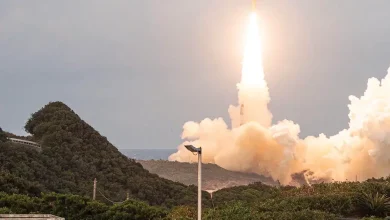
Sling Stone 2024, a US PACOM-led capabilities exercise that coincided with the Missile Defense Agency’s (MDA) Flight Experiment Mission-02 in the U.S. territory of Guam, showcased PMTEC’s ability to integrate virtual and constructive simulations with live forces. That enables joint and coalition forces to rehearse sensitive tactics, techniques and procedures without being exposed to adversaries.
“Sling Stone was able to rapidly transition from a virtual event using distributed training systems based in the U.S. and live units on Guam to a bilateral U.S.-Japan defense of Guam scenario,” said U.S. Navy Cmdr. Ben Herring, then assistant to the MDA director at US PACOM.
The first phase included LVC training environments simulating real-world multidomain operations in the air and on land and sea. The second phase used the MDA’s test of a missile defense interceptor to allow the joint force to detect, track and simulate engagement of the threat. During the test, a Standard Missile-3 Block IIA, fired from a vertical launcher at Andersen Air Force Base, Guam, intercepted a surrogate medium-range ballistic missile more than 200 nautical miles off the coast of northeast Guam.
Simultaneously, the U.S. Navy guided-missile destroyer USS Milius, operating off Guam, detected, tracked and simulated engagement of the missile. Task Force Talon, the U.S. Army’s Guam-based Terminal High Altitude Area Defense unit, also received missile tracking information.
The Japan Maritime Self-Defense Force guided-missile destroyer JS Haguro also exercised its air defense support, increasing interoperability between forces and fostering a shared information environment.
“Leveraging MDA’s flight test to train how we fight just made sense,” said U.S. Navy Rear Adm. Greg Huffman. “We will take lessons learned and continue to strengthen the architecture of Guam’s defense against evolving adversary missile threats.”

NANCY JONES-BONBREST/
U.S. MISSILE DEFENSE AGENCY
Enabling Interoperability
While live-fire exercises span the gap between classroom theory and battlefield reality, PMTEC builds additional bridges — nodes, networks and facilities — that link geographically distributed ranges across the Indo-Pacific and beyond with U.S. continental assets. Connecting live ranges with virtual simulators and constructive (computer-generated) environments enables realistic training without revealing sensitive tactics to adversaries — another asymmetric advantage.
PMTEC has created a unified training ecosystem capable of integrating simulation systems across locations, ensuring combined joint forces can train together effectively, regardless of physical barriers.
“PMTEC has established the largest coalition range system in the world,” said Dr. Andre J. Stridiron III, PMTEC program manager.
Enabling the U.S. and its Allies and Partners to rehearse joint operations in a unified training environment with realistic scenarios tailored to regional threats is a significant asymmetric advantage for the U.S. and coalition forces.
Balikatan 2026 marked a significant milestone for coalition command and control in the Indo-Pacific, as allied forces for the first time had a common operating picture accessible to eight nations, enabled by PMTEC. Alphonse La Porta, a career diplomat and former U.S. ambassador to Mongolia, served as political and military advisor for the exercise’s control group. He said contextual awareness and information flow are invaluable for commanders. “We can’t go to war without effective command and control,” La Porta said. “We have to make doggone sure that it works.”
Near-peer adversaries may have large militaries but often lack true allies. Their partnerships are transactional, fragile and limited. By contrast, U.S.-led coalitions are built on shared values, trust and institutional frameworks, giving them staying power and credibility. That imbalance makes coalitions an asymmetric advantage. Unlike raw military strength, coalitions bring unique benefits that tilt the balance strategically, psychologically and operationally.
During large-scale military exercises such as Cobra Gold 2026 in Thailand, the use of TAK devices and a common operating picture allows warfighters to overcome language barriers and other procedural differences, enhancing interoperability and strengthening partnerships.
By demonstrating a synchronized, technologically advanced, and highly interoperable network of Allies and Partners, asymmetric advantage serves as a powerful deterrent. It reduces the likelihood of miscalculation and escalation by showcasing the readiness and capability of U.S. and allied forces to respond decisively to any threat.
PMTEC’s ability to rehearse tomorrow’s fight with Allies and Partners without revealing tactics or risking escalation is a strategic asset in maintaining stability in the Indo-Pacific.
PMTEC exemplifies the principle of “going deep,” empowering warfighters to go beyond surface-level preparation and cultivate the practiced expertise required to excel in complex, multidomain, contested scenarios. This unwavering commitment to depth — in skill, strategy, resources and collaboration — ensures that U.S. and coalition forces are not only prepared to meet today’s challenges, but also well-equipped to adapt and prevail in the face of tomorrow’s uncertainties. PMTEC is diving deep to keep U.S. asymmetric advantage clearly visible on the surface, projecting strength and readiness across the Indo-Pacific and beyond.
“We are continuously … integrating emerging technologies, creating infrastructure and partnering with industry to operationalize exercises and enhancing U.S. posture and deterrence,” Stridiron said. “We are bringing kinetic and nonkinetic — cyber, electronic warfare, space, information — together to create realistic, real-time, multidomain training with our coalition partners.”
Tai Prohaska is an information operations integrator supporting the Pacific Multi‑Domain Training and Experimentation Capability.
What is live, virtual and constructive training?
Live
Real-world operations with personnel, equipment and platforms. It provides hands-on experience in field exercises, live-fire drills and other environments.
Virtual
Computer-based simulations that replicate real-world scenarios. Participants interact with simulated environments through virtual reality and other technologies.
Constructive
Computer-generated forces and scenarios that simulate operational environments. This enables large-scale complex training that may not be possible to replicate in live environments.