U.S. Army Col. (Ret.) Dr. James M. Minnich Daniel K. Inouye Asia-Pacific Center for Security Studies
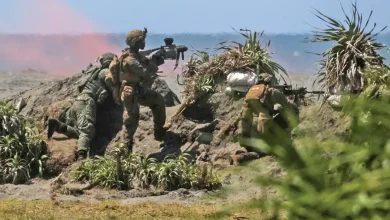
In April 2025, a new picture of coalition power emerged across the Philippine archipelago. During Exercise Balikatan, United States Marines positioned long-range anti-ship missile launchers in the northern islands of the Batanes. Simultaneously, U.S. Army High Mobility Artillery Rocket Systems (HIMARS) rolled into coastal firing positions on Palawan, hundreds of kilometers to the southwest. At sea, Japanese frigates integrated with Philippine and U.S. vessels near the contested Scarborough Shoal in the South China Sea.
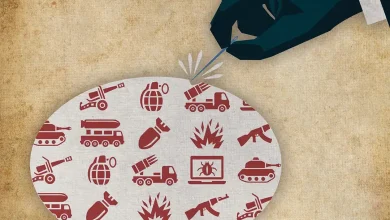
None of these individual moves rivaled an adversary’s mass. They did not have to. Together, they represented a different logic of power: networked asymmetry — the ability of Allies and Partners to impose cascading dilemmas through tempo, geometry and quality to offset an opponent’s numerical advantage.
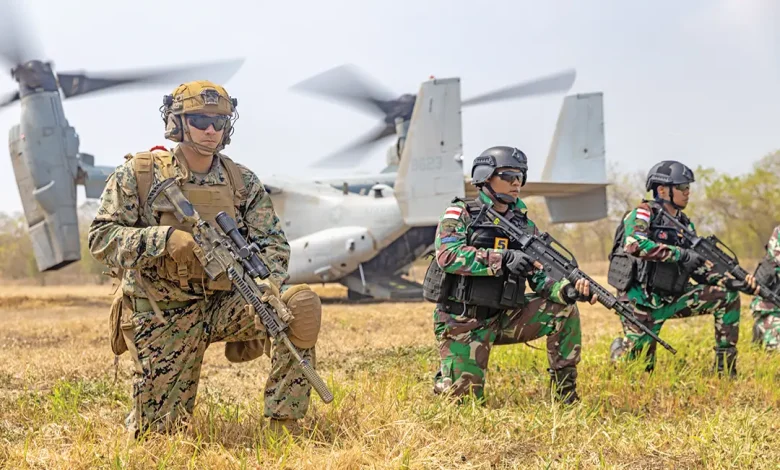
Adm. Samuel J. Paparo, Commander of U.S. Pacific Command (US PACOM), describes this unparalleled network of alliances and partnerships as the U.S.’s key strategic asymmetric advantage. For example, exercises that were once bilateral, such as Balikatan in the Philippines and Garuda Shield in Indonesia, have evolved into multilateral test beds for integrating advanced technologies, synchronizing multidomain operations and rehearsing high-end warfighting at an unprecedented scale.
In advancing the concept of networked asymmetry, the coalition’s decisive edge lies in its ability to outpace, outposition and outadapt rivals by fusing innovation, geography and alliance architecture. This advantage rests on three interdependent pillars:

Tempo: Sensing, deciding and acting faster than competitors to seize and maintain the initiative.
Geometry: Dispersing and positioning forces across contested spaces to create a resilient and unpredictable posture.
Quality: Sustaining innovation, interoperability and resilience to win the long-term contest
of adaptation.
Faster than the Adversary: The Tempo Imperative
In modern warfare, speed is critical, but tempo is decisive. Tempo, the rhythm of observing, orienting, deciding and acting faster than an opponent, determines who controls the initiative. In his 2025 posture statement, Adm. Paparo made this US PACOM’s central objective: to “see, understand, decide, and act faster than any adversary,” denying them the ability to achieve their objectives. Achieving this requires more than just faster platforms; it demands a resilient, coalitionwide command and control (C2) backbone that transforms shared information into synchronized action.
From Kill Chain to Kill Web
The traditional kill chain model of warfare is linear and fragile. A kill chain is the systematic process used to rapidly and accurately locate and destroy an enemy target. The chain fails if any single link — from sensor to shooter — is broken. In contrast, a kill web is a distributed, resilient multinode network. It spreads detection, decision-making and engagement functions across redundant platforms and units. If one sensor is jammed or a C2 node degraded, others are positioned to carry the mission forward, ensuring continuity.
Balikatan 2025 demonstrated this concept. When U.S. Marines deployed the Navy-Marine Expeditionary Ship Interdiction System launchers to the Batanes Islands alongside their Philippine counterparts, they did more than position hardware. They integrated a sophisticated fires system into a combined sensing and fire-direction architecture. The subsequent simulated strikes demonstrated a fused coalition kill web’s ability to move targeting data cleanly across national and service boundaries and to act on compressed timelines. The result is a powerful deterrent message: The alliance can generate combat effects at a speed no adversary can match. Adm. Paparo has called this “decision superiority” the ultimate tool to “reduce the risk of miscalculation.”
Institutionalizing Tempo
For tempo to be a durable advantage beyond scripted exercises, coalitions must cultivate three core habits:
Shared Data and Delegated Authorities: The heat of a crisis is not the time to negotiate information-sharing agreements. Coalitions must establish common data standards and prearranged release authorities that prevent bureaucratic bottlenecks at the most decisive moments.
Rehearsals Under Duress: Drills must move beyond best-case scenarios. By routinely injecting degraded communications, cyber interference and split-command scenarios into training, forces normalize rapid recovery and build the muscle memory to operate in contested environments.

Trusted Automation with Humans in the Loop: Leveraging artificial intelligence and machine-learning algorithms can drastically accelerate the processing of vast amounts of sensor data, presenting commanders with viable options in seconds, not hours. This is not about replacing human judgment but augmenting it to operate at machine speed.
When tempo becomes the baseline expectation, adversaries are forced to hesitate. That hesitation, born from uncertainty about the coalition’s response time, is deterrence delivered at the speed of relevance.
Survive by Dispersing: The Geometry of Uncertainty
Across the Indo-Pacific, distance and dispersion reward agility. Geometry transforms the region’s geography from a challenge into a decisive advantage. Instead of concentrating forces in a few large, vulnerable hubs, this approach disperses combat power across a network of smaller, more resilient sites, profoundly complicating an adversary’s surveillance and strike calculus.
Balikatan 2025 provided a master class in strategic geometry. The U.S. Army’s maneuver of HIMARS launchers over 240 kilometers by land and sea to Palawan for a live-fire drill demonstrated the ability to project precision firepower from unpredictable locations. This was complemented by Philippine Navy fast attack craft and Australian Javelin launch unit teams securing the littoral zone. Far to the north, the expeditionary fires base in the Batanes proved that potent effects can be staged from austere terrain in strategic choke points without relying on static, easily targetable infrastructure.
These actions exponentially multiplied the number of aimpoints an adversary would have to track and target, forcing them to expend finite intelligence, surveillance and reconnaissance (ISR) assets and munitions to cover a bewildering array of dilemmas.
Translating Access into Advantage
This operational geometry is underwritten by forward-thinking diplomacy. A resilient network of interlocking pacts from the Philippines-U.S. Enhanced Defense Cooperation Agreement to the growing number of reciprocal access agreements linking key partners such as Australia, Japan, the Philippines and the Republic of Korea forms the foundation for this distributed posture. The agreements translate political commitments into operational options: the ability to rotate forces, pre-position critical supplies, and train together with greater frequency and realism. In this context, geometry is not about static basing but about gaining time: the critical hours and days dispersed units need to absorb a potential first strike, displace and continue the fight. The same distributed networks that move launchers and supplies for defense also enable a more rapid and resilient humanitarian response, saving lives in peacetime and preserving combat power in crisis.
This geometry forces adversaries into an unfavorable cost-exchange ratio, where they spend far more on ISR and munitions to find and neutralize a target than the defenders expend to remain mobile and viable. That economic friction is asymmetric advantage in its purest form.
Win on Endurance: The Quality of Adaptation
In a protracted conflict, the ultimate advantage goes to the side that can endure, adapt and regenerate. For the alliance network, quality is less about possessing the most exquisite platforms and more about the holistic blend of rapid innovation, seamless interoperability and resilient sustainment, allowing forces to outadapt a numerically superior rival over weeks, months and years.
Innovation that Scales
Adaptability thrives at the tactical edge. In 2025, U.S. Army units in Luzon in the northern Philippines used expeditionary 3D printers to manufacture and deploy mobile drones, achieving their ISR and strike capabilities in days rather than the months or years typical of traditional procurement. This model, built on iterative upgrades, modular parts and commercial off-the-shelf sensors, reflects a crucial shift toward affordable mass. Loitering munitions, uncrewed surface and aerial systems, and modular sensor nodes provide commanders with low-cost options that can be deployed at scale. The value is not in their elegance but in their adaptability to operational timelines.
Interoperability as a Weapon System
The most decisive platform in the Indo-Pacific is not a ship or a plane, but the network of partnerships itself. When data formats cross national borders effortlessly, when gateways can fuse and translate disparate sensor feeds, and when release authorities are rehearsed, the alliance’s many sensor grids and magazines are fused into a single, vast arsenal. Adm. Paparo’s emphasis on a resilient command, control, communications, computers, cyber, intelligence, surveillance, reconnaissance and targeting architecture, known as C5ISRT, underscores this point. A shared network is the connective tissue that enables a dispersed force to fight as a cohesive whole.
Sustaining the Fight Forward
Endurance is a function of logistics. A distributed force can only persist if supported by a correspondingly distributed sustainment network. Fuel bladders, spare parts and repair capacity must be pushed to the edge. Pre-positioning stocks through bilateral agreements, leveraging commercial transport and establishing regional repair nodes are essential for shortening vulnerable replenishment lines. Initiatives such as Philippine-U.S. pre-positioning programs and broader allied industrial efforts, including the U.S.-led Partnership for Indo-Pacific Industrial Resilience and the AUKUS security partnership among Australia, the United Kingdom and the U.S., are not just about efficiency. They also are strategic imperatives designed to build a codevelopment, coproduction and cosustainment ecosystem that can withstand the pressure of conflict. The ultimate metric of quality is throughput under stress — the speed at which systems can be repaired, replaced or upgraded to maintain combat power.
An Enduring Asymmetric Advantage
The Indo-Pacific’s competitive landscape demands a strategic approach that values ingenuity over sheer mass. As recent exercises demonstrate, networked asymmetry — the integrated application of tempo, geometry and quality — provides the U.S. and its Allies and Partners with a powerful and enduring counter to adversary scale.
The effect is cumulative and reinforcing. Hesitation is imposed by superior tempo. Dilemmas are created by unpredictable geometry. Endurance is enabled by superior and adaptive quality. Together, these dynamics create a defensive web so resilient, responsive and lethal that it fundamentally alters an adversary’s risk calculus. This is the ultimate aim of networked asymmetry: to build an advantage so clear and credible that it makes deterrence effective and conflict unnecessary.