Removing Barriers, Sharing Solutions
Trust, Interoperability and Mutual Purpose are Critical to First Island Chain Partnerships
Lt. Col. Kevin M. Wheeler/U.S. Marine Corps
Promoting peace and stability in the Indo-Pacific hinges on strategic depth. Resilient relationships are born of shared visions and coupled with interoperable strategies able to adapt as conditions change. Plans must be designed not for short, intense skirmishes but for prolonged struggles over influence, access and values. A mindset that prioritizes long-term coalition strength over short-term lethality will secure a free, secure and prosperous Indo-Pacific.
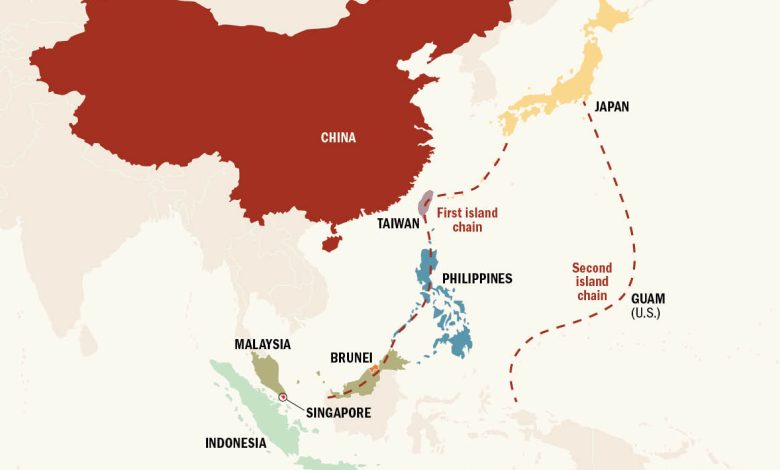
The United States and its Allies and Partners must operate from a position of strength. Success will be built on a foundation established by like-minded stakeholders working together. National commitments and mutual trust among partners are essential. As the saying goes, “If you want to go fast, go alone. If you want to go far, go together.” To embrace inevitable challenges, the U.S. and its Allies and Partners must emphasize the enduring strategic value of the first island chain, the strand of archipelagoes off Asia’s east coast that includes Brunei, Indonesia, Japan, Malaysia, the Philippines, Taiwan and Singapore, which poses a hurdle for any revisionist power seeking Pacific Ocean access.
Mutual trust, access and shared interests are critical to ensure the stability and security of not only the first island chain but also the entire Indo-Pacific. Allies and Partners must clearly explain why securing first island chain nations and territories is vital, making their case concisely and judiciously and deploying personnel and resources when needed. In the digital age, when information can move faster than a hypersonic missile, effective messaging will aid this effort.

Our Word Is Our Bond
U.S. mutual defense treaties such as those with Japan and the Philippines are more than legal obligations; they are promises of solidarity based on trust. From an armed forces perspective, supporting Allies and Partners means ceding some operational independence for the collective benefit.
Weapons sales, interoperability and, in some cases, interchangeable hardware are key. Japan deploys
U.S.-designed and manufactured weapons such as fighter aircraft, missiles and naval combat systems. Japan also supplies the Philippines with defense technology such as a command and control system. Partner forces routinely participate in bilateral and multilateral military exercises.
Removing barriers to procuring high-performing technologies from foreign suppliers is spurring unprecedented collaboration. It enables the integration of commercial supply chain management practices and puts sustainment requirements closer to points of need. This trend must continue to grow.
Shared needs — basic logistics, housing, food, water — can be met with shared solutions. The goal must be a trusted, interoperable network of Allies and Partners anchored by shared access, logistics and supply chains.
Armed forces increasingly are improving efficiency with artificial intelligence tools that synthesize vast data streams and replace siloed systems specific to individual services and functional areas. Allies and Partners must establish secure distributed data systems that allow information to flow across borders and domains, enabling like-minded nations to support one another. Coalition logistics and infrastructure require integrated data systems that help commanders plan and rehearse possible scenarios, accelerating decision-making and ensuring best use of finite resources.

Enduring Influence
Combined efforts to promote peace and stability must be enduring. This is where defense forces play a stabilizing role through presence, posture and partnership. Force engagement, aligned with diplomatic, informational and economic initiatives, provides continuity and signals long-term commitment. To strengthen this architecture, Allies and Partners must:
Continue developing metrics of effectiveness beyond kinetic outcomes. This could include the ability of coalition forces to seamlessly operate multiple units, sustain combat operations because of pre-positioned stocks and accurately predict sustainment shortfalls based on superior data analysis.
Enhance training pipelines for regional expertise and language skills. Allies and Partners must familiarize service members and public servants with a country or region, allowing them to build relationships, understand geography and embrace host nation cultures.
Promote interagency coordination for a whole-of-government approach, creating structured forums within each country to facilitate sustained collaboration.
Encouraging long-term stability requires continuous engagement, shared planning and scalable participation among coalitions, anchored by person-to-person relationships.
Establishing influence in the Indo-Pacific takes generations. Success will be measured in trust, interoperability and shared purpose. A foundation built on coalitions with resilient physical and digital architecture will allow nations to outlast long-term challenges and outmaneuver short-term threats. This is a template for enduring influence, one that prioritizes relationships over reaction, presence over rhetoric and coalitions over artificial timelines. ο