Environmental Exploitation and Deception
How China is Exporting Ecocide to the World
FORUM Staff
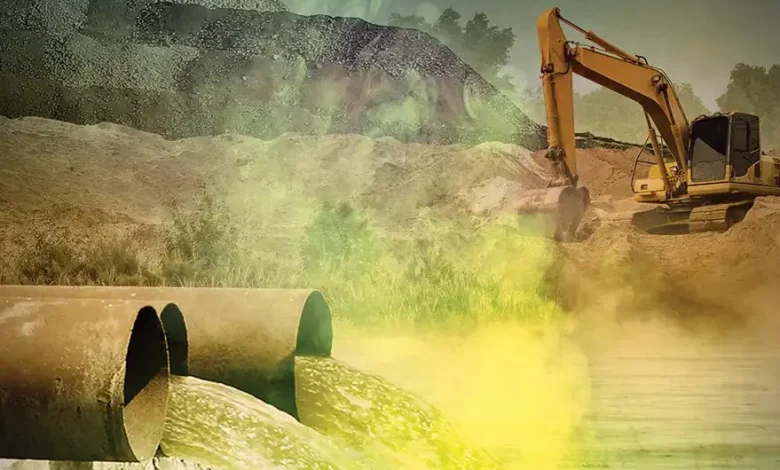
Beijing has increasingly attempted to brand itself as a global leader in protecting the environment and providing clean energy and sustainable development. Yet underneath that propaganda lies a dark reality: China is exporting some of its worst environmental practices to developing nations through aggressive investments and resource-extraction campaigns, especially in critical minerals and raw-material industries. The result: widespread ecological destruction, toxic pollution and long-term damage to fragile ecosystems across Southeast Asia and beyond.
Examples range from nickel mining in Indonesia and rare-earth mining in Myanmar to steel and paper mills across the region, indicating a pattern of exploitation that starkly contrasts China’s professed environmental stewardship.
A geo-economic and humanitarian challenge is unfolding with implications for regional stability, public health and global security. The international community must develop solutions to China’s export of destructive environmental practices.
A Grab for Critical Minerals
As demand surges for electric vehicles (EV), renewable energy technologies and advanced electronics, the race for battery metals and rare-earth elements has intensified. Despite already being a processing leader, China has steadily expanded its reach by relocating the dirtiest, most polluting parts of its supposedly green supply chain, often to countries with weak environmental governance, lax enforcement or ongoing conflicts.
Many of the targeted countries, such as Indonesia, Laos and Myanmar, are strategically important for China under the framework of its hegemonic One Belt, One Road scheme. Beijing presents its infrastructure, smelters and industrial parks as investment or aid — but the underlying motive is resource control and profit, often at the cost of local health, ecology and sovereignty.
In Indonesia, which has the world’s largest nickel reserves, Chinese firms, notably Tsingshan Holding Group and Jiangsu Delong Nickel Industry Co., control about 75% of nickel refining capacity, the United States-based global security nonprofit C4ADS reported in February 2025.
“A lack of domestic control leaves Indonesia reliant upon Chinese investment and continued support of the industry, which may limit the government’s ability to hold the industry accountable and shape the sector for its own economic benefit,” C4ADS reported.
Meanwhile, in Myanmar’s border regions, such as Shan and Kachin states, Chinese state-affiliated mining firms have ramped up rare-earth extraction, often operating under little or no regulatory oversight due to the protracted civil war, reported the Thailand-based news website The Nation.
China’s pattern of expansion suggests a deliberate strategy: secure access to critical resources cheaply and at scale, while outsourcing the environmental cost to states with weaker regulatory capacity or greater political vulnerability.

REUTERS
Nickel in Indonesia: The Price of Batteries
Nickel is essential for stainless steel and EV battery production. But the way China’s nickel sector has expanded in Indonesia, particularly with coal-powered smelters and processing plants, has caused severe environmental and social damage, experts contend.
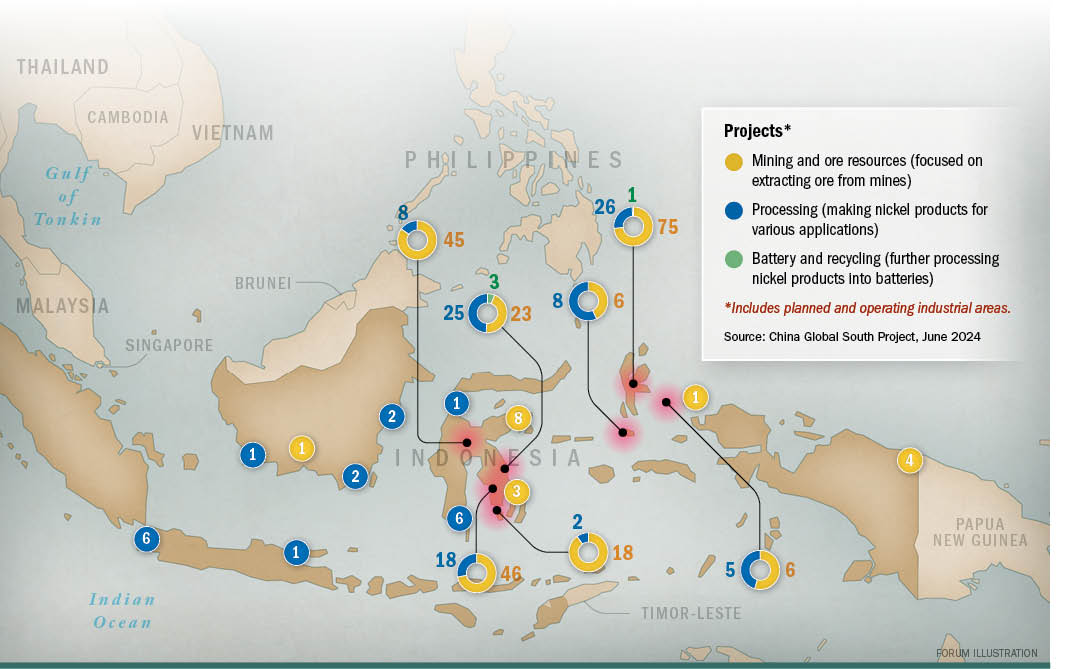
China has supported this expansion through predatory financing of the massive Indonesia Morowali Industrial Park (IMIP) on Sulawesi and other smelter clusters on Halmahera. Many of these facilities run on captive coal-fired power plants, even as their output feeds supposed clean-energy supply chains abroad.
IMIP is expected to have an annual coal-fired power capacity of 5 gigawatts, or nearly as much coal power as Mexico generates each year, according to advocacy group Mighty Earth. In addition to high emissions, these coal plants pollute the air, water and land, threatening local livelihoods, the Asia Pacific Solidarity Network reports.
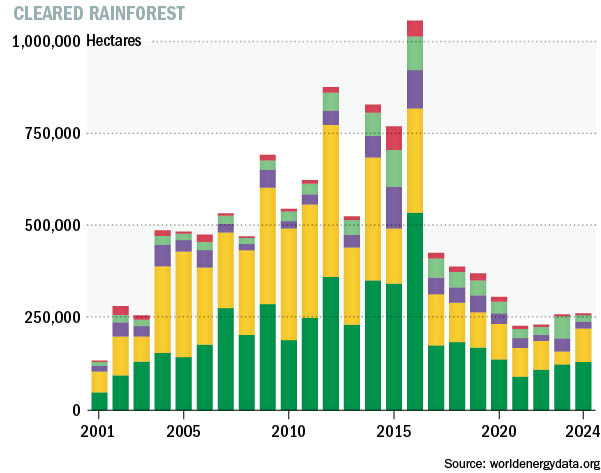
Deforestation has been extensive. Since 2000, over 8,700 hectares of rainforest have been cleared in the North Morowali region alone to make way for mines, smelters and infrastructure, according to environmental groups including Greenpeace Indonesia. This massive land conversion has destabilized local ecosystems, undermined watershed integrity and degraded habitat for biodiversity. Agricultural land and water sources vital to local communities have been disrupted, the groups report.
The pattern extends beyond Indonesia. In Papua New Guinea, testing at a Chinese-operated nickel mine revealed contamination patterns strikingly similar to those in Indonesia: inadequate containment systems, toxic runoff threatening communities and ecosystems, and dangerous levels of heavy metals, including hexavalent chromium, a carcinogen. Multiple contaminants exceed safety standards by orders of magnitude, demonstrating Chinese firms are systematically replicating harmful practices across the Pacific, according to a U.S. government analysis.

Pollution, Worker Deaths, Social Costs
The environmental toll is matched by alarming social costs. Chinese-backed nickel smelters in Indonesia were frequently accused of air and water pollution, soil contamination and biodiversity loss, according to a 2023 report by the London-based advocacy group Business and Human Rights Centre. The report, “Unpacking clean energy: Human rights impacts of Chinese overseas investment in transition minerals,” covered 18 countries with the Democratic Republic of the Congo, Indonesia, Myanmar, Peru and Zimbabwe recording the highest numbers of allegations.
At the same time, labor conditions in Indonesia have been repeatedly criticized as unsafe and exploitative. Between 2015 and 2023, more than 90 deaths and 100 injuries were reported in processing facilities there. In 2023, at least 60 deaths or serious accidents were linked to Chinese-owned smelters, including a fire at a Tsingshan-owned facility that killed 21 people and injured 38, according to Mongabay, a conservation and environmental science news platform.
Pollution and wastewater runoff have decimated fish populations, destroying livelihoods of people rely on fisheries and marine resources, environmental groups report.
Underlying many of these abuses are corruption and weak enforcement. Roughly one-third of over 330 nickel mining and refining projects in Indonesia had been accused of corruption or illegal mining, according to a 2024 investigation by the China Global South Project, a nongovernmental organization.
“Corruption and environmental damage in Indonesia’s nickel industry have become closely linked: when a nickel mining company operates illegally, the local community and ecology tend to suffer,” the report said. “The widespread Chinese financing of the Indonesian nickel industry seems to have led some to grow wary of Chinese investors and their relationships with local officials, since local governments have been broadly criticized for corrupt business dealings.”
Although the report cites China for the growth of Indonesia’s nickel mining industry, the expansion has negative consequences. What is promoted as foreign investment or industrial development often translates into a de facto resource grab, with environmental safeguards sacrificed for profits and speed.

Myanmar’s Mining and the Mekong Crisis
China’s drive to dominate rare-earth resources is matched by its readiness to outsource environmental harm to unstable frontier zones.
Historically, China conducted much of its rare-earth extraction within its borders. But domestic environmental and health concerns, especially contamination of soil and groundwater, led Beijing to shutter hundreds of small private mines after 2011, according to a June 2025 report in Le Monde, a French newspaper.
Rather than cleaning up heavily polluted sectors at home, including nickel smelting, rare-earth mining and heavy industry, China began relocating them. Beijing is recasting what was once a domestic problem as a so-called foreign development opportunity,
Le Monde reported.
The cost of producing heavy rare-earth elements such as dysprosium and terbium, both used in advanced weapons systems, is one-seventh the price in Myanmar than in China, according to Benchmark Mineral Intelligence, a London-based market research firm. To meet demand, China redirected extraction to neighboring Myanmar, particularly to conflict-affected territories in Shan and Kachin states. These regions, under the sway of ethnic armed organizations or remote military outposts, offer lax oversight and minimal accountability.
Satellite imagery shows explosive growth: mining sites, road networks and waste ponds cutting into once-untouched hillsides, according to the Shan Human Rights Foundation. These mines extract key rare-earth elements for export to China.
At least a dozen gold and rare-earth mines were established in southern Shan in 2025 alone, according to Zachary Abuza, a professor at the National War College in Washington, D.C.
Myanmar’s civil war has persisted for more than five years, producing a lawless border area mainly held by ethnic armed groups. Chinese firms operate via informal networks, often in alliance with the military junta as well as local militias or armed groups, making accountability nearly impossible, Abuza told the Al Jazeera news agency.
“In this vacuum, mining has exploded — likely with Chinese traders involved. The military in [Myanmar’s capital] Naypyidaw can’t issue permits or enforce environmental rules, but they still take their share of the profits,” he said.
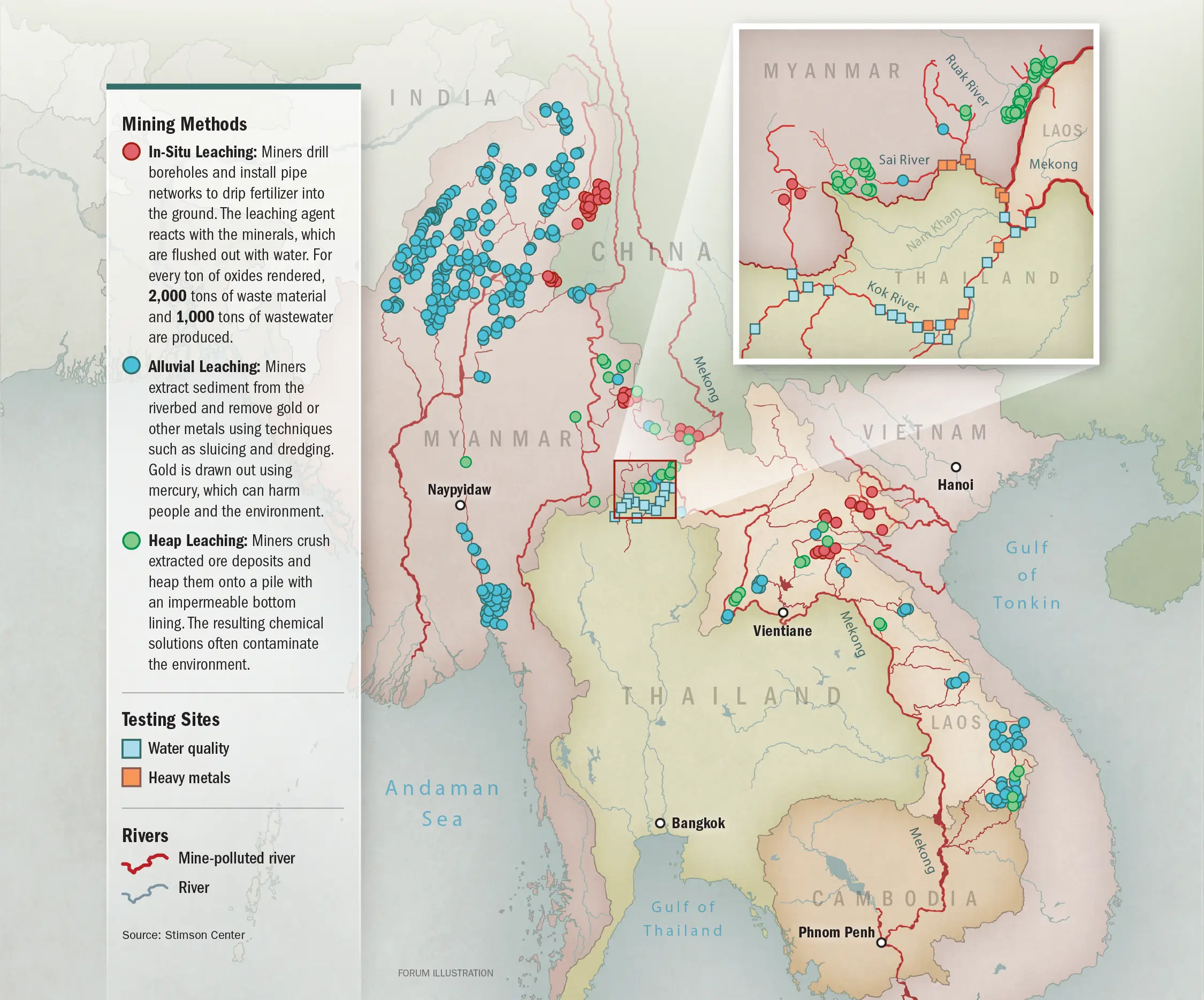
In a November 2025 report, the Stimson Center think tank used satellite imagery to identify 2,420 unregulated mining sites on major river systems in Cambodia, Laos and Myanmar. “Over the last decade, a boom in unregulated mining has been sending dangerous contaminants such as cyanide, mercury, arsenic, and other heavy metals directly into scores of rivers throughout mainland Southeast Asia,” the report stated.
“Since the mining operation started [in Myanmar], there is no protection for the local people,” Sai Hor Hseng, a spokesman for the Shan Human Rights
Foundation, which is based in the eastern Myanmar state, told Al Jazeera. The mining companies “don’t care what happens to the environment,” he said, or to those living downstream in Thailand.
Transboundary Pollution
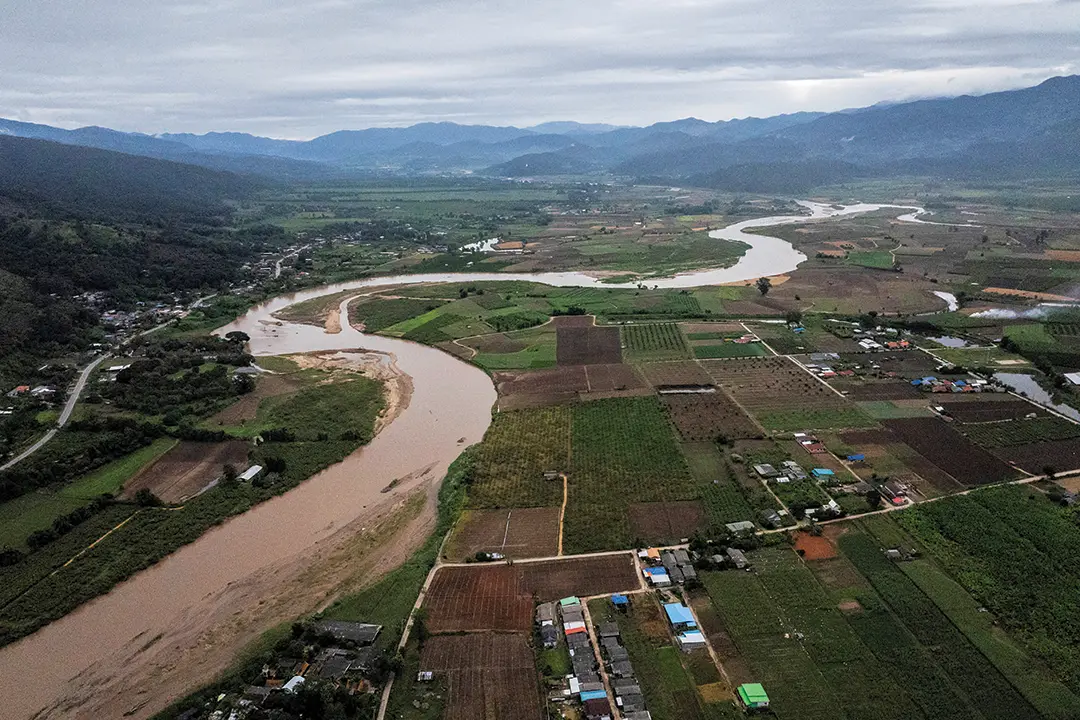
The environmental harm is not constrained within Myanmar’s borders. Toxic runoff, including heavy metals and arsenic, has polluted the Kok River and its tributaries, which feed into the Mekong, threatening water supplies, fisheries and farming communities in northern Thailand, Laos and farther downstream.
Arsenic levels in parts of the Kok River and Mekong tributaries exceeded by as much as 40 times the levels defined as safe by health authorities, the Thailand-based CTN News portal reported in August 2025. Local communities report fish deformities and die-offs; farmers fear their crops will absorb toxins; residents have developed skin ailments after contact with contaminated water, all “traced to upstream mining operations” across the border in Shan, according to the Bangkok Post newspaper. Elevated arsenic levels also have been found in the Mekong.
The contamination potentially affects tens of millions of people across Southeast Asia. Downstream impacts of such mining ripple across borders, contaminating rivers, agricultural land, fisheries and communities in neighboring countries such as Laos and Thailand.
The cross-border pollution crisis is severely impacting millions of people in Chiang Rai in northern Thailand, who face risks to their livelihoods and health due to heavy metal contamination, particularly arsenic, in the Kok River, which flows into the Mekong and Sai rivers, Pianporn Deetes, director of Southeast Asia Campaigns at International Rivers, told the Bangkok Business newspaper.
“Local residents can no longer engage in traditional activities like fishing or operating tour boats, and farmers are worried that rice grown using water from the Kok River may be contaminated with arsenic, as rice tends to absorb arsenic well. Additionally, there have been reports of fish with unusual parasites, which correlate with mining activities disturbing the soil,” Deetes said.
Ben Hardman, Mekong legal director for the advocacy group EarthRights International, told Al Jazeera in August 2025 that residents worry that Shan and neighboring countries into which Myanmar’s rivers flow will suffer the same fate as Kachin, especially if rare-earth mine sites multiply to meet growing global demand.
“There’s a long history of rare-earth mining causing serious environmental harms that are very long-term, and with pretty egregious health implications for communities,” Hardman said. “That was the case in China in the 2010s, and is the case in Kachin now. And it’s the same situation now evolving in Shan state, and so we can expect to see the same harms.”
The pattern extends globally. Testing at Chinese-operated mining and refining facilities across the Pacific, Africa, Latin America and the Caribbean reveals the same systematic failures: adverse levels of mine waste, inadequate containment, and contamination threatening water supplies and communities. Regardless of commodity or location, Chinese firms prioritize profit extraction over environmental protection, leaving host nations to bear the costs of pollution and ecological damage.

Steel, Paper Production
China’s resource grab doesn’t stop at raw materials. Through investment, Chinese firms have exported steel production, paper mills and plantations to Southeast Asia and elsewhere in the Indo-Pacific, often bringing pollution-intensive technology, weak regulation guidelines and environmental degradation.
With pressure on domestic heavy industry mounting, such as stricter regulations, expansion limits and carbon-emission targets, many Chinese steel producers, for example, are shifting to Southeast Asia and beyond. As of 2023, China accounted for about 80% of total foreign investment in new steel capacity in Southeast Asia, according to a 2025 report by Agora Industry, a Germany-based think tank.
Most of these plants rely on older, coal-fired furnace technology, which produces the most harmful emissions, particulate matter and local pollution, Agora reported. The results are rising carbon emissions regionwide as well as local air and water pollution, strain on ecological systems, and deteriorating public health. Moreover, the flood of cheap Chinese steel into Southeast Asian markets undermines local producers, discouraging investment in cleaner and more environmentally responsible steel production, the SteelRadar website reported. Chinese-backed smelting companies in Indonesia, including Tsingshan Holding Group and PT Obsidian Stainless Steel, have been linked to air pollution, contaminated water systems, fisheries damage and deforestation, according to a 2026 report on the Dhaka Tribune website.
The world has observed similar patterns in China’s pulp-and-paper sector. In recent decades, China’s growing demand for timber and paper has driven massive plantation and logging operations in Southeast Asia. Large-scale concessions for pulpwood plantations have spread across Cambodia, Laos, Myanmar and Vietnam, often at the cost of natural forests, biodiversity and local land rights, according to the Wilson Center, a U.S.-based think tank. China’s Sun Paper Group, for example, has drawn criticism in the past decade for its paper mill operations in Laos that allegedly contaminated water, reduced agricultural quality and polluted nearby communities, causing illness among residents, according to news reports.
China-linked paper companies often acquire pulp from Southeast Asian plantations, effectively externalizing environmental degradation while reaping profits and meeting global demand. Communities displaced by these plantations lose access to forest resources; traditional agriculture and livelihoods are disrupted.
Despite China’s efforts to create a more sustainable domestic pulp-and-paper sector, its overseas supply chain — where timber is felled, plantations expanded and forests razed — remains a glaring contradiction to Beijing’s “green paper” narrative.
Strategic, Moral Leadership
Supply chain dominance in critical minerals and metals confers China with strategic leverage over industries from consumer electronics to defense. Yet evidence strongly suggests that Beijing is using its might not to build a sustainable future, but to export environmental destruction to some of the world’s most vulnerable communities, including many in Southeast Asia.
The international community, including governments, investors, multilateral institutions and civil society, must confront this reality. Transparency, accountability and enforceable standards are needed to prevent China’s exploitation in the name of clean energy, advocates say. Otherwise, emerging economies will be left with toxic landscapes, broken communities and ecological collapse while China prospers. Only by confronting such predation and holding all stakeholders accountable can peace, security and prosperity be ensured in the region.
China’s Export of Harmful Mining Practices Exacerbates Regional Pollution
China’s aggressive investments and resource mining pursuits, especially of rare-earth minerals, are accelerating environmental degradation across Southeast Asia and beyond.
Mekong River Tributaries Poisoned by Unregulated Chinese Mining
A boom in unregulated mining in the past decade has released arsenic, cyanide, mercury and other contaminants into rivers across Southeast Asia. Satellite imagery revealed more than 2,400 sites for unregulated in-situ leach (rare earth), heap leach (gold, copper, nickel, manganese) and alluvial mining (gold, silver, tin) on or alongside 43 rivers in Myanmar, Laos and Cambodia. Nearly 800 of the sites are along Mekong tributaries. China is driving much of this surge, given the cost of producing rare-earth elements such as dysprosium and terbium, both used in advanced weapons systems, is one-seventh the price in Myanmar than in China, according to Benchmark Mineral Intelligence. Locations affected by Myanmar’s prolonged civil war, such as Shan and Kachin states, seem especially susceptible to such exploitation.
Case Study: China’s Exploitation of Indonesia’s Key Resources
Nickel Mining Nexus
Indonesia is the world’s largest nickel ore supplier, providing about half of global demand in 2023. Chinese companies own about 90% of Indonesia’s nickel processing facilities, and China accounts for up to 70% of all investments in Indonesia’s nickel industry, according to government officials. China’s entrenched role in Indonesia’s nickel sector has contributed to the proliferation of practices that exploit local communities and the environment.
Mining and Processing Projects
- 350+ projects studied; $70.2 billion in investments
- Chinese shareholders control at least 75 of some
350 projects studied. - More than one third of projects were accused of or involved in corruption or illegal mining.
- Water pollution is the top concern for villagers living near nickel mines and factories.
- Nickel industry’s coal-power use may lead to 5,000 annual deaths by 2030 due to air pollution.
Source: 2024 China-Global South Project “Nickel Nexus” report
Deforestation in Indonesia
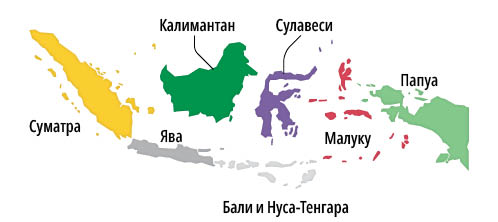
In addition to causing pollution through mineral extraction and processing practices, the pursuit of critical minerals has accelerated deforestation. Since 2000, for example, over 8,700 hectares of rainforest have been cleared in Indonesia’s North Morowali region in Sulawesi alone to make way for mines, smelters and infrastructure.
Reversing Environmental Degradation Caused by China
China’s exportation of harmful mining practices can be reduced by international enforcement of environmental and social standards and by increased coordination among the United States and its Allies and Partners.
The following measures can mitigate environmental damage, minimize future damage,
curtail China’s harmful practices and protect vulnerable populations and lands from abuses linked to global demand for critical minerals.
Promote Alternative Supply Chains, Strict Standards
- More countries could invest in domestic mining and processing capacity or in recycling critical minerals, under stricter environmental standards, reducing reliance on China-dominated supply chains.
- Support mining and processing operations that adopt best practices, such as promoting wastewater treatment, responsible waste management and reforestation, rather than enabling the lowest-cost, highest-pollution model.
Support Regulatory Capacity, Governance in Host Countries
- International organizations such as the United Nations and development banks should provide financial, technical and institutional support to strengthen environmental regulation, monitoring and enforcement in developing countries.
- Civil-society organizations, local communities and media must be empowered to monitor, report and hold investors and governments accountable.
Promote Supply Chain Transparency
- Use technology, including satellite monitoring, blockchain-based supply-chain tracing and remote sensing, to detect illicit mining, deforestation, pollution and waste mismanagement.
- Publish data on ownership, financing, environmental assessments, pollution incidents and compliance so companies, regulators and the public know who is responsible and where.
Strengthen Environmental, Human Rights Requirements
- Governments, multilateral institutions and investors in allied and partner nations should demand that companies sourcing minerals or materials from abroad conduct rigorous environmental and social due diligence, covering not only mines and smelters but also supply-chain impacts and downstream pollution.
- Host nation governments also should enforce licensing, environmental impact assessments and community consultation, and ensure transparency.
Apply Economic Pressure
- Nations and trading blocs should adopt policies and regulations that consider environmental impact and responsible sourcing, including for EVs, electronics
and renewables.