
Taiwan transforms civilian preparedness into regional resilience model
Sarah Chan
Taiwan is transforming its civil defense from a government mobilization system into a whole-of-society resilience initiative encompassing local agencies, emergency services, critical infrastructure operators and residents. Analysts say the approach holds valuable lessons for nations across the region.
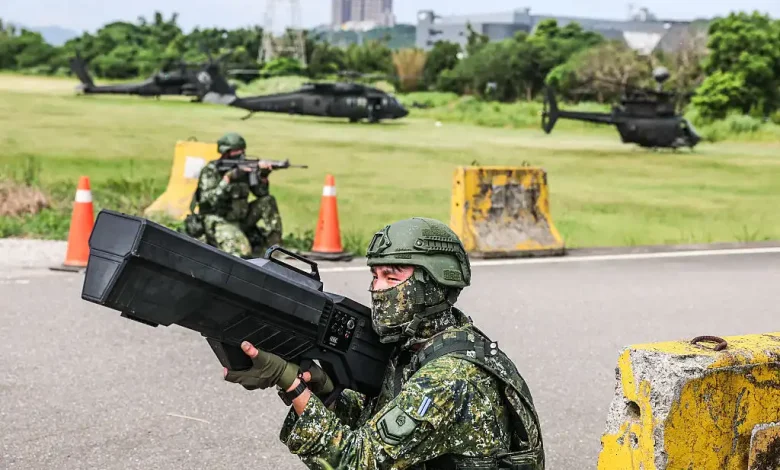
In August 2026, Taiwan staged urban resilience exercises alongside its annual Han Kuang military drills, with nearly 10,000 civilians joining about 20,000 reservists in the largest such exercises yet. For the first time, civilian drills included a deliberate slowing of mobile internet service to rehearse backup communication options, a key pillar of emergency preparedness.
“Realistic participation is what makes a drill worth doing,” Aadil Brar, a Taiwan Foreign Affairs Ministry fellow and visiting scholar at National Chengchi University in Taipei, told FORUM. “If people can ignore a drill, it only tests the plan on paper, not the society that has to carry the plan out.”
In September 2026, President Lai Ching-te announced the World Alliance for Disaster Management, a Taiwan-led network for joint training, exercises and information sharing incorporating agencies from 13 member states, 17 observers and 11 partners, including Japan, the Philippines and the United States.
“Together they form a cooperation network that spans the globe,” Lai said, according to the Taipei Times newspaper.
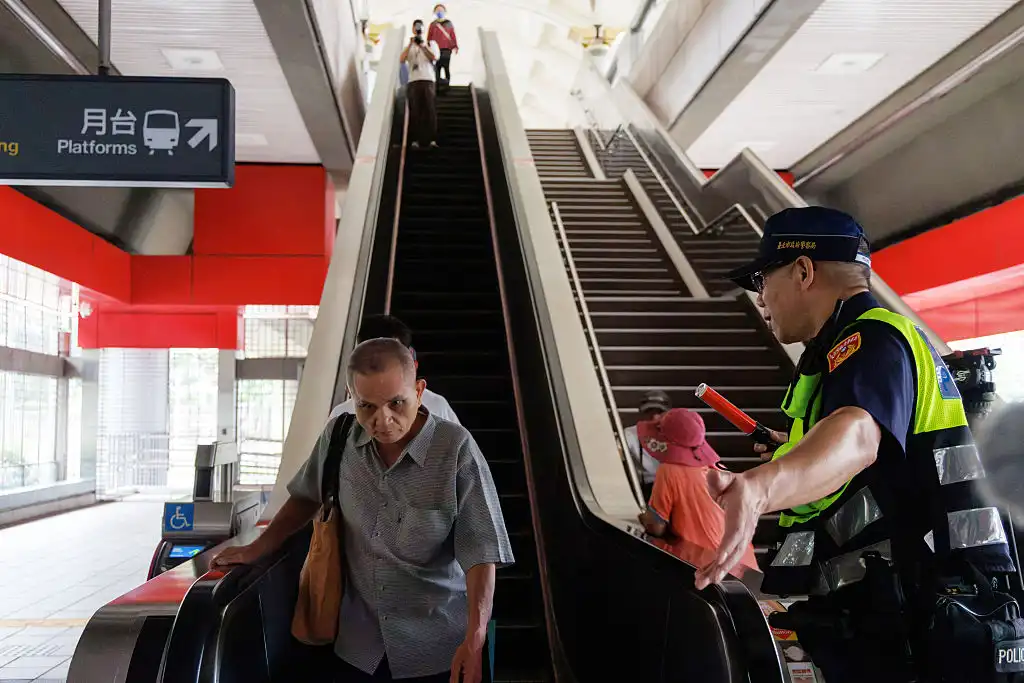
Brar said the resilience drills were fully integrated into the military exercise framework for the first time in 2026, with local governments and military units working under the same wartime scenarios.
In addition to the threat of earthquakes and other natural disasters, Taiwan is preparing for a potential invasion by the Chinese Communist Party, which claims the self-governed island and threatens to annex it by force.
Dr. Wen Liu, an associate professor at the Academia Sinica, Taiwan’s national academy, said exercises should test what happens when communications fail, hospitals face a surge of casualties or supplies cannot reach their destinations. “The objective is not to militarize society, but to give civilians greater agency during a crisis,” Wen, a member of Taiwan’s Whole-of-Society Defense Resilience Committee, told FORUM.
“The question is not only whether Taiwan can survive the first 24 or 48 hours of a crisis, but also whether essential social functions can continue for weeks amid repeated disruptions,” Wen said.
Brar identified distributed energy supplies as foundational, including backup generation at critical sites, microgrids, and storage at hospitals and shelters. He similarly highlighted satellite backups, alternative channels for official information and protection of undersea communication cables.
— STORY CONTINUES BELOW —
Join the discussion
How does your nation contribute to regional disaster response initiatives?
Wen called the all-hazards approach, which treats war as a form of disaster, the most transferable principle for countries throughout the region, since preparing for earthquakes, typhoons or cyber disruption builds capacities useful in any crisis.
The unveiling of the World Alliance for Disaster Management comes two years after Taiwan established the Whole-of-Society Defense Resilience Committee, a public-private endeavor, to bolster crisis preparedness and response.
Lai said the goal is to “ensure Taiwan is better prepared and has greater strength to maintain the status quo, and to prevent peace from being undermined by unilateral provocations.”
Sarah Chan is a FORUM contributor reporting from Singapore.


