Quad nations boost maritime surveillance, critical minerals capacity
FORUM Staff
Australia, India, Japan and the United States are enhancing regional maritime surveillance, bolstering critical minerals supply chains and expanding port infrastructure in the South Pacific under their Quadrilateral partnership.
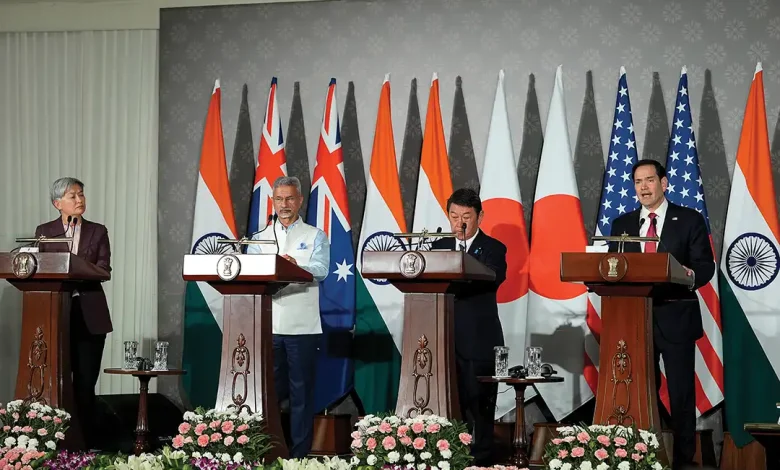
The Indo-Pacific Maritime Surveillance Collaboration, unveiled in May 2026 by the nations’ foreign ministers, will increase information sharing and maritime domain awareness capacity. It initially will focus on the Indian Ocean and incorporate emerging technology and simulated exercises.
The existing Indo-Pacific Partnership for Maritime Domain Awareness (IPMDA) initiative is a mutually reinforcing component to the newly established Indo-Pacific Maritime Surveillance Collaboration. The IPMDA is being operationalized through India’s procurement of commercial MDA data. By subsequently sharing this critical intelligence with regional partners throughout the Indian Ocean Region, India cements its goal to be a reliable security provider.
Meanwhile, the Quad’s inaugural port project in Fiji highlights its emphasis on infrastructure resilience, particularly in a vital region where China is seeking a foothold, including through predatory lending practices and development pacts that have saddled host nations with debt.
Similarly, the new Quad Critical Minerals Initiative will bolster supply chains for mining, processing and recycling rare-earth elements (REE), which are essential for producing components used in civilian and military technologies.
China controls 60% of global REE production and 90% of mineral refining, according to the International Energy Agency. Analysts say Beijing wields its monopoly for economic and political coercion.
The Quad ministers said they will work with regional partners in four key areas: maritime and transnational security, economic prosperity and security, critical and emerging technologies, and humanitarian assistance and emergency response.
“There is great alignment between our interests,” Australian Foreign Minister Penny Wong said. “We all share a vision for the Indo-Pacific, a region that is free and open.”