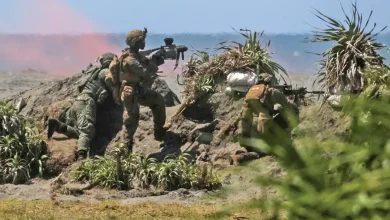
Countering North Korea’s Asymmetric Playbook
Allies and Partners Respond with Multidimensional Approach
Lt. Gen. (Ret.) In-Bum Chun/Republic of Korea Army
North Korea has depended on asymmetry for more than seven decades. Economically weak, diplomatically isolated and technologically constrained, Pyongyang tries to compensate with a web of coercive tools: nuclear weapons, ballistic missiles, cyber intrusions, special operations forces (SOF), political warfare, smuggling networks, and extensive urban and subterranean defenses. These capabilities do not stand alone. Under dictator Kim Jong Un, they have merged into an integrated playbook designed to deter attack, secure concessions and fracture cohesion among the United States and its Allies and Partners.
Communist movements historically rose to power by exploiting the grievances of the poor, the hungry and the ideologically impressionable. They understood political manipulation long before the term asymmetric warfare existed. For them, the human mind was the decisive battleground. North Korea is a direct heir to this tradition. Cognitive warfare remains its most enduring asymmetric weapon.
The U.S. and its Allies and Partners are responding with a multidimensional approach — fortifying extended deterrence, enhancing cyber and financial resilience, tightening maritime enforcement, strengthening counter-SOF capabilities, and preparing for urban combat. But the contest is long-term, and Pyongyang invests heavily and still seeks advantage in the cognitive domain.
STAFF SGT. SARAH WILLIAMS/U.S. AIR FORCE
Extended Deterrence and Missile Defense
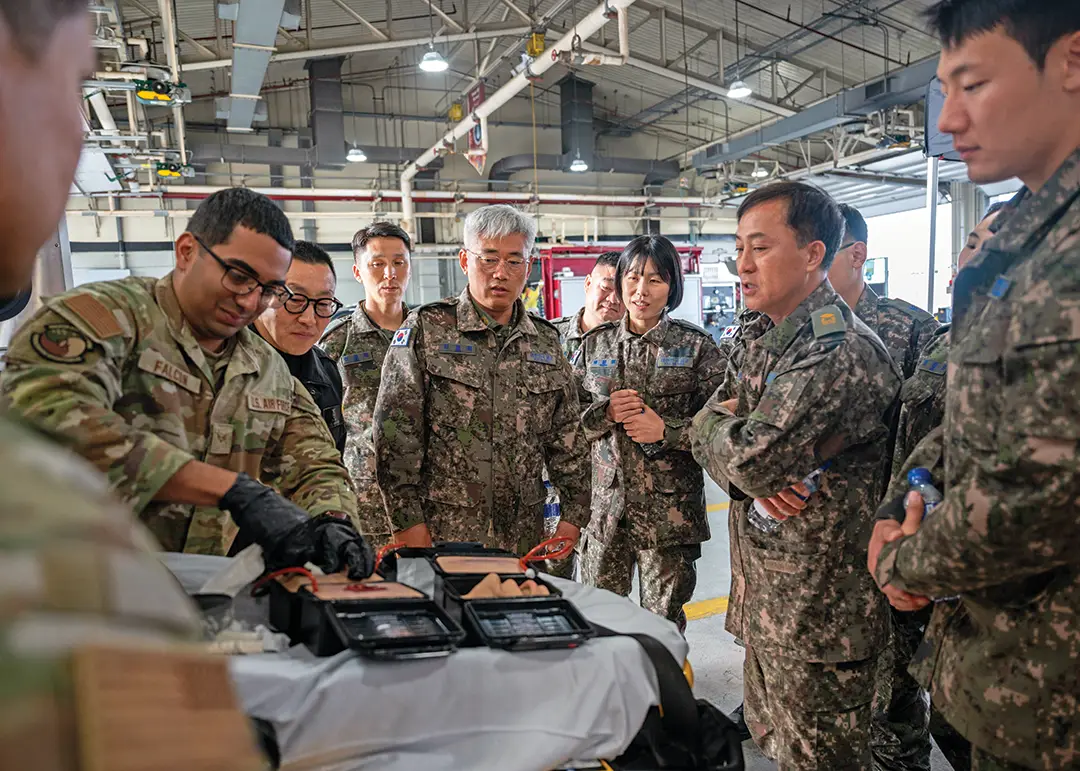
The backbone of allied strategy remains credible U.S. extended deterrence, backed by visible strategic assets and integrated missile defense planning. After the 2013 adoption of the Tailored Deterrence Strategy, longtime allies the Republic of Korea (ROK) and the U.S. have repeatedly updated their posture to account for North Korea’s nuclear and missile capabilities. Revisions, especially in 2023, placed renewed emphasis on nuclear consultation mechanisms, real-time data sharing, and closer integration of conventional and nuclear deterrence.
The resulting approach is concrete. The U.S. regularly deploys long-range bombers, including B-52s, B-1Bs and occasionally B-2s, over and around the Korean Peninsula to signal alliance resolve. ROK fighter jets routinely integrate with these aircraft during combined air missions. U.S. ballistic missile submarines also resumed port calls in South Korea in 2023 for the first time in decades, providing unmistakable reassurances of nuclear commitment.
Missile defense cooperation has intensified. The ROK’s Kill Chain preemptive strike concept, air and missile defense, and nuclear deterrence doctrine form a national framework that is reinforced by Patriot PAC-3
missile systems, and Japanese and U.S. Aegis ballistic missile defense platforms. Since 2023, trilateral data sharing enables almost instantaneous detection and tracking of North Korean missile launches.
Exercises reflect this integration. In 2025, the trilateral Freedom Edge off South Korea’s Jeju Island brought air, naval, cyber and missile defense components from Japan, the ROK and the U.S. into a combined scenario, demonstrating the ability to coordinate deterrence and crisis response across domains. These measures complicate Pyongyang’s nuclear planning and reduce the regime’s confidence in nuclear coercion.

1ST LT. JONATHAN SAULS/U.S. ARMY
Cyberwarfare and Disrupting Revenue Streams
North Korea believes that cybercrime is central to its survival. State-sponsored hacking groups such as Andariel, Kimsuky and Lazarus steal intellectual property, disrupt critical systems and — most notably — generate revenue through cryptocurrency theft. North Korean cyber operators stole an estimated $4 billion from 2017 to 2025. Major heists in India, Japan and the Middle East demonstrate the hackers’ reach.
Allies increasingly approach this not merely as cybercrime but also as a sanctions-evasion regime. The ROK and the U.S. have elevated cyber cooperation through information sharing, joint attribution of major attacks and coordinated law enforcement action. Japan participates in joint advisories and supports rapid sanctions designations against North Korea-linked cryptocurrency wallets and accounts.
Financial defenses are tightening across the region. Crypto exchanges in Australia, Japan and Southeast Asia have strengthened know-your-customer and anti-money-laundering standards, often after coordinated Japan-ROK-U.S. warnings. North Korean information technology (IT) workers posing as freelance developers have been exposed and expelled due to improved biometrics and network behavior analysis provided through joint intelligence channels. These efforts significantly increase operational risk for Pyongyang and constrain its ability to rapidly convert stolen cryptocurrency into usable foreign currency.
SOF, Provocations and Escalation Control
North Korea has one of the world’s largest SOFs, trained for infiltration, sabotage, leadership targeting and disruption. The regime deliberately pairs these units with calibrated provocations: artillery exchanges, drone incursions, naval clashes and other gray-zone actions designed to test resolve and manipulate political timing. More recently, North Korea has expanded its role well beyond the Korean Peninsula. Under a 2024 strategic partnership treaty with Russia, Pyongyang deployed troops and technical personnel to assist Russia’s war against Ukraine. These forces reportedly participated in operations in Russia’s Kursk region and have used drones and reconnaissance teams in Ukraine.
The ROK and the U.S. have strengthened border surveillance, improved coastal radar integration, and enhanced joint intelligence, surveillance and reconnaissance. Combined counter-infiltration exercises train forces for rapid reaction to SOF incursions, hostage scenarios and destabilization attempts. The alliance has also refined escalation-management protocols, giving leaders a range of precise response options to impose cost without triggering uncontrolled escalation. These measures counter Pyongyang’s long-standing belief that it can strike, shock and retreat with impunity.

Sanctions Evasion, Smuggling, Maritime Pressure
North Korea’s illicit networks are essential to regime survival. Bureau 39 oversees operations that include coal smuggling, petroleum transfers, arms sales, counterfeit currency and narcotics distribution. These activities, which violate United Nations Security Council resolutions targeting North Korea’s weapons of mass destruction (WMD) programs, increasingly rely on ship-to-ship transfers in international waters, concealment of vessel identity and shell companies disguised within regional business hubs.
The U.S.-led Pacific Security Maritime Exchange has become a central platform for multilateral information sharing. Australia, Japan, and European and Southeast Asian partners contribute data on suspicious vessels, illicit cargo movements and maritime identity fraud. Interdictions have increased, and North Korea-linked vessels have been seized and auctioned.
Training and capacity building play an important role. Southeast Asian coast guards and Pacific island states receive assistance to improve boarding protocols, evidence collection and maritime domain awareness. This cooperation narrows Pyongyang’s options and pushes it toward riskier criminal methods, particularly cyber theft.
Preparing for Urban, Subterranean Warfare
Any major conflict on the Korean Peninsula would occur in some of the world’s densest urban terrain and in areas laced with hardened bunkers and tunnels built over decades. U.S. assessments note that North Korea maintains extensive underground networks designed to move troops and equipment undetected. Four major infiltration tunnels have been uncovered, but many more likely remain hidden.
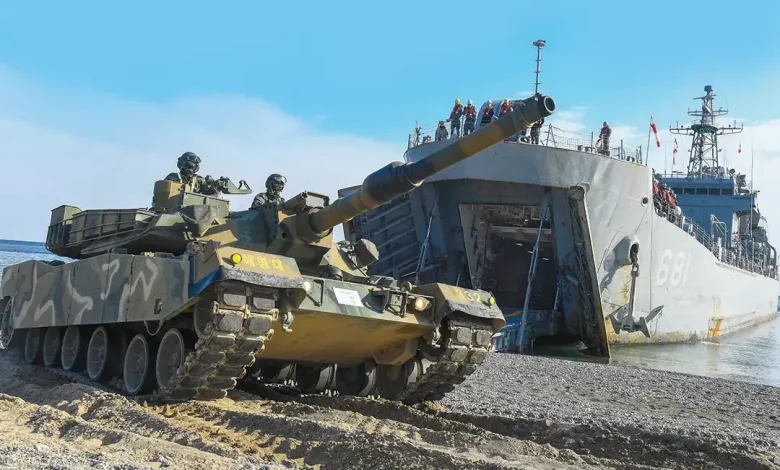
Combined ROK-U.S. exercises increasingly incorporate subterranean scenarios using uncrewed systems, robotics and teams trained in chemical, biological, radiological and nuclear defense to map, breach and neutralize tunnel networks. Civil defense planning continues to evolve, reinforcing shelters, emergency communications and continuity of government systems. These measures signal readiness for any asymmetric scenario North Korea assumes it can exploit.
Ideology, Cognitive Warfare
While missiles and cyber tools draw headlines, the North’s most prevalent asymmetric weapon is cognitive warfare. Juche, the official state ideology of North Korea, has evolved far beyond its origins as a doctrine of self-reliance. Under Kim, it functions as a political tool — an instrument designed to preserve regime power internally while shaping perceptions externally. Juche is fused with nuclear identity to portray North Korea as dignified, sovereign and morally justified in pursuing nuclear weapons. This framing is an attempt to influence foreign audiences, normalize North Korea’s illegal nuclear weapons and cast the regime as a victim of great-power hostility. The narrative aims to blur responsibility for crises, portraying missile tests as defensive reactions and international sanctions as illegitimate.
North Korea disseminates false and misleading information through state media, intelligence services and proxy media platforms that operate with plausible deniability. These untrue narratives are recycled through fringe websites, bot networks and social media content farms in Southeast Asia and Eastern Europe.
Researchers have documented the regime’s use of covert assets — including IT workers operating under forged identities — to distribute propaganda, manipulate comment threads and seed fabricated narratives into English- and Korean-language online forums. Some foreign influencers echo North Korean messages knowingly. Others do so unwittingly when they repeat misleading content wrapped in pseudoscientific or academic language. The goal is not persuasion in the traditional sense; it is distortion and division. By attacking the credibility of democratic institutions, amplifying local grievances and injecting doubt about alliance intentions, Pyongyang tries to erode cohesion within South Korea, weaken trilateral cooperation and undermine the international consensus supporting sanctions.
North Korea’s information operations intensify during times of potential domestic instability in allied nations, such as elections, trade disputes and historical controversies. These surges often coincide with the regime’s missile tests or cyberattacks as part of a synchronized coercive strategy that blends physical provocation with information manipulation.
Allied responses rely on transparency and exposure. Japan, South Korea and the U.S. issue coordinated public statements that clearly attribute North Korea’s actions, highlight manipulated narratives and reinforce the legitimacy of U.N. Security Council resolutions. Seoul and Washington also publish detailed reports on human rights abuses, illicit finance and cyber operations, creating a factual narrative that counters North Korean propaganda.
Still, the cognitive domain is where Pyongyang can achieve disproportionate effects at minimal cost. The U.S. and its Allies and Partners must do more in this respect.
Regional and Multilateral Contributions
Countering North Korea’s asymmetric warfare requires a regional effort. Japan is deepening missile defense, expanding counterstrike capabilities and sharing real-time data with the ROK and the U.S. Southeast Asian nations increasingly enforce sanctions, monitor ports and airspace, and expose North Korean front companies. Australia, the European Union and NATO partners contribute through sanctions enforcement, cyber defense and maritime monitoring. The 2003 global Proliferation Security Initiative to prevent the trafficking of WMD and related materials continues to constrain the North’s arms transfers by enabling rapid interdiction of suspicious shipments. These regional contributions close many of the gaps Pyongyang historically exploited.
Long-Term Strategic Competition
North Korea’s asymmetric strategy — rooted in ideology, empowered by missiles and cyber tools, and sustained by smuggling and information manipulation — is designed to ensure regime survival without confronting the superior conventional capabilities of the U.S. and its Allies and Partners. Pyongyang’s objective is clear: alter perceptions, weaken cohesion and shape the environment to the North’s advantage.
The changing geopolitical environment adds complexity. Moscow has become increasingly reliant on North Korean artillery and ballistic missiles. In return, Pyongyang seeks advanced technologies, intelligence sharing and political cover at the U.N. Security Council. Meanwhile, Beijing, through trade, diplomatic protection and lax sanctions enforcement, subtlely shields North Korea from full economic isolation. For Pyongyang, these arrangements reduce the costs of its asymmetric actions. For the U.S. and its Allies and Partners, they underscore the need for sustained multilateral coordination.
A second challenge lies within South Korea’s information environment. North Korean cognitive warfare attempts to polarize South Koreans, exploiting generational divides and manipulating security narratives. Strengthening societal resilience through transparent communication, media literacy, consensus on national security and timely exposure of foreign disinformation has become as essential as strengthening air defenses.
The U.S. and its Allies and Partners are countering the North Korea challenge with a comprehensive response across military, informational, diplomatic and financial domains. Extended deterrence is stronger, cyber pressure is increasing, maritime enforcement is deeper and urban readiness is more mature. This is a long-term contest, and North Korea will continue adapting. But as allied coordination deepens, transparency increases and resilience grows, the space for North Korea’s asymmetric advantage steadily narrows. The task now is to sustain this effort, refine it and ensure that the Indo-Pacific remains stable, secure and resistant to physical and cognitive coercion.