Philippines-U.S. asymmetric capabilities effort raises Manila’s maritime security with sea drones
FORUM Staff
The Philippines military acquired four autonomous sea vessels from the United States in June 2026 to boost Manila’s ability to monitor its waters and detect potential maritime threats.
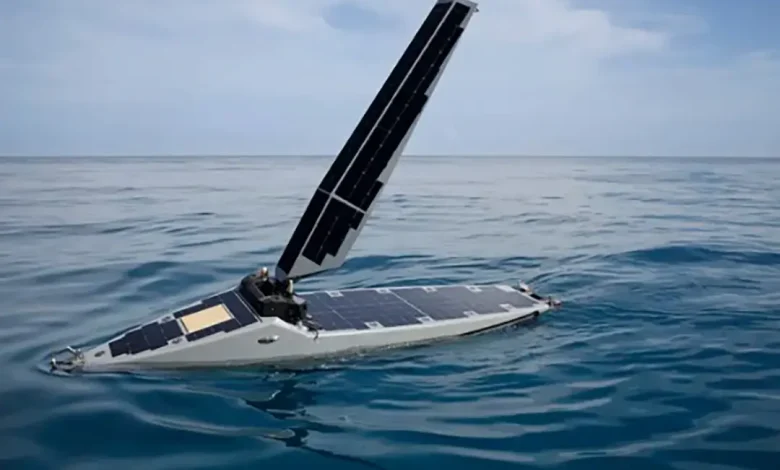
The solar-powered Ocean Aero Triton uncrewed vessels, valued at $13 million, demonstrate the U.S. commitment to the Philippines, its treaty ally, the U.S. Embassy in the Philippines stated, and strengthen Manila’s ability to discover and respond to maritime challenges including illegal fishing, gray-zone activities and threats to freedom of navigation.
“The four Ocean Aero Triton [vessels] … represent something important: the future of maritime security is not just about platforms — it is about capability, speed, and reach,” said U.S. Embassy Chargé d’Affaires Bridgette Walker. “The Indo-Pacific’s maritime domain is vast, contested, and critical, and the Philippines sits at the heart of it. The ability to monitor and respond to maritime challenges … requires persistent, long-endurance awareness that no single ship or aircraft can provide alone. The Triton fills that gap by expanding the capabilities of the Philippine Navy into critical waterways.”

The transfer is part of the U.S. asymmetric capabilities program, a security assistance initiative in which Washington plans to arm Manila with lethal capabilities, such as armed drones, by 2027, USNI News, the news service of the U.S. Naval Institute, reported.
Using commercial off-the-shelf systems and sensors can quickly increase Philippines’ maritime domain awareness. The effort initially focused on the Philippine Navy but expanded to include the Philippine Marine Corps. The Philippine Army is also considering asymmetric systems through the initiative, according to USNI News.
The asymmetric capabilities program is part of the Philippines-Security Sector Assistance Roadmap, finalized in July 2024, which outlines the capability requirements of the Armed Forces of the Philippines and Philippine Coast Guard that will be supported by Philippine national funds and U.S. capacity building. It guides shared defense modernization planning and investments over five to 10 years, according to the U.S. Department of War.
Tritons are capable of autonomous navigation both on the surface and underwater and can support missions such as intelligence, surveillance, reconnaissance, anti-submarine warfare, maritime strike and mine countermeasures, Defense News reported. The drones can be fitted with video cameras, thermal imaging and sonars, and may be deployed from shore, vessels or aircraft. A Triton can dive to 100 meters and remain underwater for 10 days and can conduct surface patrols for up to 30 days.
— STORY CONTINUES BELOW —
Join the discussion
How can your nation boost maritime security by partnering with the U.S. and its Allies and Partners in the Indo-Pacific?
The drone transfer will extend the Philippine’s efforts to protect subsea cables and monitor incursions by Chinese vessels and maritime militia in the South China Sea. Beijing claims almost the entire South China Sea, a resource-rich waterway and vital global trade route, despite an international tribunal’s 2016 ruling, in a case brought by the Philippines, that invalidated China’s assertion. Beijing ignores the tribunal’s ruling and its coast guard and militia vessels seek to enforce the illegal claims by ramming, blocking and firing water cannons at Philippine government and civilian boats operating lawfully within their nation’s exclusive economic zone.
“Integrating unmanned systems in our ships can expand our operational reach, enhance situational awareness, and strengthen our capabilities,” Philippines Navy spokesperson Capt. Marissa Martinez told the Philippine News Agency. The drones allow “us to execute a broader range of maritime missions with greater operational effectiveness.”