
ROK missile purchase boosts air defense, interoperability with U.S.
FORUM Staff
The Republic of Korea (ROK) plans to purchase air-to-air missiles and related equipment from the United States to strengthen its air defense capabilities and ensure interoperability with U.S. forces.
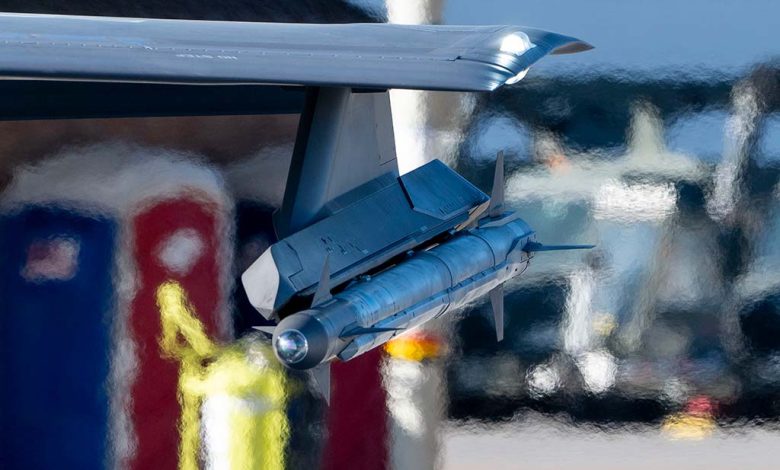
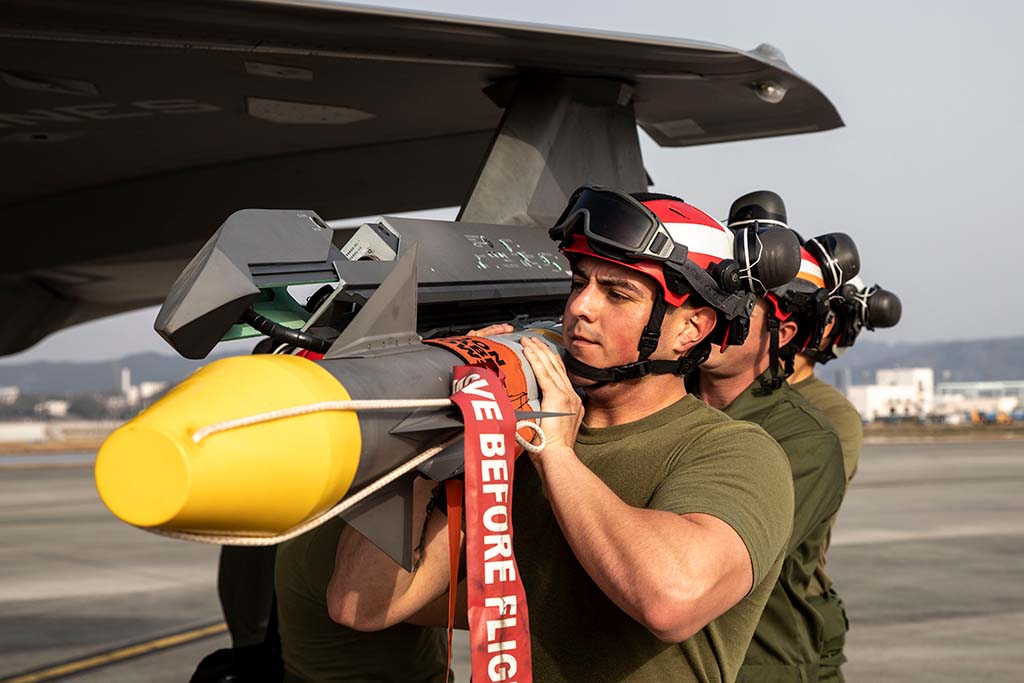
The U.S. State Department provisionally approved the $125 million sale in mid-August 2026. It includes 103 AIM-9X Sidewinder Block II tactical missiles, 10 guidance units, instruction aids, training, spare parts, and engineering, technical and logistical support.
The supersonic Sidewinder is equipped with a high-explosive warhead and an infrared heat-seeking guidance system. The U.S. Navy developed the missile for fleet air defense and the U.S. Air Force adapted it for fighter jets.
The transaction will improve “the security of a major ally that is an important force for political stability and economic progress in the Indo-Pacific region,” the State Department said. It also helps “improve the Republic of Korea’s capability to meet current and future threats by expanding its air defense capability, deterring aggression in the region, and ensuring interoperability with U.S. Forces.”
The State Department announced its initial approval a day after the ROK said it suspected North Korea had fired a missile barrage. The ROK military said 10 short-range ballistic missiles were launched from the Pyongyang region and flew about 300 kilometers toward North Korea’s eastern waters.
The United Nations Security Council has adopted nine major resolutions sanctioning North Korea over its illicit nuclear and missile activities since 2006 and has called for the regime to abandon its nuclear program in a “complete, verifiable and irreversible” manner, end its ballistic missile activities, and return to nuclear reduction talks.
North Korea refuses to comply with the resolutions. It has turned to regimes in China and Russia to evade international economic sanctions and has deployed troops and ballistic missiles to aid Moscow in its conflict with Ukraine. In exchange for personnel and munitions, North Korea received a surface-to-air launcher and has sought a Russian air missile defense system, CNN reported.
The Sidewinder agreement is the second major ROK-U.S. defense transaction in two months, following the U.S. State Department’s tentative authorization of the $292 million sale of AIM-120C-8 Advanced Medium Range Air-to-Air Missiles (AMRAAM). It includes 70 AMRAAMs, two guidance sections, containers, spare parts, and other logistics and program support.
The conflicts in Iran and Ukraine have highlighted the importance of interceptor missile stockpiles, with relatively inexpensive uncrewed aerial systems and low-flying cruise missiles launched simultaneously to deplete air defense interceptors.
— STORY CONTINUES BELOW —
Join the discussion
How can your forces work with the U.S. and its Allies and Partners to enhance deterrence through denial in the Indo-Pacific?
The ROK has used the AIM-9X since 2011, according to militarnyi.com, a Ukraine-based news site, and the missiles are in service with the ROK Air Force’s F-15K, KF-16 Fighting Falcon and F-35A Lightning II fighters. The missile also can be used for surface-launch missions without modification, according to its U.S. manufacturer, RTX.
The ROK also deployed a domestically engineered surface-to-air defense system in early August 2026. The M-SAM-II can neutralize short- to medium-range ballistic and conventional threats. Analysts say the system is the bedrock of the nation’s lower-tier missile defense network and fortifies its defense against Pyongyang’s ballistic missile program.
ROK military planners intend to integrate the M-SAM-II with the Long-Range Surface-to-Air Missile system, the Korea Times newspaper reported.
“We will seamlessly execute subsequent deployment phases to decisively heighten our military’s missile response capabilities,” said Kim Ki-young, director general of the ROK Defense Ministry’s Force Policy Bureau. “By mobilizing cutting-edge defense science and technology, our armed forces will continuously perfect a multi-layered, overlapping defense architecture capable of responding swiftly and precisely to increasingly sophisticated aerial threats.”