China’s coercion includes interdicting nearly 200 ships in Philippine Sea, study says
FORUM Staff
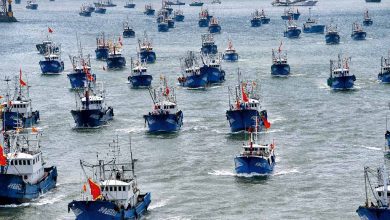
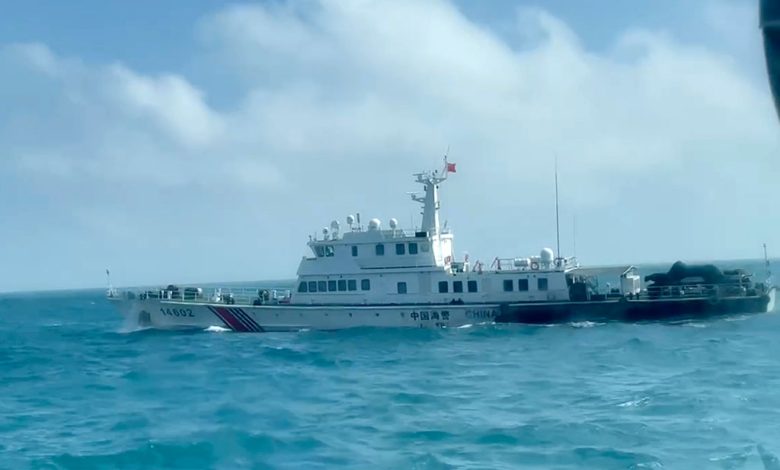
China’s Coast Guard illegally questioned operators of nearly 200 commercial ships transiting the Philippine Sea, demanding information about their port calls and crews, the Asia Maritime Transparency Initiative (AMTI) reported in August 2026. The coercion began shortly after Japan and the Philippines announced they would start boundary negotiations over their overlapping exclusive economic zones (EEZ) in the sea, east of Taiwan.
Japanese Prime Minister Sanae Takaichi and Philippine President Ferdinand Marcos Jr. agreed in May 2026 to elevate their nations’ ties. Besides negotiations on delimiting maritime boundaries, Manila and Tokyo began talks on the Philippines acquiring Japan Maritime Self-Defense Force destroyers and sharing classified military information.
In response to the bilateral cooperation, China deployed survey and Coast Guard ships in June for “a series of unprecedented operations in the Philippine Sea” that could be a precursor to trying to establish its own jurisdiction, according to AMTI, part of the Center for Strategic and International Studies, a United States-based think tank.
“The scale and character of China’s response suggest that these operations are not just about sending a signal to Tokyo and Manila. Beijing may also see an opportunity to change the status quo by establishing a semi-permanent presence and exercising some form of jurisdiction east of Taiwan,” the AMTI stated.
China’s bullying of 198 commercial ships would be unlawful even if it had occurred within its own EEZ, according to the report.
Between June and August, China Coast Guard activity focused in the area where Manila and Tokyo have overlapping claims, the report found. There was virtually no China Coast Guard presence in those waters in the five months before Japan and the Philippines announced boundary talks, according to the AMTI. China erroneously called the negotiations illegal, contending the Philippine Sea is the subject of maritime claims by Taiwan, the self-governed island that China claims and threatens to annex by force.
— STORY CONTINUES BELOW —
Join the discussion
Why should Allies and Partners expose China’s coercion in the Philippine Sea and elsewhere?
Beijing’s maritime push includes civilian research missions, the South China Morning Post reported. Beijing’s Natural Resources Ministry said in June that it conducted a three-day marine environmental survey east of Taiwan, part of what China said will be an annual mission rather than the previous occasional surveys in the area, the newspaper said.
The operations extended beyond the boundary zone. The AMTI reported that survey vessels often operated within 50 nautical miles (93 kilometers) of Taiwan in waters “largely irrelevant to the Japan-Philippines delimitation.” That suggests the effort is “as much about representing China’s claim to the island of Taiwan as they are about the maritime area being delimited by Manila and Tokyo.”
Survey operations “have a dual use of collecting data on subsea environments that can inform undersea warfare capabilities. The undersea domain in the area surveyed would be a critical battleground in any Taiwan conflict scenario.”
China’s activities intensify concerns it could use a blockade or quarantine to pursue Taiwan’s annexation, the study noted. “It is not hard to imagine how these operations, consisting of sustained law-enforcement patrols monitoring and interdicting commercial traffic across an area covering several maritime approaches to Taiwan, could function as a rehearsal for a quarantine effort to test regional reactions and normalize a low level of coercion.”