
Maritime domain awareness of Allies, Partners seeks to turn detection into action
Mandeep Singh
Indo-Pacific nations have made major strides in maritime domain awareness, fusing satellite imagery, drone footage, artificial intelligence and commercial vessel-tracking data to expose illegal fishing, sanctions evasion and coercive activity at sea. High-profile interdictions show how far that capability has come, and how regional partners are working to close the remaining gap between spotting suspicious vessels and turning that detection into action.
Southeast Asian navies and coast guards once struggled with “sea blindness,” said Gregory Poling, director of the Asia Maritime Transparency Initiative at the Center for Strategic and International Studies. “Today that’s reversed. More likely than not, it is going to be identified and tracked,” Poling told FORUM.
He credited declining satellite costs and partnerships between governments and business, along with platforms such as SeaVision — the United States Navy’s unclassified, web-based maritime situational awareness tool — and Canada’s Dark Vessel Detection system, which tracks ships that turn off their Automatic Identification System (AIS) transponders to hide illegal fishing and covert maritime activities, for giving countries like the Philippines and Vietnam capabilities that didn’t exist a decade ago.
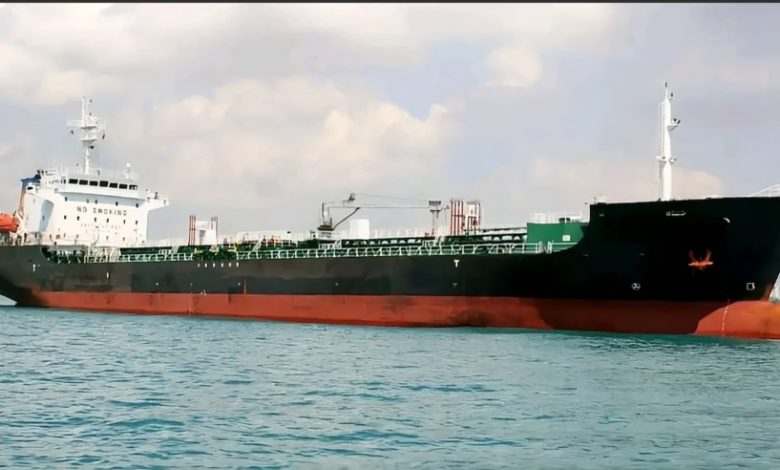
That improved visibility has translated directly into notable right-of-visit boardings of stateless tankers carrying Iranian crude through South Asian waters.
Investigators have typically built their cases by combining satellite radar, synthetic aperture radar and ownership registry forensics, a sign that multi-source data fusion is increasingly capable of unmasking even sophisticated evasion tactics. Malaysian authorities achieved success off Penang, intercepting two tankers during an illegal fuel transfer, while Vietnam has moved decisively to protect the integrity of its monitoring systems, introducing a draft decree that would impose fines of up to $38,000 on ships caught tampering with their vessel monitoring systems.
Regional information sharing efforts such as India’s Information Fusion Centre-Indian Ocean Region and Singapore’s Information Fusion Centre, alongside the developing Quad-led Indo-Pacific Partnership for Maritime Domain Awareness, are evidence that countries are steadily building the connective tissue needed for coordinated action, said Dr. Pratnashree Basu, associate fellow for the Indo-Pacific at the Observer Research Foundation’s Strategic Studies Program.
“Countries in the Indo-Pacific are making irregular but gradual progress toward strengthening the evidentiary value of digital maritime data,” she told FORUM, describing growing efforts to corroborate incidents by integrating satellite imagery, AIS records, radar feeds, drone footage and commercial tracking data.
— STORY CONTINUES BELOW —
Join the discussion
Why are collective security arrangements that boost maritime domain awareness important in the Indo-Pacific?
Rather than waiting for a single harmonized legal standard, Basu said, a more realistic path forward is “improving the credibility, interoperability, and timely exchange of digital maritime evidence among trusted partners.”
AI has “undoubtedly improved the detection of anomalous vessel behavior,” she said, with human analysts remaining a crucial safeguard, validating alerts and adding operational context that keeps the process credible and trustworthy for legal and diplomatic uses.
Obstacles remain, however. Poling pointed to the difficulty of monitoring the region’s vast small-scale fishing fleets, and the still-evolving evidentiary chain-of-custody standards for data from platforms such as Global Fishing Watch. But he described this as a solvable engineering and policy challenge, suggesting cheaper uncrewed platforms could bridge the gap between orbital detection and costly crewed verification. Basu called for greater investment in coast guard capacity, digital evidence training and multi-agency coordination to turn awareness into enforcement.
The Indo-Pacific’s maritime domain awareness architecture has already proven capable of exposing sophisticated maritime evasion, they said, and the next step is building the trust, training and institutional coordination needed to ensure that visibility consistently leads to accountability.
Mandeep Singh is a FORUM contributor reporting from New Delhi, India.