Australia boosts defense spending, expands partnership with Japan

FORUM Staff
Australia is increasing defense spending and affirming security partnerships under Canberra’s revised defense strategy released in April 2026. Australia said it plans to raise its defense budget to $69.1 billion by 2033, the equivalent of 3% percent of its gross domestic product. The Defence Department wants spending to reach $80.9 billion by 2036, $38 billion higher than previous projections.
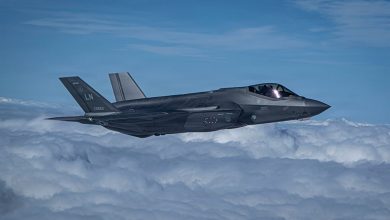
The plan expands the military’s adoption of autonomous and uncrewed systems on land, sea and air, including the Australian-developed Ghost Bat uncrewed jet aircraft and Ghost Shark uncrewed underwater system. It also strengthens long-range strike capabilities and accelerates the introduction of integrated air and missile defense systems.
The largest investment is the planned manufacturing of eight submarines powered by United States nuclear technology through the AUKUS partnership with the United Kingdon and the U.S. “Alliances, especially with the United States, will always be fundamental to Australia’s defense,” Australian Defence Minister Richard Marles said.
— STORY CONTINUES BELOW —
Join the discussion
How else can Australia and Japan expand security cooperation to ensure a free, open and prosperous Indo-Pacific?
The revised defense strategy also calls for deeper ties with Indo-Pacific countries and identifies Japan as an “indispensable partner for achieving regional peace and prosperity.” The plan recommends enhanced interoperability and increased information sharing between Australia and Japan.
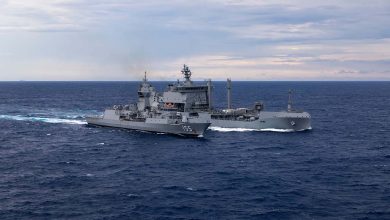
Shortly after the updated strategy was released, Canberra and Tokyo signed contracts to deliver the first three of 11 Japanese-designed warships to Australia. Mitsubishi Heavy Industries will build the first three Mogami-class frigates in Japan, with the others to be built in Western Australia. The deal is a major boost to Japan’s developing defense industry.
“Our surface fleet is more important than at any time in decades,” Marles said. “These general purpose frigates will help secure our maritime trade routes and northern approaches as part of a larger and more lethal surface combatant fleet.”
The deal represents deepening integration of the nations’ defense-industrial bases.
“By linking design, production, and maintenance across borders, agreements like this create a form of interdependence that is hard to reverse,” Australia-based analyst Grant Wyeth wrote in The Diplomat magazine. “Over time, this draws Australia and Japan closer together not only in terms of aligned worldviews and strategies, but in the practical choices they make — binding the two countries into a far closer, more trusting, relationship.”
Australia’s defense initiatives come amid China’s military buildup and coercive behavior by the Chinese Communist Party’s People’s Liberation Army (PLA) in the South China Sea and elsewhere. China illegitimately claims sovereignty over most of the sea, a vital global trade route, and ignores an international tribunal’s 2016 ruling invalidating its assertions. Open sea lanes, including in the East China and South China seas, are central to Canberra’s national interests, Australian officials say.
The PLA’s gray-zone bullying has targeted nations including Australia. In October 2025, a PLA fighter jet dropped flares near an Australian maritime patrol plane conducting routine surveillance in the South China Sea. China’s military previously discharged flares and metal chaff near Australian aircraft, directed a laser at an Australian P-8A maritime patrol aircraft over the Arafura Sea within Australia’s exclusive economic zone (EEZ), and emitted potentially dangerous sonar near Royal Australian Navy divers inside Japan’s EEZ.
With the revised defense strategy, the Australian Strategic Policy Institute reported in April 2026, “Australia is positioning itself within a U.S.-led network of Allies and Partners to collectively balance China.”