Grit, Adaptability, Purpose
‘Strong partnerships are at the heart of a stable and secure Indo-Pacific’

Maj. Gen. Vicente Blanco III became the 37th commandant of the Philippine Marine Corps in July 2025. He entered the Philippine Military Academy in 1987 and graduated four years later with a bachelor’s degree. He joined the Marine Corps after completing the naval officer’s qualification course at the Naval Training Command and has served as a line officer, platoon commander, company commander, operations officer, executive officer, commanding officer, commander of the 4th Marine Brigade and deputy commandant. He also served as chief of staff for plans and later as chief of staff for the Marine Corps. Blanco completed two four-year tours of duty with Naval Intelligence, serving as commander of the Counterintelligence Group, Naval Intelligence and Security Force, and as the Philippine defense attaché to Myanmar. He has received multiple combat and service awards. He and his wife, Lyra, an obstetrician-gynecologist, have two children.
Blanco spoke with FORUM in July 2025 at the Pacific Amphibious Leaders Symposium (PALS) in Manila, where he served as co-host. The conversation has been edited to fit FORUM’s format.
FORUM: Can you describe your role as commandant?
Maj. Gen. Blanco: I lead a force of over 10,000 active duty Marines. My job is to lead this force forward — to ensure that we are always combat-ready, well equipped and trained to handle a full range of missions, from territorial defense to humanitarian assistance and from internal security to amphibious operations. At the same time, I’m focused on the continued transformation to the Corps — modernizing our equipment, improving our training systems and expanding our capabilities to match the demands of the current security environment.
We are in a transformation. For six decades, we’ve been involved in a lot of internal security operations involving counterinsurgency, anti-secessionism, counterterrorism and even law enforcement. We support our national police. It’s like we have really forgotten our No. 1 role, which is territorial defense, external defense operations.
So, by the year 2022, we saw a reduction in internal security operations. The [extremist] Abu Sayyaf [Group] no longer poses a threat in Sulu, Basilan and Tawi-Tawi. And I think it was a realization from our higher authorities for us to concentrate now on our external defense operations given the current situation. I was lucky that my brigade, the 4th Marine Brigade, was chosen to transform from doing counterterrorism operations to more focused external defense operations in the north.

FORUM: What’s the biggest challenge you face?
Maj. Gen. Blanco: How to transform the Marine Corps. It’s not really a new role. It’s relearning the TTPs [tactics, techniques and procedures] and doctrines of why there is a Marine Corps in a country.
FORUM: What challenges face the Philippine Marine Corps?
Maj. Gen. Blanco: The challenges we face are both traditional and emerging. On one hand, we continue to secure our coastlines and littorals, and support internal security operations. On the other hand, we now have to deal with new realities: the growing tension in the West Philippine Sea [South China Sea], information warfare, gray-zone tactics, cyber threats, and the need to operate jointly with other services and combined with other nations.
Internally, we’re transforming into a more specialized and modern amphibious force and this requires sustained investment in training, technology and our people. We also have to maintain a high state of morale and professional standards across the Marine Corps because even with all the gear and systems, it’s still the Marine on the ground who gets the job done.
FORUM: How did you start your military career?
Maj. Gen. Blanco: Growing up in a situation where, again, there is this insurgency problem … I think that made me, or shall I say it helped me, look to what could be a military life serving the country. And then while in the academy, there are these opportunities to choose a branch of service. And given the ethos, the discipline, the honor and the ability to serve the people, it is in the Marine Corps where I saw all these things could be done.
FORUM: What is the significance of PALS and of the Philippines hosting the symposium?
Maj. Gen. Blanco: PALS is a vital platform for building stronger ties among like-minded nations and their militaries in the Indo-Pacific. It allows amphibious leaders to share experiences, align concepts and prepare for joint/combined operations in times of crisis or conflict.
For the Philippines, hosting PALS is a big honor and privilege. It reflects our growing leadership role in regional security. It’s also a chance to show the world what the Philippine Marine Corps is capable of — not just in terms of training and operations but also in diplomacy and regional cooperation. It’s our way of saying the Philippines is ready to be a dependable partner in maintaining peace and stability in the Indo-Pacific.
When we say like-minded nations, it’s how they see the Indo-Pacific as a free and open region.
It’s really the exchanging of views, ideas, amphibious doctrines — how do we do things — because it’s not really looking at the military doing all these military operations. We confront [rising sea levels and warmer temperatures]. There are a lot of disasters and the Philippines is a disaster-prone country given the number of typhoons passing through the country in a year. I think we are averaging about 24, and these are devastating.

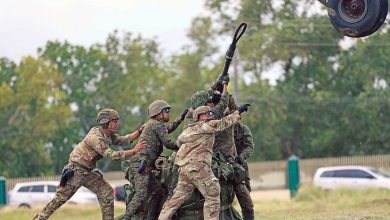
in June 2025. CAPT. JOHN FISCHER/U.S. MARINE CORPS
FORUM: Is there a particular piece of knowledge you gained at PALS or were able to relay to other participants?
Maj. Gen. Blanco: It is about building further trust and confidence among nations. It was indeed open discussion, nothing to hide. There is also exposure for my officers with officers of other countries. There were other forums, subforums, within the whole symposium. We are proud of the initiative of calling on senior enlisted leaders to have their own forum under PALS and the key leader engagements where one country is bilaterally engaging another.
FORUM: Why are partnerships important to the Philippines?
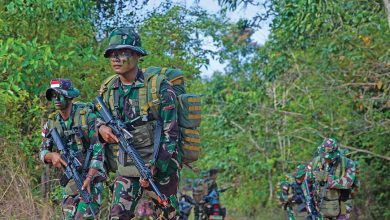
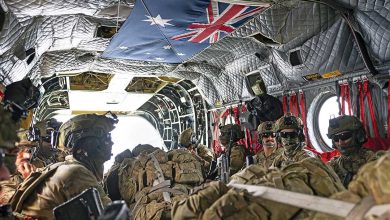
Maj. Gen. Blanco: Strong partnerships are at the heart of a stable and secure Indo-Pacific. We work closely with Allies and Partners to improve interoperability, share best practices and strengthen our collective defense posture, whether it’s through joint exercises like Kamandag and Balikatan or personnel exchanges and capability development programs. We learn from each other and build trust.
These partnerships allow us to respond together to natural disasters, maritime security threats and even acts of aggression. They also reinforce our shared commitment to international law, freedom of navigation and peaceful resolution of disputes.
FORUM: What is the role of amphibious forces in the Philippines?
Maj. Gen. Blanco: The Philippine Marine Corps is the country’s primary amphibious force. Because we’re an archipelagic nation, we need units that can move fast across islands, operate from sea to land and vice versa, and secure both coastal and inland objectives. Our Marines are trained for a wide range of missions — combat operations, coastal defense, littoral combat operations, amphibious assaults, humanitarian assistance and rapid deployment in emergencies. Whether it’s reinforcing remote islands, responding to typhoons or asserting our presence in contested waters, amphibious forces like ours provide reach, flexibility and staying power.
We operate closely with other services and increasingly with foreign counterparts. Our ability to operate in diverse terrain — from mountains to shorelines — makes us one of the most versatile forces in the Armed Forces of the Philippines.
FORUM: Do you have any other message to share with Allies and Partners?
Maj. Gen. Blanco: The Philippine Marine Corps is committed, capable and ready to work with you. We are proud of our legacy but even more focused on the future. We may be a lean force compared to others, but we make up for it with grit, adaptability and a strong sense of purpose.
I’ve always believed in working together, military to military, people to people. My door is open to anyone who shares our values and our vision for a more secure and stable region. Together, we can achieve more than any one country can on its own.