Philippines advances ‘kill web’ strategy for maritime defense
Maria T. Reyes
The Philippines is adopting a more networked and distributed maritime defense strategy under the nation’s Comprehensive Archipelagic Defense Concept (CADC) and in conjunction with its longtime ally, the United States.
Transitioning from fixed coastal defenses and linear operations, the Armed Forces of the Philippines (AFP) is embracing an interconnected “kill web” strategy to modernize maritime defense. The concept disperses military assets across islands and maritime zones, linking them through a digital network to maintain real-time coordination even during system disruptions.
Philippine Navy Rear Adm. Roy Vincent Trinidad said the approach aligns with the CADC, which was enacted in 2024 to shift the military’s focus from internal security toward power projection and resource protection within the nation’s exclusive economic zone (EEZ).
“A kill web in the local setting will be the AFP’s ‘brain and nervous system’ — the digital infrastructure that ensures all the new hardware, including missiles, ships and planes, can communicate effectively to protect the country’s maritime borders,” Trinidad told FORUM.
Unlike a traditional “kill chain” model, which follows a linear structure, a kill web is networked, “thus making it less vulnerable to interruption through redundant systems,” he said. “It is faster and translates to mobile, inter-island systems rather than fixed coastal sites.”
— STORY CONTINUES BELOW —
Join the discussion
How do exercises and other engagements with Allies and Partners enhance your armed forces’ capabilities?
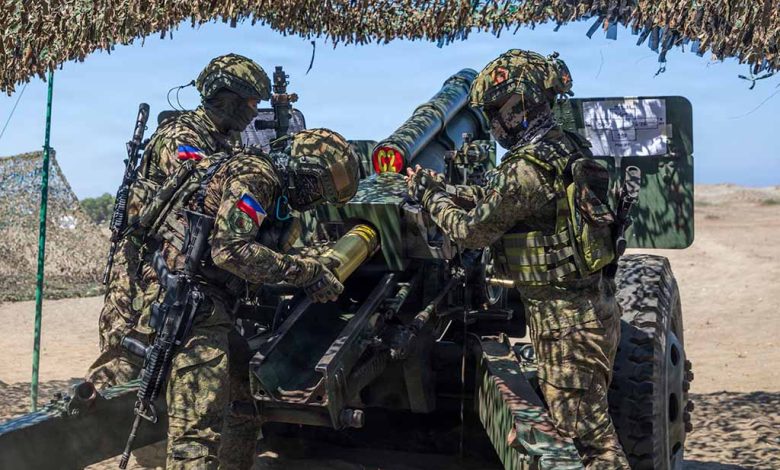
The shift also is reshaping the long-running Balikatan, the Philippines’ largest joint military exercise with the U.S. Under the CADC, the multinational drills are increasingly focused on defending the Philippines’ territorial waters, internationally recognized EEZ, maritime choke points and strategic islands. The 2026 iteration included counter-landing drills, integrated air defense operations and expanded interoperability, as well as the inaugural participation of Japanese ground forces.
“Exercise Balikatan has undergone a dramatic transformation,” Trinidad said. “This is primarily due to the CADC and the integration of Japan as a combat [drills] participant.”
Another major component of the CADC is integration of uncrewed systems such as autonomous surface vessels with special operations forces. “This is part of the ‘porcupine defense’ mentioned in the Naval Operating Concept,” Trinidad said. “The overall posture of this concept is defensive in nature but is also harder to target, covers a wider expanse and is more capable of area denial.”
The porcupine defense strategy seeks to create a dispersed and survivable force posture capable of deterring larger adversaries without matching them asset for asset. Uncrewed systems play a key role by expanding surveillance and targeting capabilities while reducing risks to personnel.
Trinidad said the AFP is using such systems as “force multipliers” for units including the Naval Special Operations Command and the Marine Corps. During Balikatan 2026, AFP special operations forces tested small autonomous craft designed to identify and track maritime targets while transmitting real-time intelligence, surveillance and reconnaissance data to land-based missile systems and naval platforms.
Maria T. Reyes is a FORUM contributor reporting from Manila, Philippines.