New Zealand partners with South Pacific neighbors to enhance maritime security
FORUM Staff
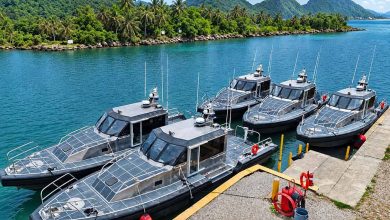
New Zealand is expanding its maritime surveillance support to South Pacific partners, including with a monthlong deployment of uncrewed surface vessels (USV) to counter drug smuggling, illegal fishing and other illicit activity in Fiji’s exclusive economic zone (EEZ).
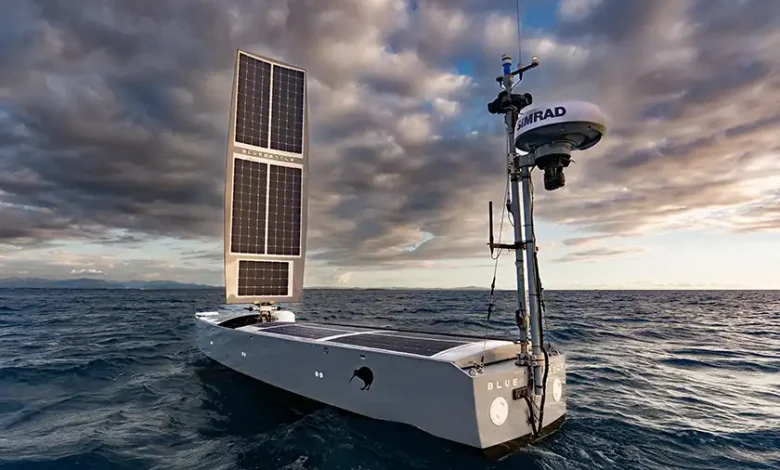
The maritime drones, known as Bluebottles and jointly owned by New Zealand’s Navy and Customs Service, were transported to Fiji by a Royal New Zealand Air Force (RNZAF) C-130J Hercules aircraft. The USVs are propelled by solar, wave and wind power, enabling them to operate 24/7 for weeks without resupply, and are equipped with radar, positioning and photographic equipment.

The USVs identified 137 suspicious vessels for additional scrutiny by Fiji’s Maritime Essential Services Centre (MESC) in Suva. The mission allowed the Republic of Fiji Military Forces to develop a deeper analysis of maritime activity, including traffic volume and patterns in the nation’s 1.3 million-square-kilometer EEZ.
“This technology is fundamental in supporting Fiji’s fisheries and border surveillance, environmental monitoring and the protection of the country’s extensive maritime domain,” Commodore Timoci Natuva, chief of the Fijian Navy, said in an October 2026 news release. “Illegal narcotics entering our country is causing so much harm and misery to our people, so any means to combat this is beneficial to the nation.”
Fisheries and other marine resources are integral to the economies of South Pacific nations, which often have limited assets for patrolling their extensive EEZs. Vanuatu, for example, has the world’s 39th-largest EEZ at more than 660,000 square kilometers, according to the Lowy Institute, an Australia-based think tank. The nation’s population of 335,000 ranks 177th globally.

The RNZAF recently concluded a two-week maritime surveillance mission in Vanuatu, working with the island nation’s Fisheries Office, National Disaster Management Office, Police Maritime Unit and Transnational Crime Squad, as well as the regional Pacific Islands Forum Fisheries Agency. An RNZAF MC-12K King Air and crew, with embarked Vanuatuan personnel, monitored for so-called dark vessels, which deliberately conceal their identification, location or ownership.
The October 2026 deployment bolstered efforts to deter illegal, unreported and unregulated fishing and transnational organized crime, RNZAF Squadron Leader Craig Clark stated. “We provided the imagery they need for evidence and to build a picture of what may be illegal activity occurring in their waters.”
— STORY CONTINUES BELOW —
Join the discussion
How does your nation support Allies and Partners in countering illegal fishing and drug trafficking?
New Zealand is increasing regional security ties amid shared traditional and nontraditional threats, including territorial incursions, state-sponsored hacking and natural disasters. The New Zealand Security Intelligence Service recently agreed to establish a six-month partnership to assess Fiji’s intelligence structure to improve coordination and information sharing across agencies.
New Zealand’s USV deployment to Fiji is part of the nations’ Duavata Partnership, which was signed in 2022 and renewed in mid-2026. Duavata means “working together” in Fijian. Among its priorities, the agreement calls for boosting defense cooperation through training and exercises, maritime security cooperation, and humanitarian assistance and disaster response initiatives.
Uncrewed systems provide persistent presence, MESC Director Lemeki Lenoa said. “We can deploy them into areas to help understand what is happening in our maritime domain, and that helps us — Navy, Customs, Fisheries, Police — develop capabilities and capacity to better respond to threats.
“The sea connects us all,” he said. “The South Pacific is a collective responsibility, so we need to work very closely with our like-minded partners within the maritime domain.”