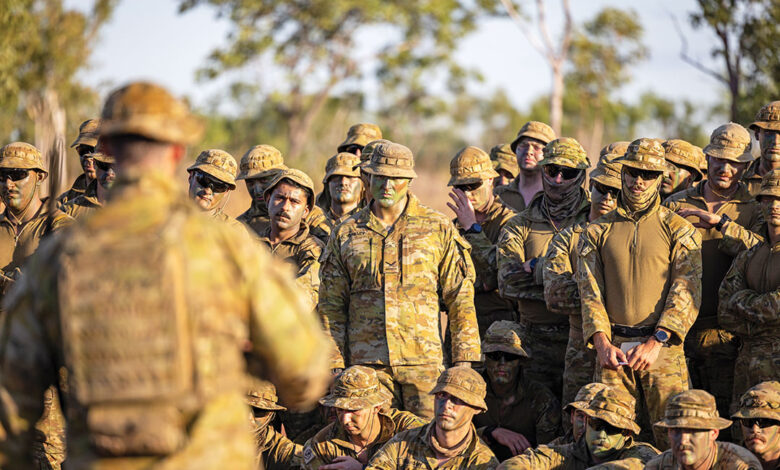
Noncommissioned officers (NCO) made an impression on United States Army recruit Jay Garza in the late 1990s. His first sergeant was fit, articulate and charismatic. He was a mentor. “I still strive to meet his mark,” Garza, now a sergeant major with his own leadership responsibilities, told FORUM.
The NCO system is especially beneficial for the U.S. and Allies and Partners across the Indo-Pacific, which is characterized by vast distances, environments ranging from tropical jungles to Arctic tundra, frequent natural disasters and threats of conflict. “One could argue that this is the most challenging and demanding terrain in the world,” Warrant Officer Kim Felmingham, an Australian Army regimental sergeant major, said in May 2025 during a Land Forces Pacific (LANPAC) symposium discussion on developing NCOs.
NCOs position military units to excel, whether in conflict or responding to the earthquakes, tsunamis and typhoons prevalent in the so-called Ring of Fire, a horseshoe-shaped, 40,000-kilometer-long zone of seismic instability around the Pacific Ocean.
“It’s an ongoing daily process, which involves a myriad of things to include warfighting skills, education, professional development, keeping fit,” retired U.S. Army Sgt. Maj. Joseph Terry, executive director of the Non Commissioned Officers Association, a Texas-based nonprofit that advocates for current and former NCOs, told FORUM. “They ensure that the mission is accomplished.”
NCOs demand discipline and reinforce it continuously. It’s what distinguishes an effective military unit. “The next fight, and it could be in the Indo-Pacific, will be won by the noncommissioned officer,” Garza said. “And how we develop our noncommissioned officers makes a difference.”

Key Ingredient
NCOs are a vital part in the machine that drives many Indo-Pacific militaries. They build readiness, enhance interoperability, and lead in complex and dynamic environments. They’re the “secret sauce” of a successful fighting force, said Garza, who serves with the Transformation and Training Command. Militaries with robust NCO programs tend to have engaged forces and an advantage in potential conflicts.
Enlisted personnel account for the bulk of Indo-Pacific military forces. In the U.S., for instance, about 82% of the Armed Forces are enlisted personnel, military service academy cadets and midshipmen, with commissioned officers accounting for the remaining 18%, the Congressional Research Service reported in December 2024.
Enlisted professionals with leadership potential and specialized skills can rise within the ranks to become NCOs. In those roles, they direct lower-ranking enlisted personnel while reporting to commissioned officers who guide big-picture planning and strategy.
Trust between commissioned officers and NCOs is vital for an effective mission. An NCO is “the indispensable link between command guidance and execution, ensuring that each task is fully understood and supervised through completion,” according to “Backbone of the Armed Forces: The Noncommissioned Officer and Petty Officer,” a book published by the National Defense University Press.
NCOs help enlisted personnel anticipate unexpected events and adapt to unforeseen circumstances. “Soldiers, NCOs and our officer corps have got to do what they can with what they’ve got, where they are,” Felmingham said. “Because you’re never going to have everything you think you need.”
Readiness — “ensuring our Soldiers are trained to be able to fight and win” — is essential, Command Sgt. Maj. Jason Schmidt, U.S. Army Pacific’s senior enlisted leader, told FORUM. “If everybody handles their core duties and responsibilities, the machine works well for us.”
Felmingham and other NCOs emphasize the importance of ensuring that every exercise serves as a rehearsal in which forces can fail and learn. “Rehearsals must be designed to test an NCO’s drive,” Felmingham said. “[NCOs] must be personable, credible, be able to translate words into action, and they need to be optimistic, because war is going to be hard.”
NCOs in the Indo-Pacific Theater
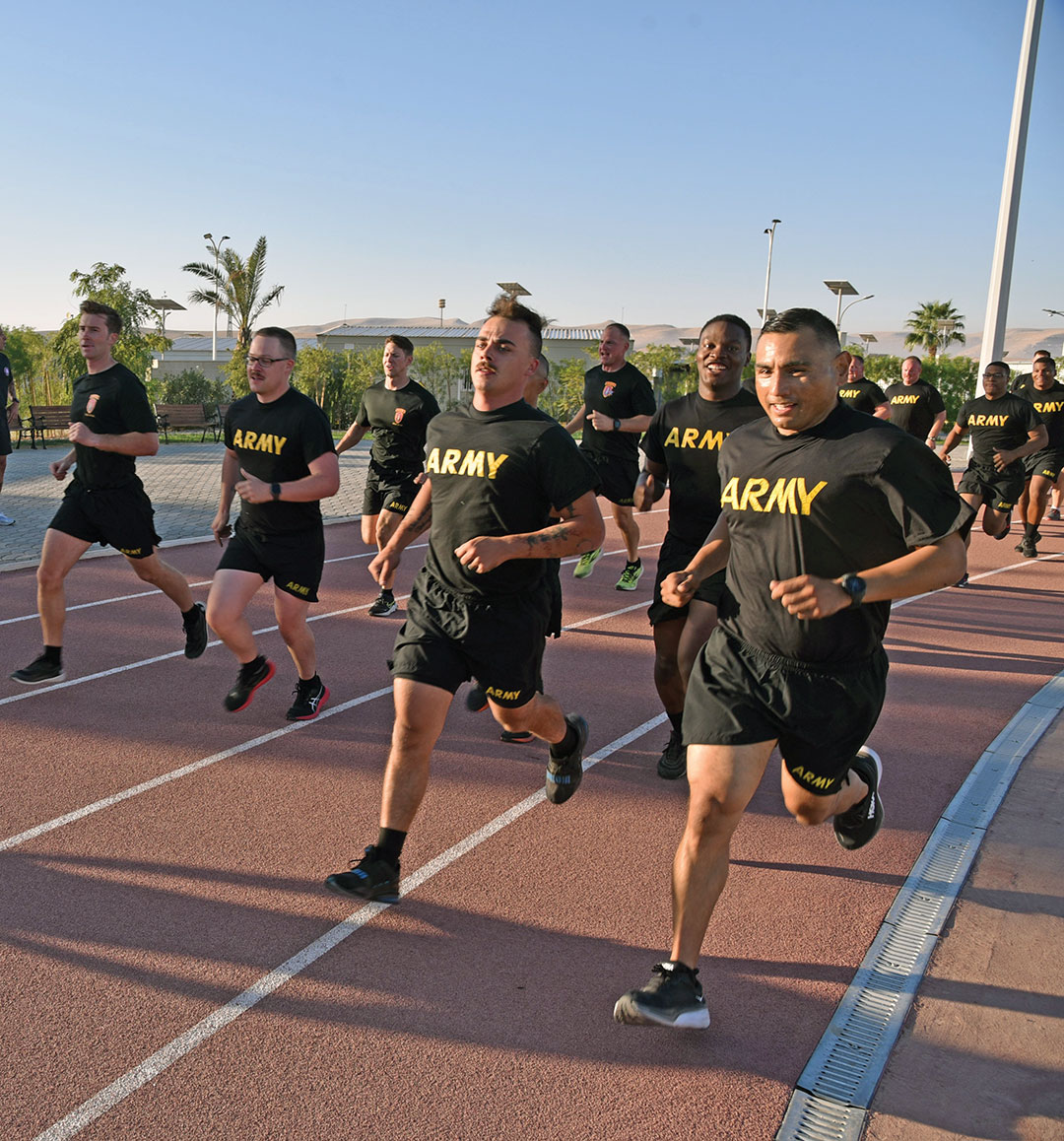
Through exercises, training and professional exchanges in the Indo-Pacific, NCOs live, train and learn alongside their Allied and Partner counterparts. Indo-Pacific nations have over the years made tremendous strides in professionalizing their NCO corps. They have a prominent role in ensuring personnel are collaborative and compatible in the field and off. That’s challenging in a region known for “the tyranny of distance,” spread across multiple time zones and populated by people of diverse cultures and 3,000 languages.
NCO development programs in the Indo-Pacific have greatly improved military effectiveness and regional stability, the Association of the United States Army reported in April 2025. They enhance operational capabilities, leadership and morale among troops.
Australia, Fiji, Japan, the Maldives, New Zealand, the Philippines, the Republic of Korea, Singapore and Vietnam are among the Indo-Pacific nations whose militaries rely on NCOs. Though they have unique protocols, their missions are similar: train, educate, instill discipline and lead while serving as a link between commissioned officers and enlisted personnel.
The structure can be advantageous. Russia’s army doesn’t have a strong NCO corps, opting for a top-down approach in which high-ranking commissioned officers attempt to directly oversee foot soldiers, the Defense One website reported in 2022. China is struggling to develop an NCO corps in its People’s Liberation Army. “The existence of a rigid hierarchy, discrepancies in [Chinese Communist Party] membership, and class-based prejudice may prevent NCOs from exercising their authority and candidly advising commanders,” Maj. Matt Tetreau wrote for the U.S. Army’s Modern War Institute website in 2023.
“We all have an obligation to prepare our non-commissioned officers as they lead Soldiers, enable commanders and, through confidence and courage, fight and win,” Felmingham said at a May 2025 gathering of regional senior enlisted leaders. “Therefore, our noncommissioned officers need to be well trained, both individually and collectively.”
Exercises should test an NCO’s leadership, knowledge, drive, empathy, passion and compassion, she said: “If we get it wrong there are going to be catastrophic consequences.”
Indo-Pacific NCOs have worked among Allies and Partners for more than a century. Instilling an effective corps takes time, Schmidt said. “But I can be optimistic.
I think it’s catching on.”

Fight Tonight and in the Future
Increasing technological proficiency among NCO candidates is reframing education and training programs, panelists at the LANPAC forum in Hawaii said. “Technology is not about replacing our traditional field training,” Singapore Armed Forces Chief Warrant Officer Sanjee Singh said. “It is an enabler. It helps us to fight better.”
NCOs receive instruction and training to enhance their ability to direct personnel in multidomain operations. The U.S. NCO Leadership Center of Excellence, for example, employs mentorship, education and practical experience to forge leaders capable of guiding others to fight and win.
The Singapore Army has a two-pronged approach to preparing Soldiers and NCOs. It provides professional military training while developing individuals through lifelong learning, whether it’s pursuing a degree or building expertise in a specific field. “You need to study the generation of Soldiers coming to you,” Sanjee said. “If you don’t know how to communicate within different generations, you will never win the battle.”
Today’s recruits tend to be more educated and might have valuable experience with coding or artificial intelligence that can be further developed, said Garza, of the U.S. Army Futures Command. “When we were coming up, we were basically executors,” Garza said. “We were told, ‘Hey, this is what we want you to do.’ We didn’t ask why. We just executed. A lot of these kids now, they’re brilliant.”
Effective NCOs push themselves and their charges to continuously improve. “NCOs have to be flexible and adaptable to the latest technologies, to the latest equipment, to the latest concepts,” Garza said. “And they’ve got to integrate that into their teams, into their squads.”