Advanced Combat Skills Assessment fosters partnership, commitment

United States Pacific Air Forces
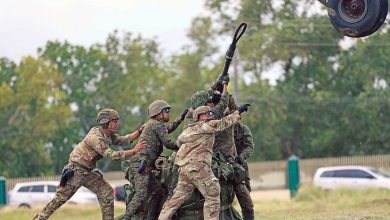
Security forces leaders from partners across the Indo-Pacific and beyond tested their skills and strengthened multinational ties during the Advanced Combat Skills Assessment (ACSA) at Andersen Air Force Base, Guam, in May 2026.
Teams from Australia, Canada, Germany, Japan, New Zealand, the Philippines, the Republic of Korea (ROK), Thailand and the United States participated in the weeklong event to build proficiency, enhance interoperability and deepen multilateral partnerships.
In support of the U.S. Indo-Pacific Command’s Theater Security Cooperation Program (TSCP), ACSA’s annual exchanges bolster an unparalleled network of Allies and Partners to deter aggression.
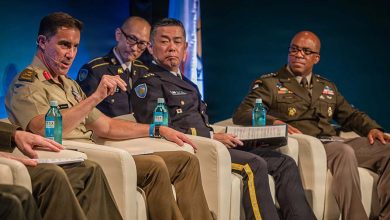
“A key advantage we have in the Pacific are our partners,” said U.S. Air Force Lt. Col. Jordan Criss, deputy of the Security Forces Division, U.S. Pacific Air Forces Directorate of Logistics, Engineering and Force Protection. “Events like ACSA allow us to build on these relationships and strengthen interoperability to increase security and stability in the region.”
The ninth iteration of ACSA featured 75 participants divided into 15 teams, which were evaluated on various technical and physical skills.
“When together, Airmen from the U.S. and the other nations find out similarities and differences in the way things are done,” ROK Air Force Capt. Kwon Min-seok said. “This lets us better understand each other, improving our comradery and boosting our communication.”

ACSA and other TSCP programs such as Pacific Defender support development of five-year partnering plans between the U.S. and participating nations to increase capabilities and interoperability. The multilateral events, conducted throughout the year across the Indo-Pacific, reinforce proactive and lethal air base ground defense alongside Allies and Partners to preserve peace through strength.
— STORY CONTINUES BELOW —
Join the discussion
How could your armed forces benefit from participating in the U.S. Indo-Pacific Command’s Advanced Combat Skills Assessment?
During ACSA, security forces professionals share expertise to advance engagement planning and warfighting capabilities. In a joint base environment, participants engage in exchanges covering tactics, techniques and procedures for anti-terrorism, physical security, and police and integrated base defense operations, among other activities.
The exchanges enhance rapid employment of combat-ready forces to address aggression or crisis, improve denial capability, including resilience, in the face of military coercion, and support partners’ ability to respond to contingencies.
Through ACSA, ally and partner forces strengthen their ability to withstand, fight through and recover quickly during multidomain attacks on critical infrastructure and networks, and disruptions to weapons systems.